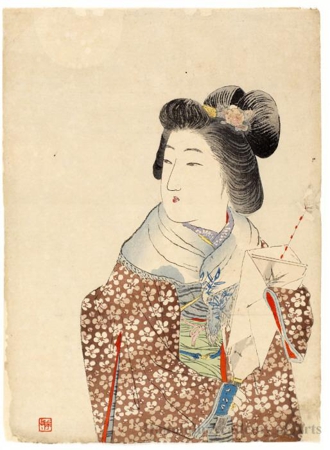
Battledore
by Suzuki Kason
- Date:
- 1911
- Medium:
- Woodblock print; ink and color on paper
- Source:
- Honolulu Museum of Art
Description
Battledore, dated 1911, is a late-Meiji painting or design by Suzuki Kason held at the Honolulu Museum of Art (honolulumuseum.org/art/9286). The battledore, hagoita, is the wooden paddle traditionally used in the New Year game of hanetsuki, the Japanese forerunner of badminton, and the elaborately decorated hagoita that became fashionable during the Edo period and remained popular into the Meiji and Taisho years constitute a major minor-art tradition in their own right. The motif had been treated regularly in late-Edo and Meiji bijinga, where young women shown holding or playing with the paddle supplied a seasonal pretext for the New Year subject. Suzuki Kason (1860-1919), trained in the Kazan lineage through Kobayashi Eitaku, brought the literati-derived refinement of that descent into the late-Meiji nihonga idiom that was emerging at the same time as the parallel yoga (Western-style) painting movement. The composition typically frames one or more figures, often in seasonal Taisho-period dress, with the decorated paddle as the focal accessory, the colourful battledore supplying both the iconographic anchor of the design and the principal accent within an otherwise restrained palette. The 1911 date places the work at the late-Meiji and early Taisho boundary, when nihonga painters were negotiating the relationship between classical seasonal subjects and contemporary visual culture. Within Kason's career, Battledore belongs to the seasonal-subject paintings that ran in parallel with his Bungei Kurabu frontispieces and represents the more substantial painted side of his output, and the Honolulu Museum of Art's holdings of three Kason works document the Hawaiian institutional interest in late-Meiji and Taisho Japanese art that grew steadily through the early twentieth century.
More Prints by Suzuki Kason
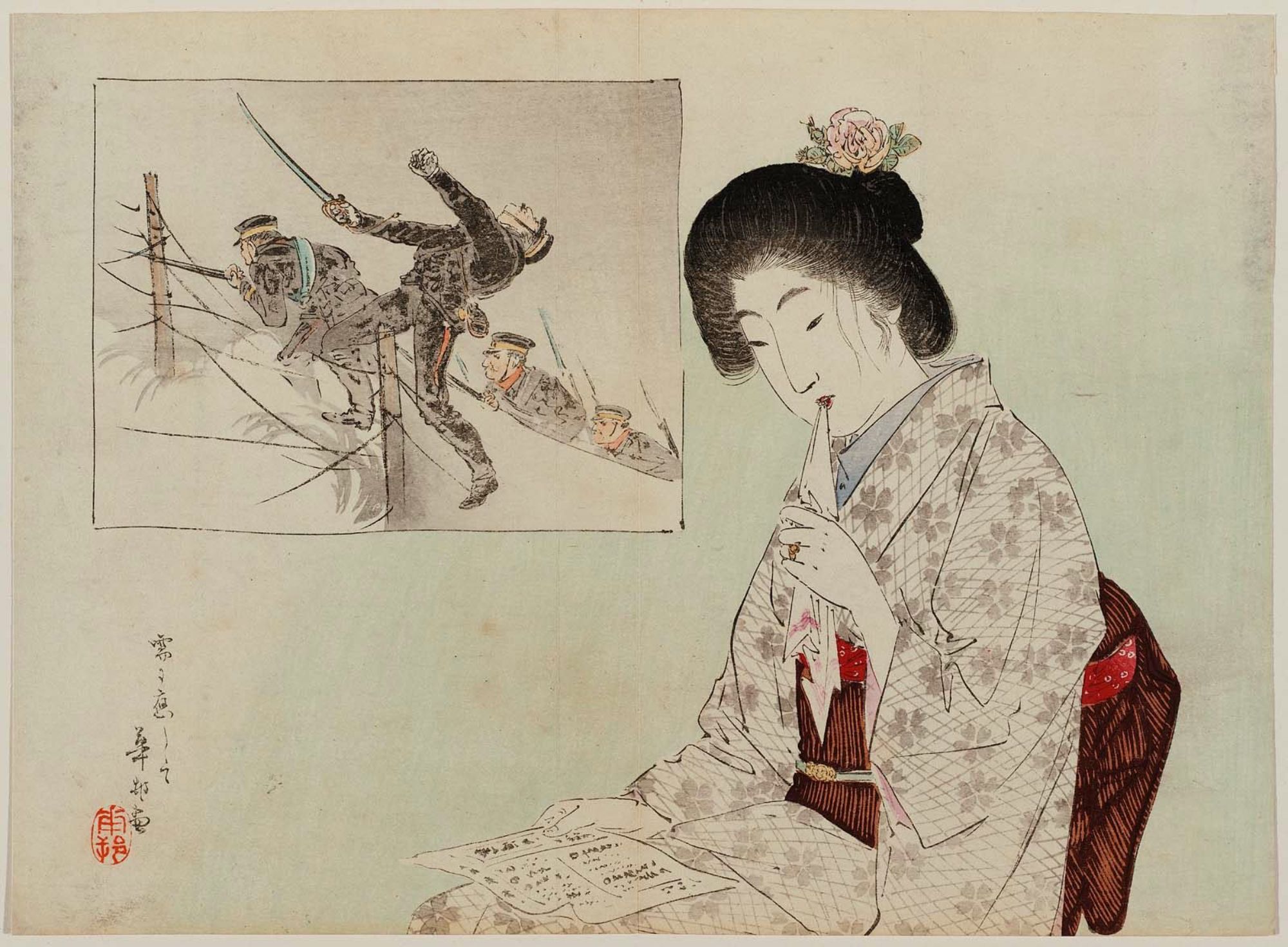
Autumn Showers (Shigure), frontispiece illustration from the literary magazine Bungei kurabu 10, no. 13
1904
Woodblock print; ink and color on paper
Autumn Shower
1904
Woodblock print; ink and color on paper
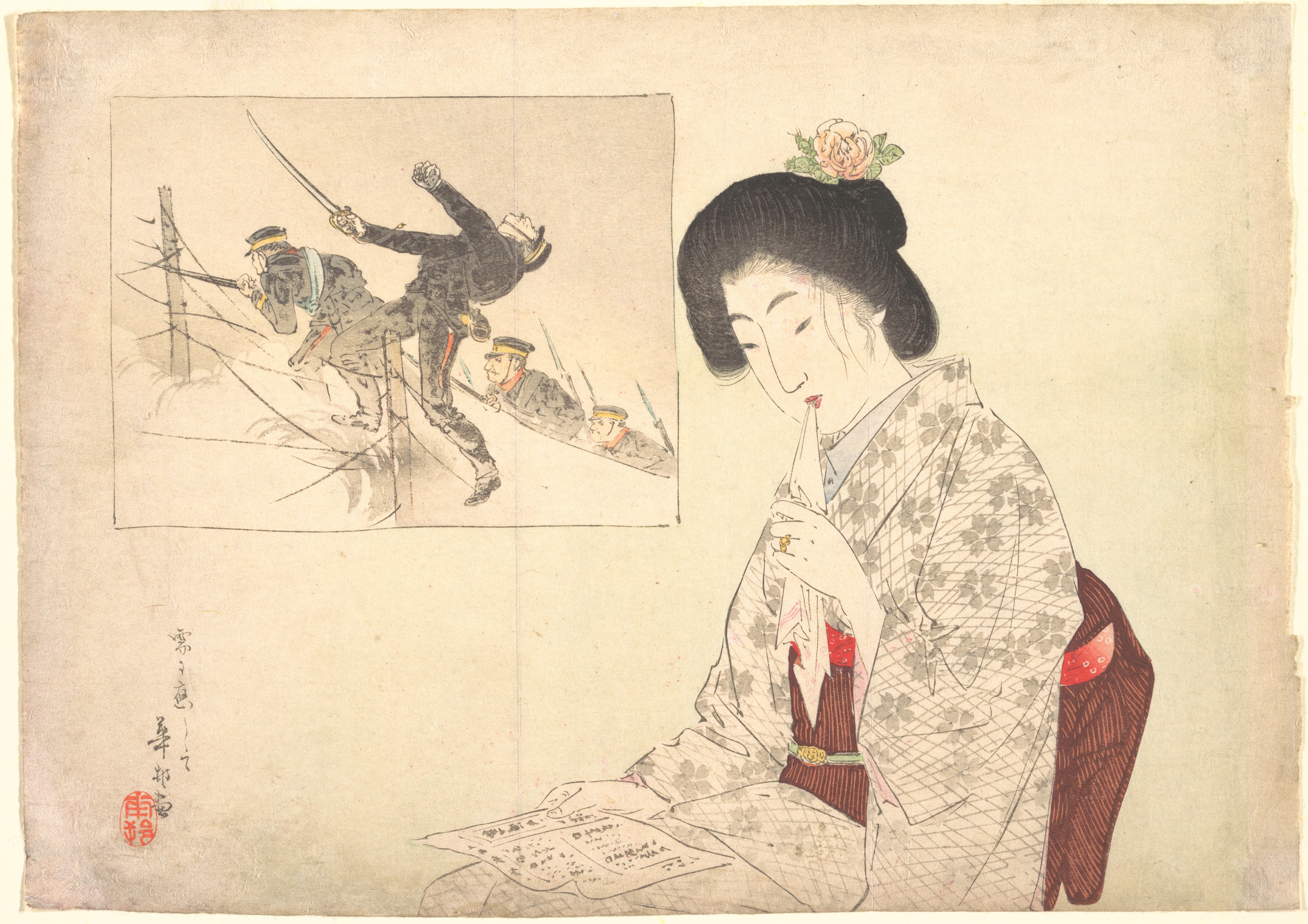
Autumn Shower, Illustration from Bungei Kurabu (Literary Club)
1904
Frontispiece; woodblock print; ink and color on paper
Frequently Asked Questions
Battledore was created by Suzuki Kason (鈴木華邨) in 1911.