Biography
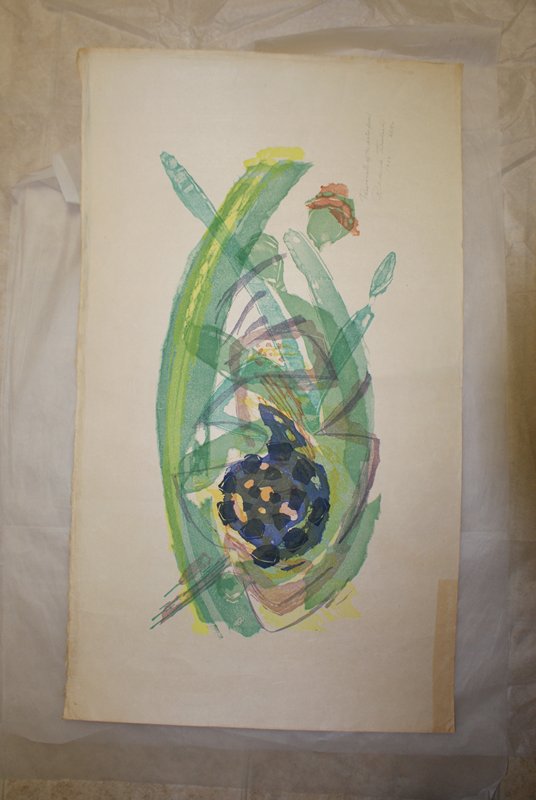
Takahashi Rikio (高橋力雄, 1917–1998) was a Japanese abstract printmaker and the son of a Nihonga painter who became an important pupil of the seminal modern printmaker Onchi Kōshirō, studying under him from around 1949. He specialized in depicting the forms of Japanese gardens, especially the classic gardens of Kyoto, through a distinctive abstract vocabulary that made him a pioneer of non-representational woodblock printing during Japan's postwar internationalization. During time spent in the United States in the mid-1960s he studied at the Chouinard Art Institute in Los Angeles and worked with the master printer Ken Tyler at the Gemini G.E.L. print studio.
Key Facts
- Active Period
- 1917–1998
- Nationality
- 🇯🇵Japan
- Movement
- Sōsaku-hanga
- Works Indexed
- 53
Frequently Asked Questions
Takahashi Rikio (高橋力雄, 1917–1998) was a Japanese abstract printmaker and the son of a Nihonga painter who became an important pupil of the seminal modern printmaker Onchi Kōshirō, studying under him from around 1949. He specialized in depicting the forms of Japanese gardens, especially the classic gardens of Kyoto, through a distinctive abstract vocabulary that made him a pioneer of non-representational woodblock printing during Japan's postwar internationalization. During time spent in the United States in the mid-1960s he studied at the Chouinard Art Institute in Los Angeles and worked with the master printer Ken Tyler at the Gemini G.E.L. print studio.
Takahashi Rikio was active from 1917 to 1998. They were associated with the Sōsaku-hanga movement.
Takahashi Rikio's work was shaped by the Sōsaku-hanga tradition in Japanese woodblock printmaking. Sōsaku-hanga: ## What is sōsaku-hanga? Sōsaku-hanga (創作版画, "creative prints") was a twentieth-century Japanese print movement defined by a single commitment: the artist must design, carve, and print every work alone.
Takahashi Rikio's prints frequently feature abstract, landscapes, urban scenes, summer, seascapes, temples & shrines.
Original prints by Takahashi Rikio can be found in collections including Art Institute of Chicago, Minneapolis Institute of Art, British Museum, japancoll.