Biography
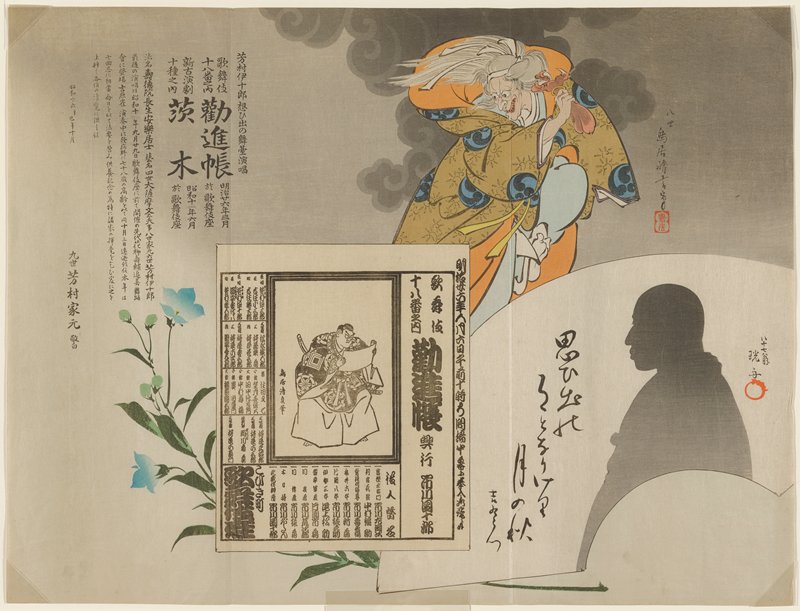
Torii Kotondo (鳥居言人, 1900–1976) was a shin-hanga artist who produced some of the most refined and admired bijin-ga (pictures of beautiful women) of the twentieth century, despite an extraordinarily small print output. Born Saito Akira in Tokyo in 1900, he was adopted into the illustrious Torii school of kabuki poster painters and became the eighth-generation head of the Torii lineage, assuming the professional name Torii Kiyotada V for his kabuki work. His woodblock prints, designed under the separate name Kotondo, represent an entirely distinct facet of his artistic career.
Kotondo studied nihonga painting under Kiyokata Kaburagi, the same master who trained Ito Shinsui and other leading shin-hanga figure artists. Under Kiyokata's guidance he absorbed the traditions of ukiyo-e bijin-ga and developed the exacting draftsmanship that would define his prints. Between 1929 and 1933 he designed just twenty-one woodblock prints in all, issued by the publishers Sakai-Kawaguchi, Kawaguchi, and later Ikeda. These few designs — collectively known as his bijin-ga series — achieved a level of elegance that places them among the supreme achievements of the shin-hanga movement.
The prints depict women in intimate, quiet moments: applying makeup before a mirror, combing wet hair after a bath, adjusting a kimono collar, sheltering under an umbrella in falling snow. Kesho (Makeup), Kami (Hair Combing), and Kuchibeni (Rouge) are among the most celebrated. Kotondo rendered kimono textiles with painstaking attention to pattern and weave, and his treatment of skin — achieved through multiple impressions of dilute pigment on fine hosho paper — produced a luminous, porcelain smoothness. The printing, executed by skilled block-cutters and printers, built up the layered color and textile detail through many separate impressions.
After 1933, Kotondo ceased designing woodblock prints entirely, devoting himself to his work for the Torii school, of which he became the eighth-generation head in 1941. He spent the remaining decades of his career painting kabuki signboards, theatrical programs, and traditional Torii-school billboards for the Kabuki-za theater in Tokyo.
Kotondo died in 1976. Because he produced so few print designs, and because wartime destruction and the passage of time have thinned the number of surviving impressions, his bijin-ga are now rare. His work is held by the Museum of Fine Arts, Boston, the Honolulu Museum of Art, and the British Museum, among other collections.
Key Facts
- Active Period
- 1900–1976
- Nationality
- 🇯🇵Japan
- Movement
- Shin-hanga
- Works Indexed
- 129
Frequently Asked Questions
Torii Kotondo (鳥居言人, 1900–1976) was a shin-hanga artist who produced some of the most refined and admired bijin-ga (pictures of beautiful women) of the twentieth century, despite an extraordinarily small print output. Born Saito Akira in Tokyo in 1900, he was adopted into the illustrious Torii school of kabuki poster painters and became the eighth-generation head of the Torii lineage, assuming the professional name Torii Kiyotada V for his kabuki work. His woodblock prints, designed under the separate name Kotondo, represent an entirely distinct facet of his artistic career.
Torii Kotondo was active from 1900 to 1976. They were associated with the Shin-hanga movement.
Torii Kotondo's work was shaped by the Shin-hanga tradition in Japanese woodblock printmaking. Shin-hanga: ## What is Shin-hanga? Shin-hanga (新版画), literally "new prints," is the early twentieth-century revival of the collaborative Japanese woodblock workshop, organized between roughly 1915 and 1960 by the Tokyo publisher Watanabe Shōzaburō (1885–1962) and a handful of competing houses.
Torii Kotondo's prints frequently feature bijin-ga, figures, portraits, bokashi, daily life, snow scenes.
Original prints by Torii Kotondo can be found in collections including Japanese Art Open Database, Ohmi Gallery, The Art of Japan, University of Wisconsin-Madison.