Biography
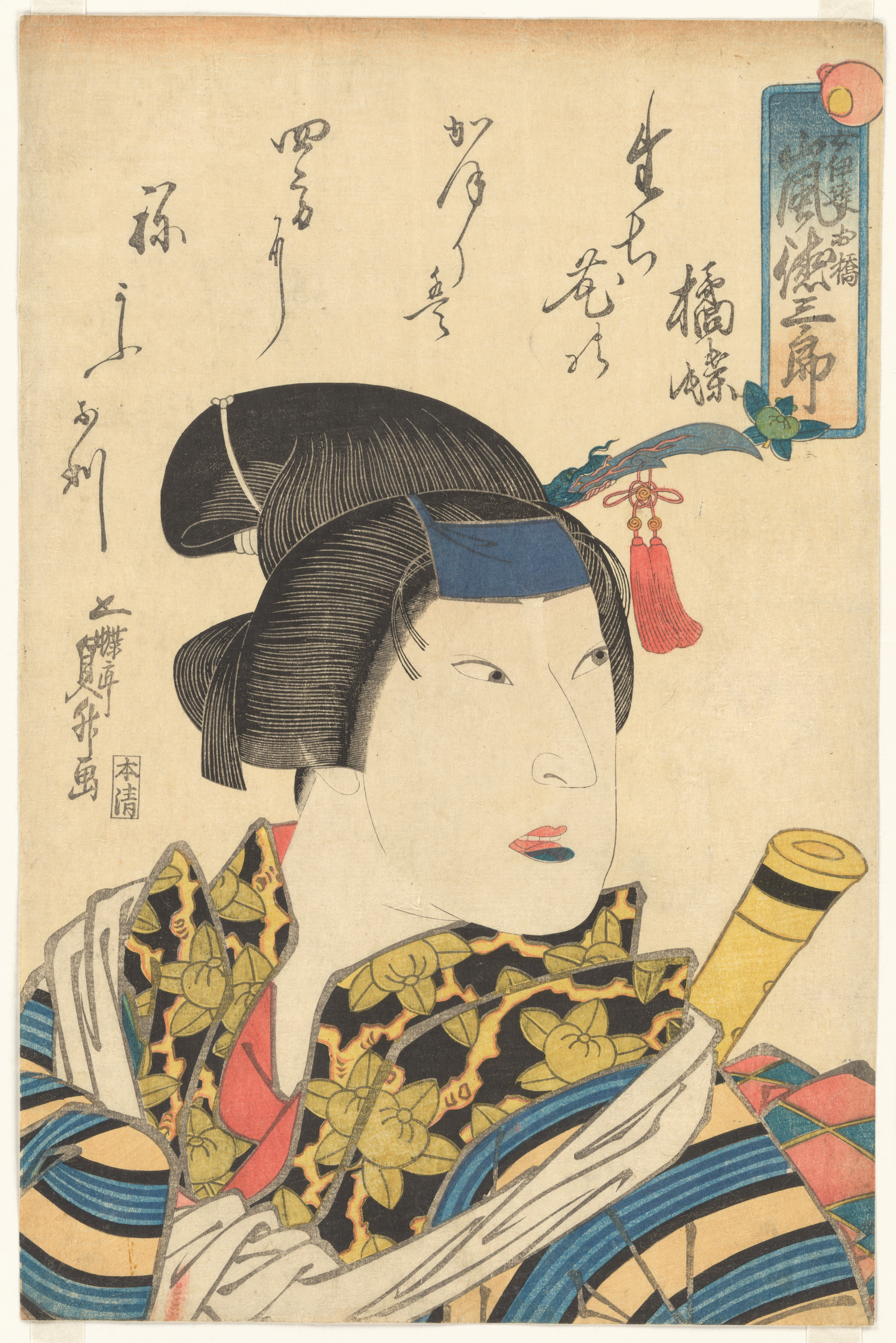
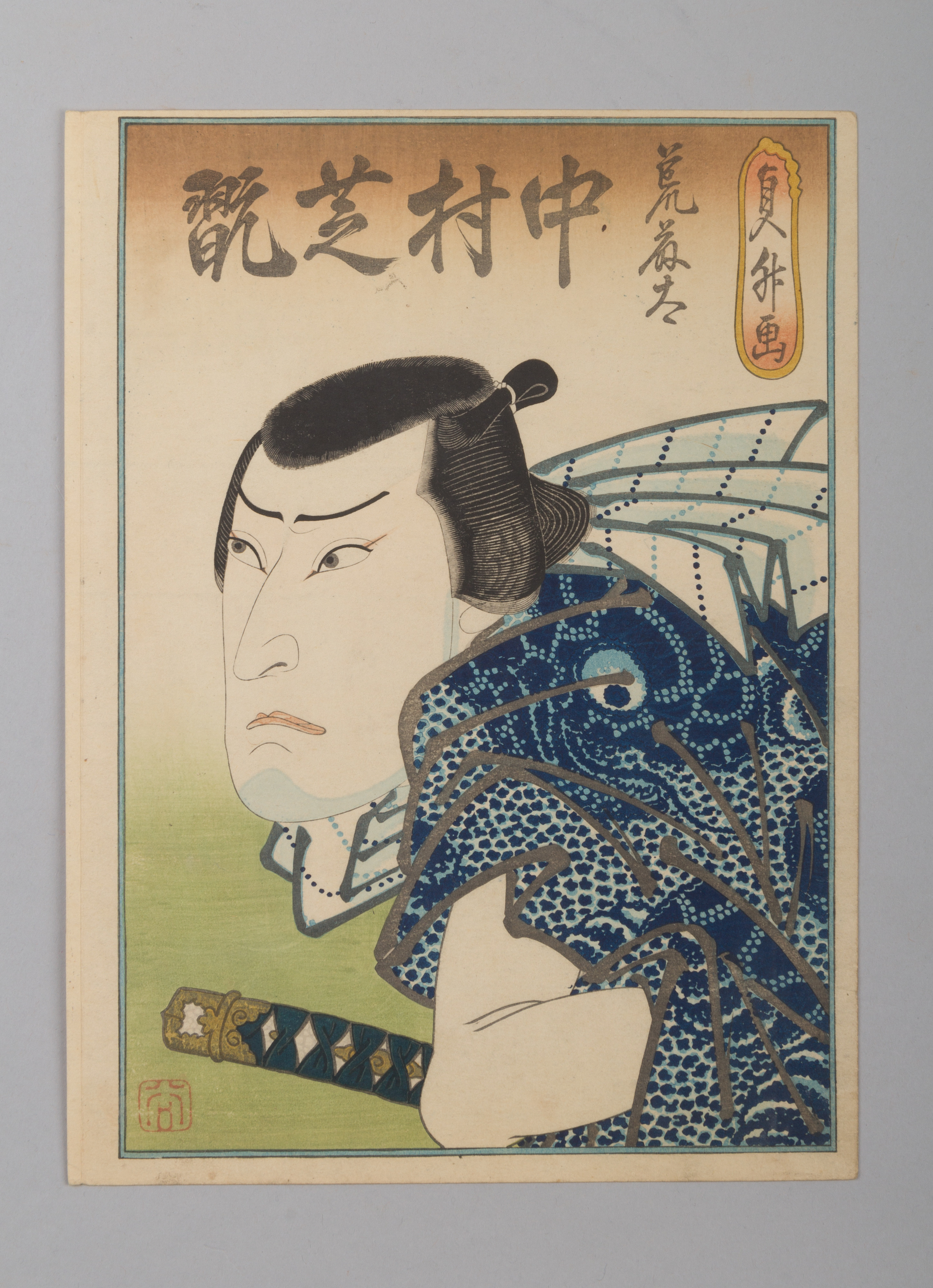
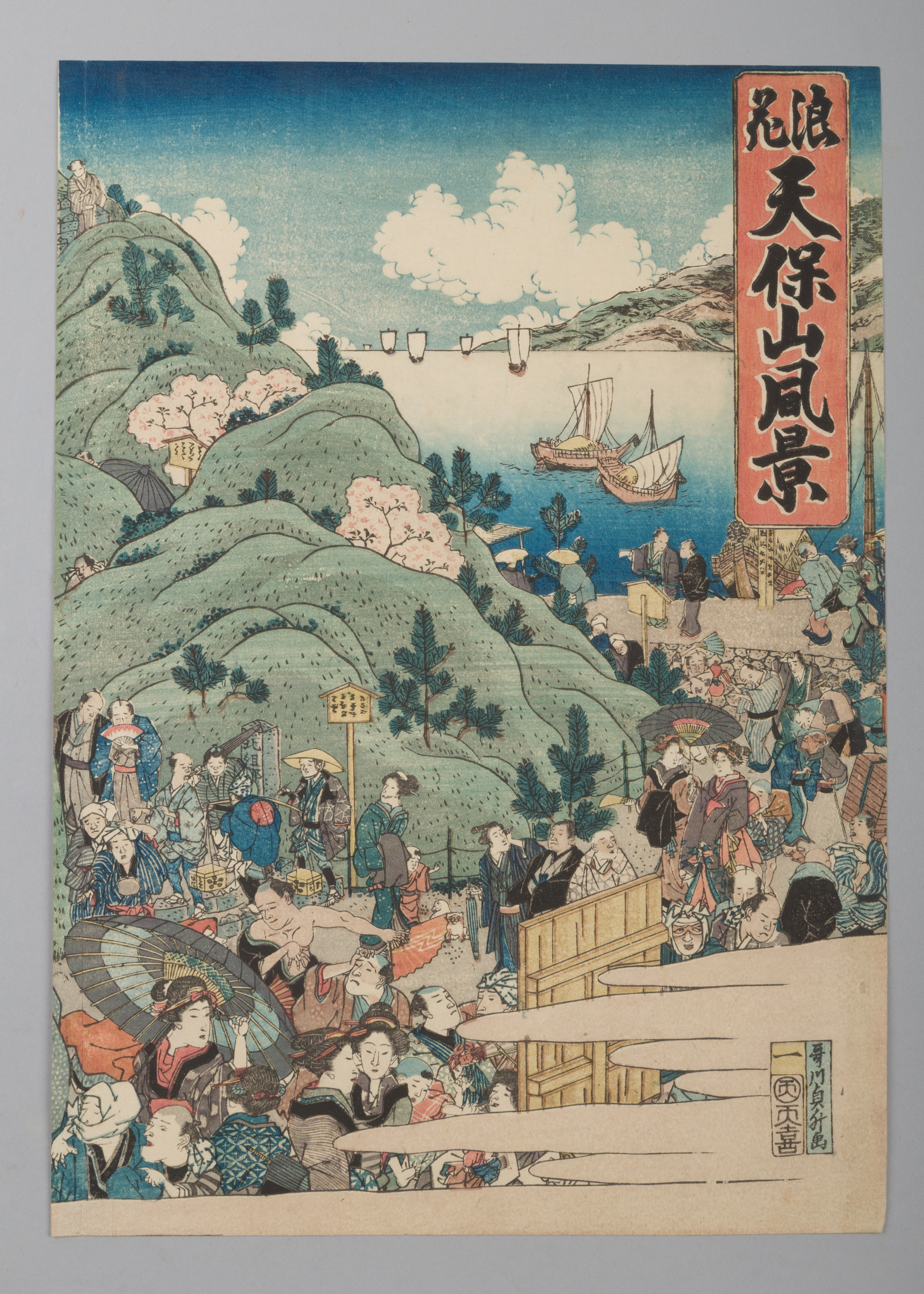
Utagawa Sadamasu (歌川貞升, active c. 1830–1853), who from 1848 officially adopted the name Kunimasu (国升 or 國升), was one of the central designers of Osaka kamigata-e in the late Bakumatsu period and a pivotal figure in the regional kabuki print industry of Japan's second great city. Working extensively in the chūban format that came to define the Osaka school, Sadamasu specialized in yakusha-e — portraits of the kabuki actors who performed at the city's celebrated theatres — and produced a body of work that combined the precise observational portraiture of the Osaka idiom with a refined sense of color and decorative finish that distinguished his designs from those of his Edo contemporaries. The exact dates of his birth and death are not recorded in surviving documentation, but his career as a print designer can be dated from his earliest signed work in early 1830 through the early 1850s, after which he appears to have abandoned the woodblock medium for painting in the Shijō school style.
His personal name was Kaneya (or Kanaya) Wasaburō (金屋和三郎), and he maintained a studio called Kanaya in Osaka. Between 1828 and 1830 he travelled to Edo to study print design under Utagawa Kunisada (later Toyokuni III), the dominant ukiyo-e designer of his generation and head of the Utagawa school in the capital. This training under Kunisada placed Sadamasu firmly within the Utagawa lineage and gave him access to the most advanced figural and color techniques of the period. He returned to Osaka and from the early 1830s produced a steady stream of actor prints documenting the city's kabuki productions, often working with the leading Osaka publishers of the day — among them the house of Tenmaya Kihei, which operated under the firm name Kinkadō and issued designs by Sadamasu alongside other major kamigata-e artists. His signature, which in the early years typically read "Gochōtei Sadamasu ga" ("drawn by Gochōtei Sadamasu"), places him among a small group of professional yakusha-e specialists who supplied the Osaka theatre audience with portraits of their favourite performers.
Osaka kamigata-e developed along lines different from the better-known Edo school of ukiyo-e: prints were often smaller in format (the chūban rather than the ōban), produced in smaller editions, and aimed at a connoisseur audience of devoted kabuki fans rather than the broad commercial market of Edo. The kamigata-e idiom favoured careful attention to the physical likeness and signature mannerisms of individual actors, lavish use of decorative techniques including mica, burnishing, embossing, and metallic pigments, and a more restrained palette than many Edo prints. Sadamasu worked within all these conventions and was praised by later critics for his fine sense of color and his palette of intense hues set against subtle contrasts. He is credited above all with helping to establish the close-up chūban actor portrait — a size in which he began experimenting around 1840 — as a dominant Osaka format, a role of considerable significance in the history of the regional tradition.
Sadamasu was a financially independent man — Sekine Shisei's 1899 biography describes him as a moneyed property owner — and he used his resources to actively promote ukiyo-e production in Osaka through patronage, collaboration with publishers, and the training of younger artists, eventually opening his own school of print design. His pupils included Hasegawa Sadanobu I (1809–1879), who became one of the leading Osaka designers of the next generation and carried the kamigata-e tradition into the Meiji era, as well as Utagawa (Konishi) Hirosada. Through these pupils and his innovations in the chūban actor portrait, Sadamasu's influence runs through the later flowering of Osaka prints — the work of the following generation of designers, such as Utagawa Yoshitaki, who collectively defined kamigata-e in the second half of the nineteenth century.
He had begun signing his prints Kunimasu by about 1846 — a tribute to Kunisada, who had assumed the coveted name Toyokuni (as Toyokuni III) in 1844 — although the change could not be made official until 1848. The transitional signature "Gochōtei Sadamasu aratame Kunimasu" ("Gochōtei Sadamasu, changed to Kunimasu") marks this period, and from the late 1840s into the early 1850s he worked predominantly as Kunimasu. Around 1852 he ceased to design woodblock prints and turned to painting in the Maruyama-Shijō manner, a shift that came as the woodblock industry itself entered its long decline. His prints are preserved today in major public collections, including the Metropolitan Museum of Art, the British Museum, and the Rijksmuseum, as well as the Kamigata Ukiyo-e Museum in Osaka — the only museum in the world devoted exclusively to the regional school of which Sadamasu/Kunimasu was a defining master.
Key Facts
Frequently Asked Questions
Utagawa Sadamasu (歌川貞升, active c. 1830–1853), who from 1848 officially adopted the name Kunimasu (国升 or 國升), was one of the central designers of Osaka kamigata-e in the late Bakumatsu period and a pivotal figure in the regional kabuki print industry of Japan's second great city. Working extensively in the chūban format that came to define the Osaka school, Sadamasu specialized in yakusha-e — portraits of the kabuki actors who performed at the city's celebrated theatres — and produced a body of work that combined the precise observational portraiture of the Osaka idiom with a refined sense of color and decorative finish that distinguished his designs from those of his Edo contemporaries. The exact dates of his birth and death are not recorded in surviving documentation, but his career as a print designer can be dated from his earliest signed work in early 1830 through the early 1850s, after which he appears to have abandoned the woodblock medium for painting in the Shijō school style.
Utagawa Sadamasu's work was shaped by the Ukiyo-e tradition in Japanese woodblock printmaking. Ukiyo-e: ## What is ukiyo-e? Ukiyo-e ([浮世絵](/glossary/ukiyo-e)) — literally "pictures of the floating world" — is the Edo-period Japanese print and painting tradition that flourished from roughly 1660 to 1868, depicting the pleasures of urban life in Edo (modern Tokyo): courtesans, kabuki actors, sumo wrestlers, famous landscapes, and seasonal beauties.
Utagawa Sadamasu's prints frequently feature fish.
Original prints by Utagawa Sadamasu can be found in collections including Metropolitan Museum of Art.