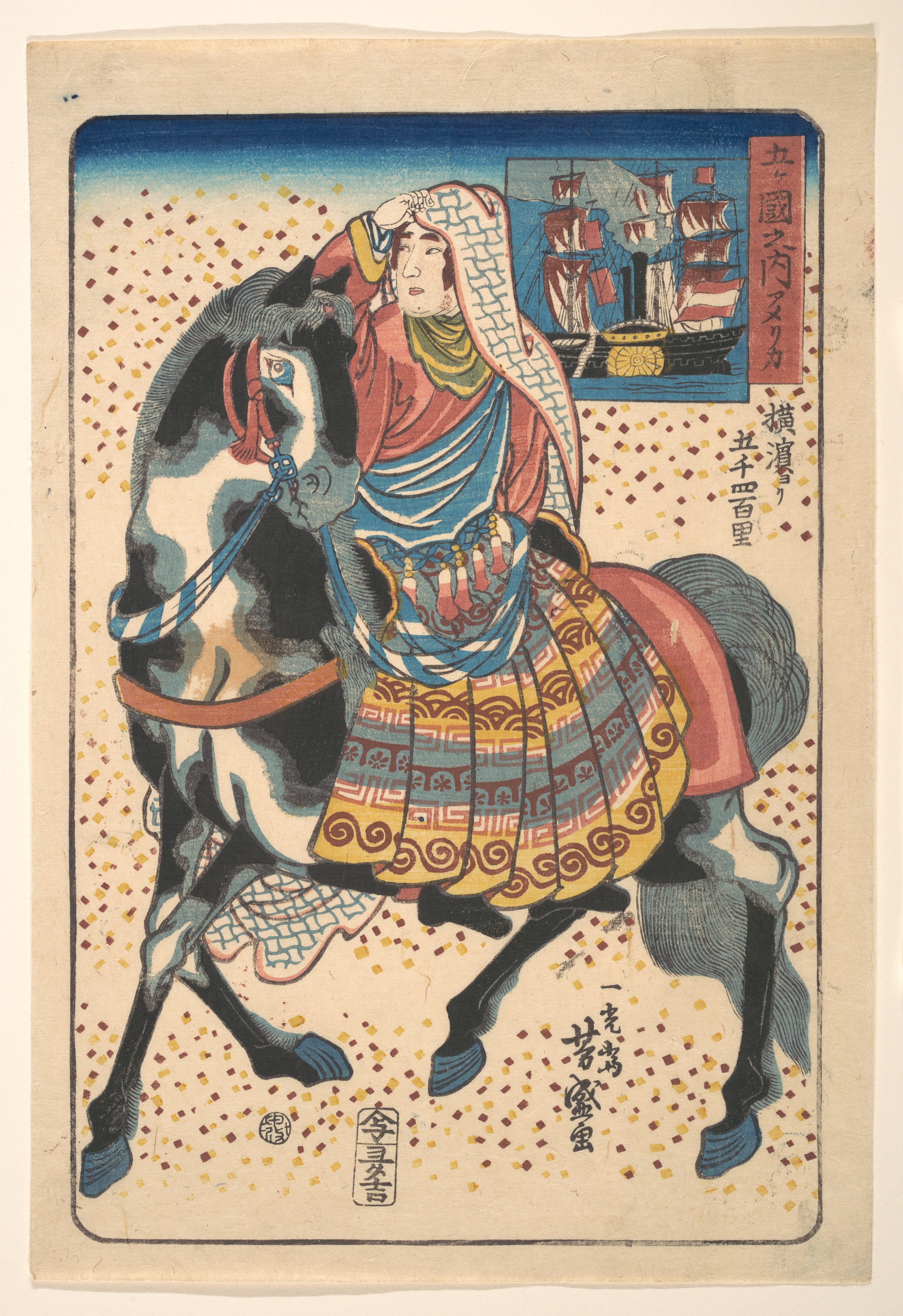
Biography
Utagawa Yoshimori (歌川芳盛, 1830–1884), born Taguchi Sakuzō and also known by the gō Ikkōsai, was a Japanese woodblock print designer of the late Edo and early Meiji periods whose career bridged the warrior-print (musha-e) tradition of his teacher Utagawa Kuniyoshi, the documentary spectacle of Bakumatsu Yokohama-e, and the new world of Meiji journalistic printing that followed the Restoration of 1868. With fellow Kuniyoshi pupils Yoshitora, Yoshikazu, Yoshitoshi, Yoshiiku, and Yoshifuji, he belongs to the remarkable last generation of the Utagawa school — the artists who carried Edo-period print culture across the threshold into modern Japan.
Born in Edo in 1830, Yoshimori entered the studio of Utagawa Kuniyoshi (1797–1861) in his teens or early twenties, receiving the Yoshi character from his master's name in the standard Utagawa-school convention. Kuniyoshi was at the height of his powers as the principal designer of warrior prints in the city, and his studio produced a remarkable group of pupils whose names — all beginning with Yoshi — would dominate Edo print publishing for the next two decades. Yoshimori's early work includes warrior prints in the Kuniyoshi tradition: heroic scenes from the Taiheiki, the Genpei wars, and the legendary repertoire of combat his teacher had made his own. The rich palette, energetic figural drawing, and dense decorative armor of these early musha-e place him firmly within Kuniyoshi's stylistic orbit.
The opening of Yokohama as a treaty port in 1859, following the Harris Treaty of 1858, transformed Edo publishing. Workshops rushed to satisfy public appetite for prints of the foreigners, ships, and technologies that had arrived on Japanese shores, and the brief but intense genre of Yokohama-e flourished in the early 1860s. Yoshimori was one of its principal designers alongside Yoshikazu and Yoshitora. His Yokohama-e of around 1860 — among them A Glance at Miyosaki, Yokohama and Foreigners in Miyozaki-chō — set foreign figures against the new topography of the treaty port and offered Japanese viewers a stylized but carefully observed encyclopedia of Western dress and behavior. The Metropolitan Museum of Art preserves his Portrait of Okichi (1860), a single-sheet image associated with the story of Saitō Kichi ("Tōjin Okichi"), the woman from Shimoda assigned by the Tokugawa authorities to serve in the household of the first American consul Townsend Harris and later mythologized as a casualty of the Bakumatsu encounter with the West.
Yoshimori worked across a wide range of genres beyond the treaty-port prints. He was one of the major contributors to the 1863 series Tōkaidō meisho no uchi ("Famous Places along the Tōkaidō"), and he produced musha-e, landscape prints, bird-and-flower prints (kachō-e), actor prints, and book illustrations through the final Tokugawa years.
The Meiji Restoration of 1868 reshaped Japanese print publishing, and Yoshimori adapted by contributing to the new genre of Meiji nishiki-e shimbun — illustrated news prints that combined woodblock images with printed text to report current events for a mass urban readership. The shimbun nishiki-e of the 1870s, produced in association with papers such as the Tōkyō nichinichi and Yūbin hōchi, drew on the visual conventions of Yokohama-e but applied them to sensational stories of crime, scandal, and foreign news. His Meiji-era prints continued his engagement with Western subjects and maritime technology — the Metropolitan Museum holds his An American Sailing Ship off Arai from this period — and across his career he also designed dozens of illustrated books (ehon). Yoshimori died in 1884 (some sources give 1885).
Yoshimori's prints are today held by the Metropolitan Museum of Art, the Art Institute of Chicago, and other major museum collections of nineteenth-century Japanese prints. For students of Bakumatsu and early Meiji visual culture, he is one of the indispensable Utagawa pupils whose prints record the decades when Japan was closing the Tokugawa chapter and opening the Meiji one.
Key Facts
- Active Period
- 1830–1884
- Nationality
- 🇯🇵Japan
- Movement
- Ukiyo-e
- Works Indexed
- 9
Frequently Asked Questions
Utagawa Yoshimori (歌川芳盛, 1830–1884), born Taguchi Sakuzō and also known by the gō Ikkōsai, was a Japanese woodblock print designer of the late Edo and early Meiji periods whose career bridged the warrior-print (musha-e) tradition of his teacher Utagawa Kuniyoshi, the documentary spectacle of Bakumatsu Yokohama-e, and the new world of Meiji journalistic printing that followed the Restoration of 1868. With fellow Kuniyoshi pupils Yoshitora, Yoshikazu, Yoshitoshi, Yoshiiku, and Yoshifuji, he belongs to the remarkable last generation of the Utagawa school — the artists who carried Edo-period print culture across the threshold into modern Japan.
Utagawa Yoshimori was active from 1830 to 1884. They were associated with the Ukiyo-e movement.
Utagawa Yoshimori's work was shaped by the Ukiyo-e tradition in Japanese woodblock printmaking. Ukiyo-e: ## What is ukiyo-e? Ukiyo-e ([浮世絵](/glossary/ukiyo-e)) — literally "pictures of the floating world" — is the Edo-period Japanese print and painting tradition that flourished from roughly 1660 to 1868, depicting the pleasures of urban life in Edo (modern Tokyo): courtesans, kabuki actors, sumo wrestlers, famous landscapes, and seasonal beauties.
Original prints by Utagawa Yoshimori can be found in collections including Metropolitan Museum of Art, Art Institute of Chicago.
Woodblock Prints by Utagawa Yoshimori (9)
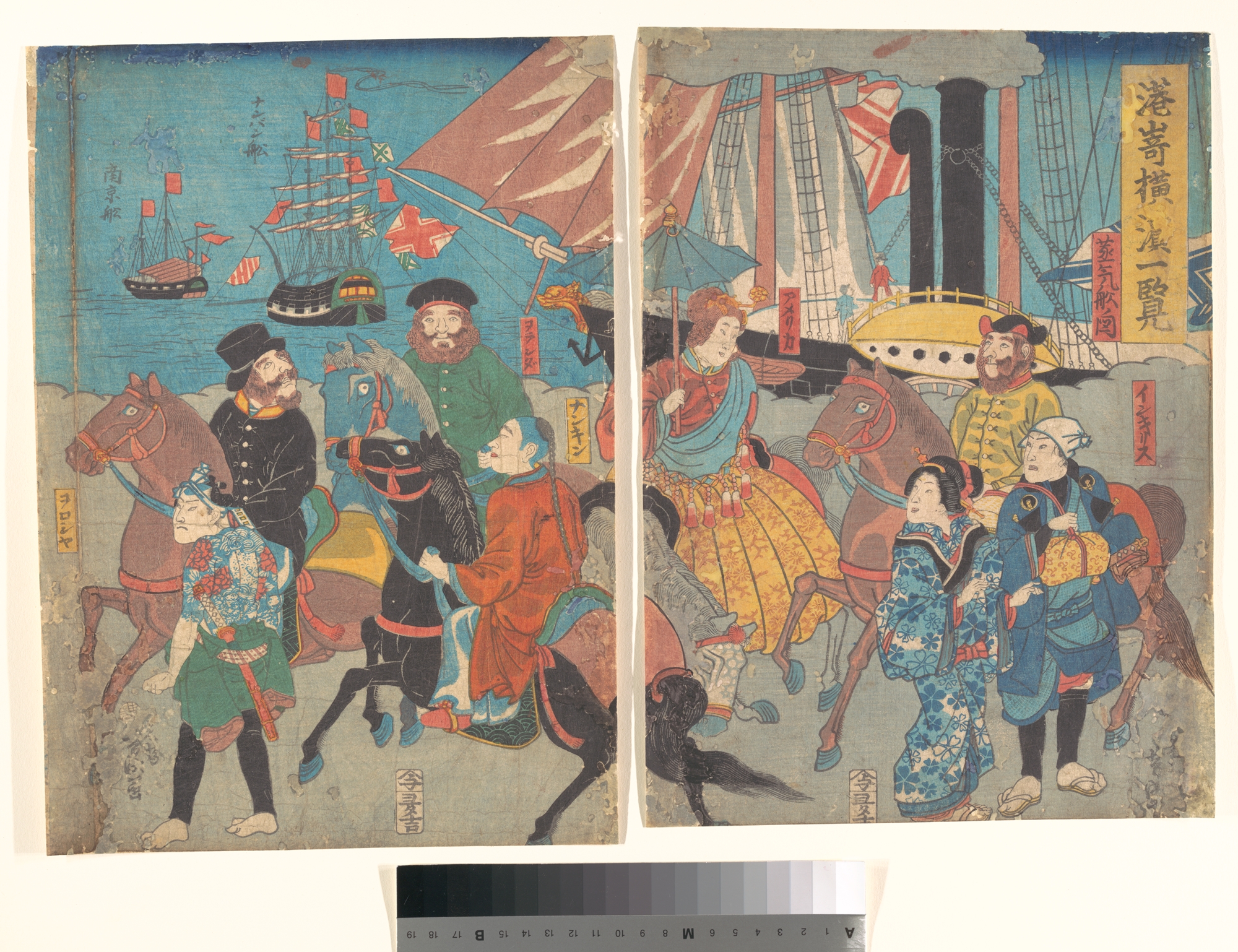
A Glance at Miyosaki, Yokohama
ca. 1860
Diptych of woodblock prints (nishiki-e); ink and color on paper
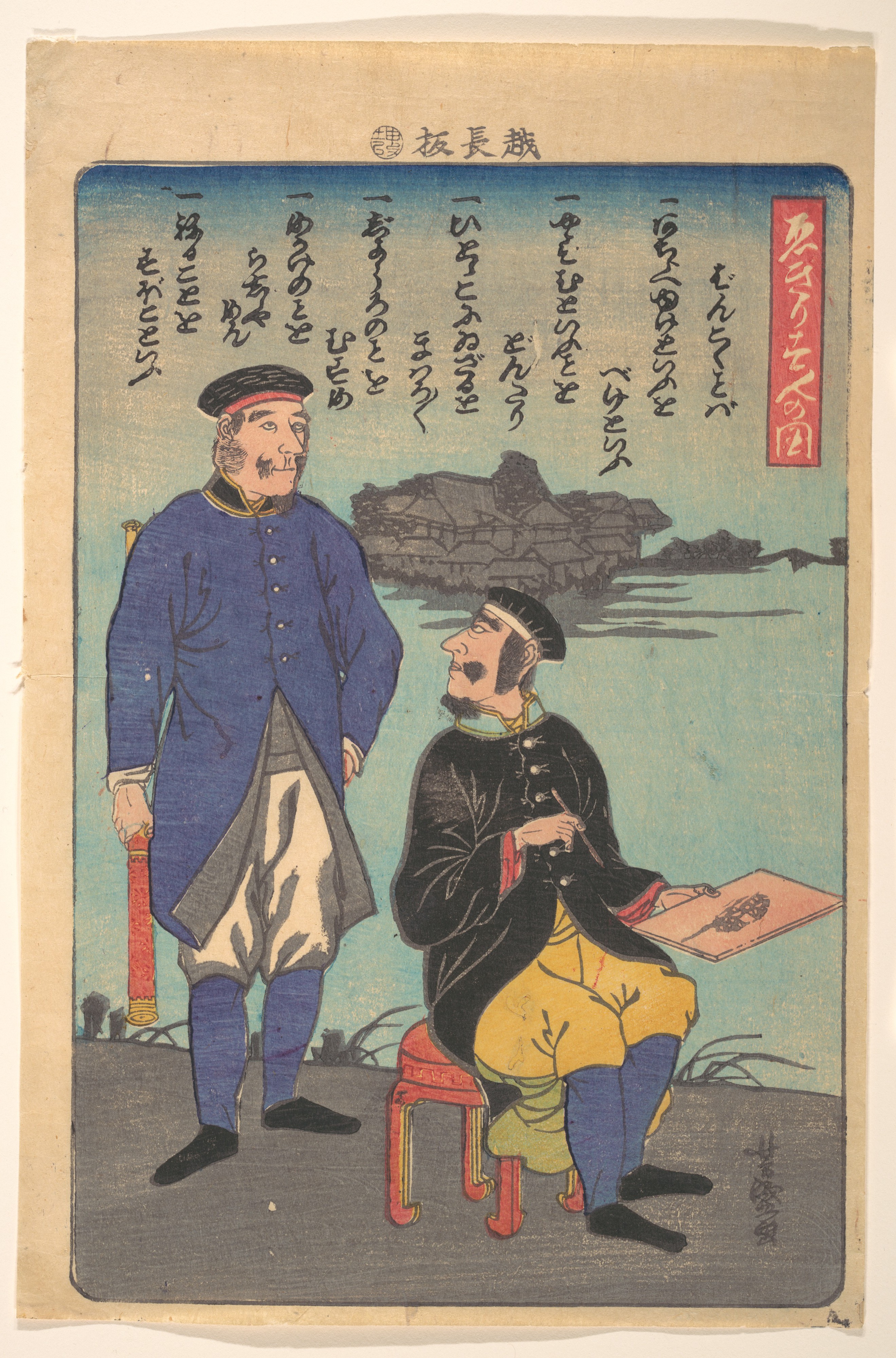
Englishmen: One Standing, One Sketching
11th month, 1860
Woodblock print (nishiki-e); ink and color on paper
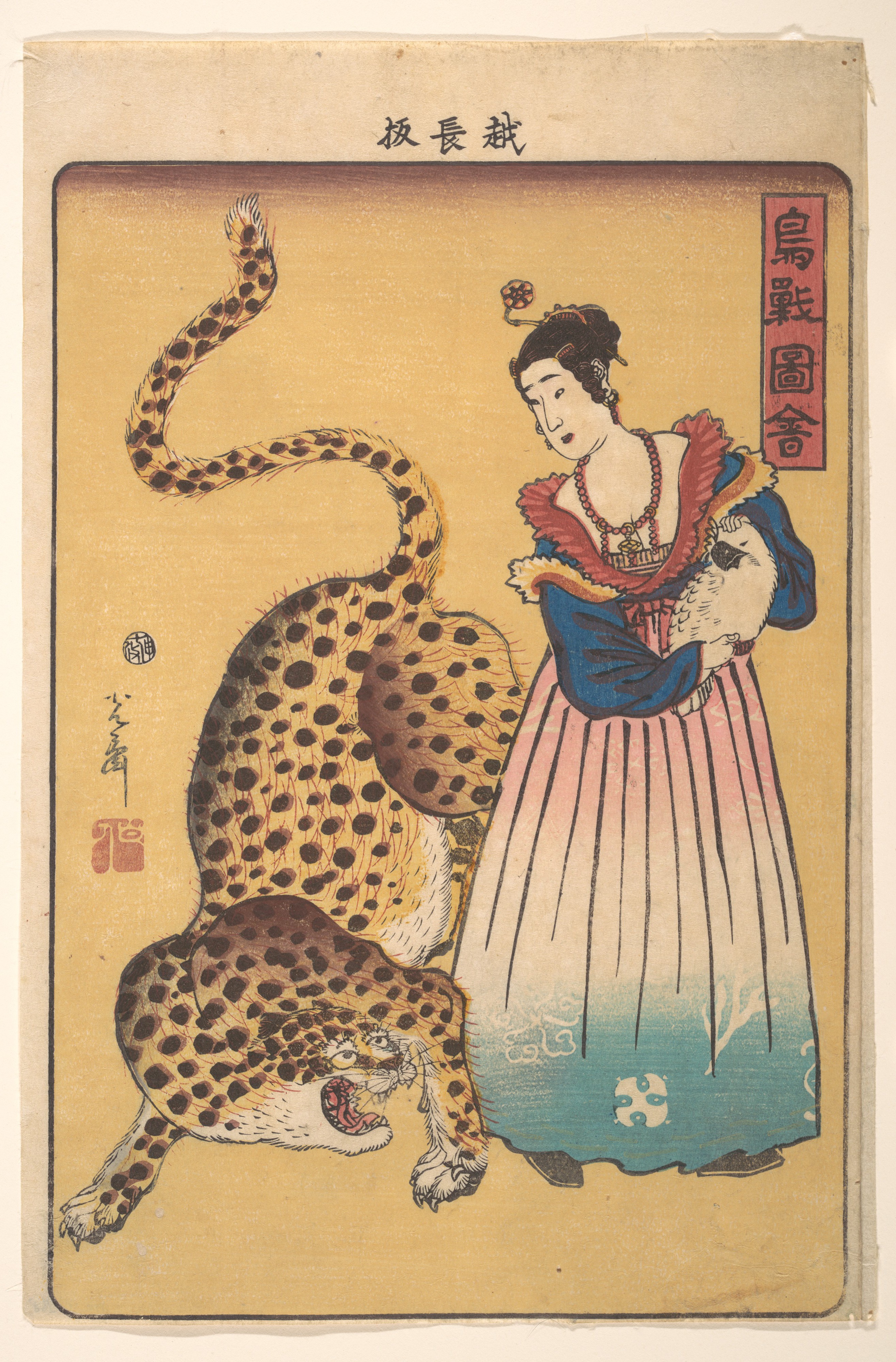
Dutchwoman with Leopard, from the series Pictures of Birds and Animals (Chōjū zue)
鳥獣図絵
7th month, 1860
Woodblock print (nishiki-e); ink and color on paper

Foreigners in Miyozaki-chō
11th month, 1860
Woodblock print (nishiki-e); ink and color on paper
"America," from the series Five Nations
1860
Woodblock print (nishiki-e); ink and color on paper; vertical ōban

Memorial Portrait of the Actor Kataoka Nizaemon VIII
1862
Color woodblock print (nishiki-e); ink and color on paper; ōban
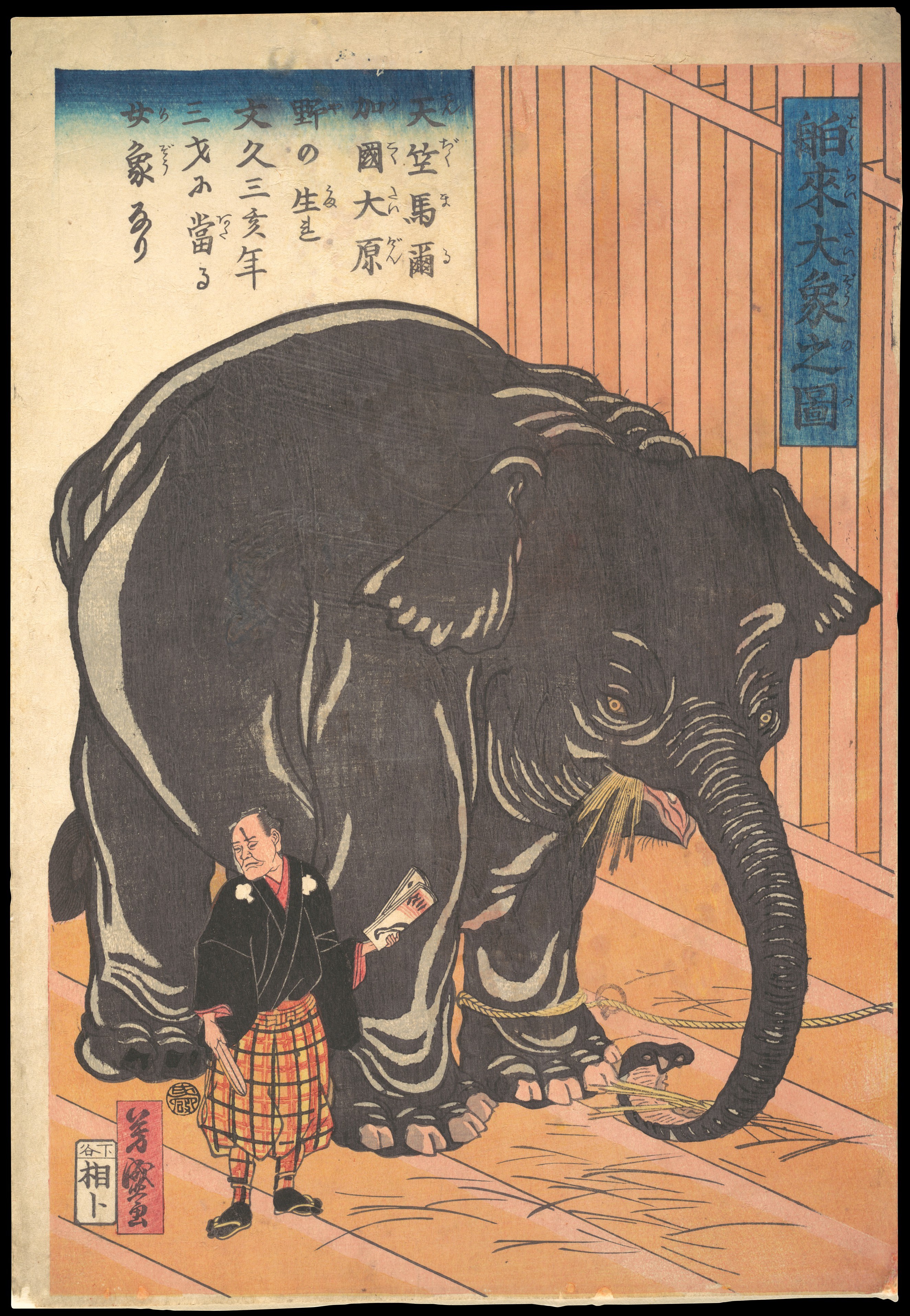
View of the Large Imported Elephant
1863 (Bunkyū 3, 4th month)
Woodblock print (nishiki-e); ink and color on paper
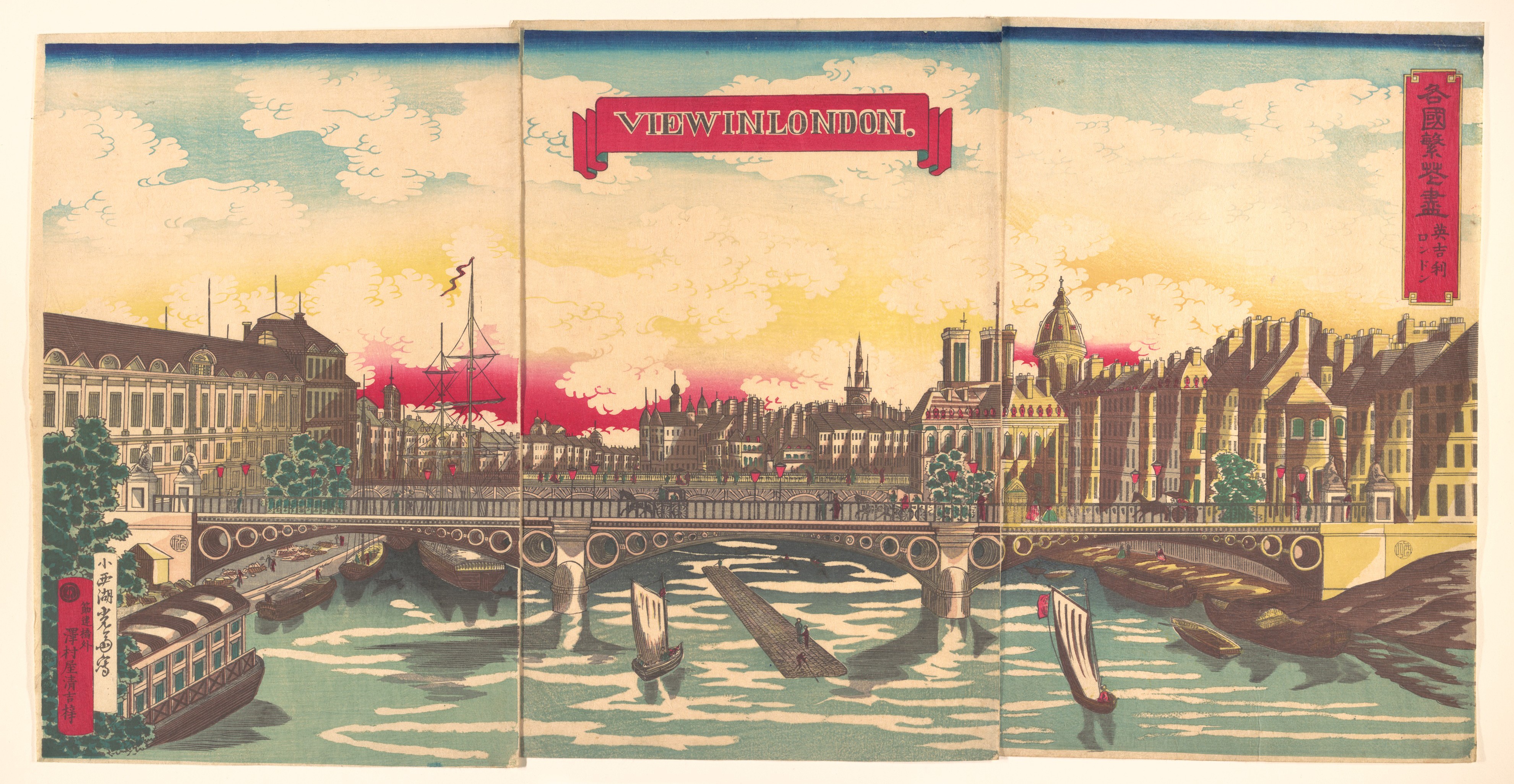
"View in London," from the series The Prosperity of Countries: London, England
September 1872
Triptych of woodblock prints (nishiki-e); ink and color on paper
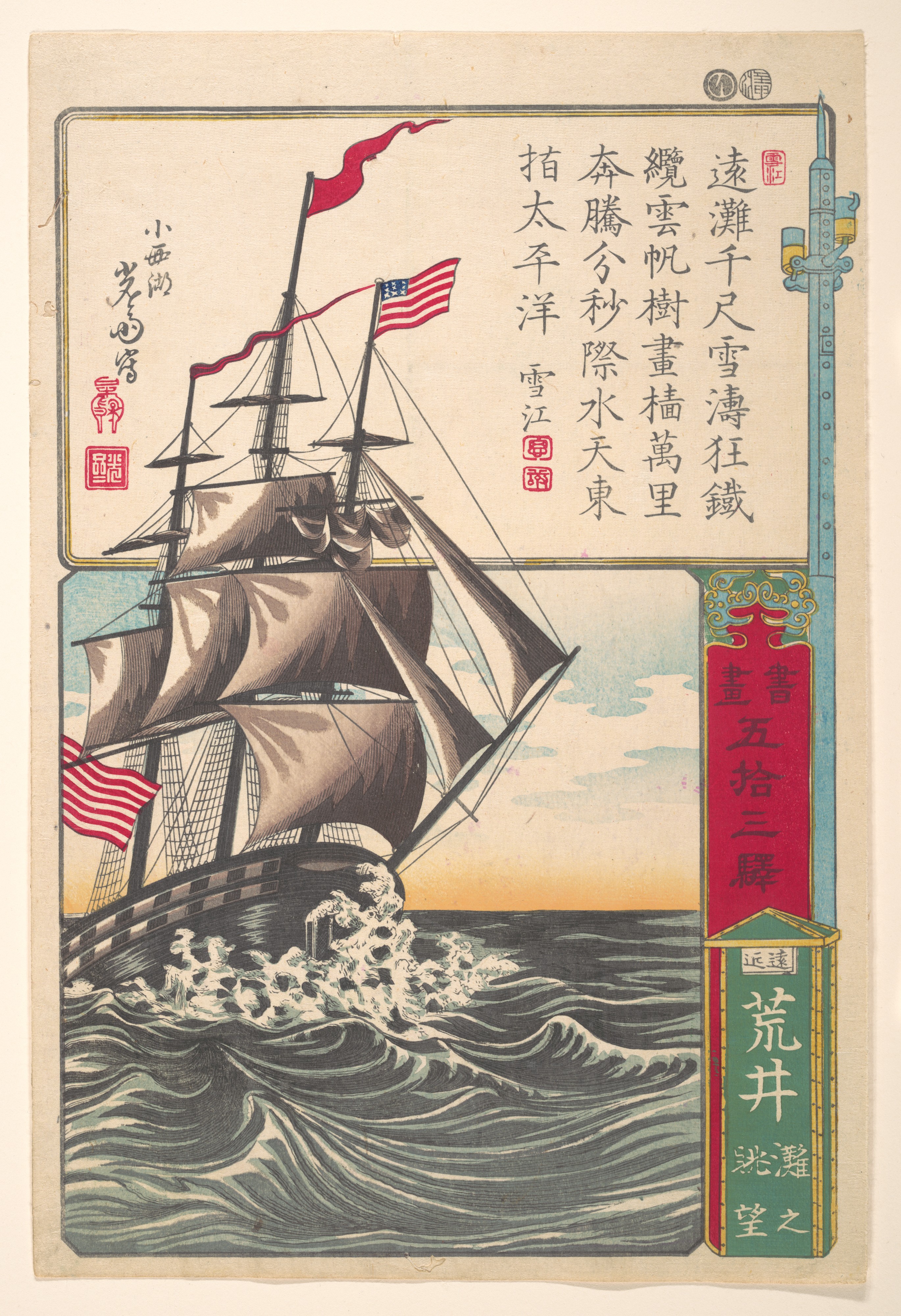
An American Sailing Ship off Arai
October 1872
Woodblock print (nishiki-e); ink and color on paper