Biography
Utagawa Yoshiume (歌川芳梅, 1819-1879) was a nineteenth-century Japanese woodblock print designer who worked principally in the Osaka kamigata-e tradition during the late Edo and early Meiji periods. He was a pupil of Utagawa Kuniyoshi (1797-1861), the great Edo master celebrated for warrior prints, comic figures, and inventive series of musha-e (military pictures), and he carried Kuniyoshi's lively manner into the distinctive idiom of Osaka prints during the middle decades of the nineteenth century.
The Utagawa school had by Yoshiume's lifetime become the dominant lineage of Japanese print designers, splitting into branches centered on Edo (modern Tokyo) and on Osaka, Japan's second great urban centre and the heart of the kamigata cultural region. Edo prints, popularized internationally by figures such as Hokusai and Hiroshige, tended toward the larger ōban format and the mass tourist and entertainment markets of the shogunal capital. Osaka prints, by contrast, were produced for a smaller, more specialized audience of devoted kabuki fans and theatre clubs and were issued in the smaller chūban format. They favoured close attention to actor likenesses, lavish decorative techniques such as mica (kira-zuri), burnishing (tsuya-zuri), embossing, and metallic pigments, and a more restrained palette than Edo brashness. Yoshiume worked fluently within these kamigata conventions and is among the most consistently identifiable Osaka designers of the late Tokugawa years.
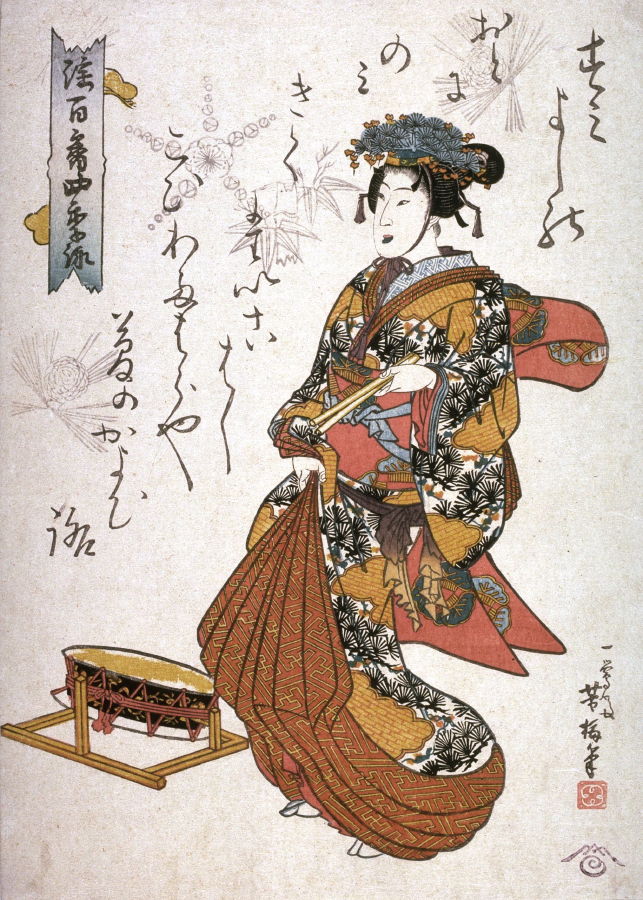
Yoshiume's documented output ranges across the standard kamigata-e subjects: yakusha-e (actor prints) of the leading Osaka kabuki performers of his day, musha-e of historical and legendary warriors drawn from Japanese and Chinese sources, mitate prints adapting earlier narratives to current theatrical casts, and series of small-format chūban sheets in the lustrous Osaka idiom. His most thoroughly documented works in Western collections include a group of related chūban prints dated to around the early 1850s now held by the Fine Arts Museums of San Francisco (Legion of Honor), which together comprise a sustained Osaka-style series in which Yoshiume treats Nō, Kagura, and other classical subjects in the meticulous decorative manner characteristic of mature kamigata-e. The same Legion of Honor holding includes prints titled "Kasuga ryūjin" (the dragon-god of Kasuga, drawn from the Nō play of that name), "Hida no Takumi" (the legendary master carpenter Hida no Takumi), "Kagura" (sacred Shinto dance), "Kaminari" (the thunder god), and a dancer standing beside a drum, all Osaka-style chūban sheets in the mature kamigata manner.
Yoshiume also produced warrior portraits in the Utagawa-school musha-e tradition founded by Kuniyoshi, his teacher. Among these is a Library of Congress sheet from the 1860s depicting Zhang Fei (張飛, Japanese Chōhi), one of the three sworn brothers of the Chinese Three Kingdoms narrative whose story had been popularized in Japan through Edo-period adaptations of the Sanguozhi yanyi (The Romance of the Three Kingdoms). The print follows the convention established by Kuniyoshi for full-length warrior portraits, depicting Zhang Fei carrying a staff and walking through snow, and represents the way Yoshiume transmitted his master's heroic idiom into the Osaka kamigata-e context.
Yoshiume continued to produce prints through the Bakumatsu years and into the early Meiji period, dying in 1879 just as the kamigata-e tradition began its terminal decline under the pressures of photography, lithography, and the centralization of Japanese visual culture in Tokyo. His prints today are held by the Fine Arts Museums of San Francisco (Legion of Honor), the Library of Congress, the Edo-Tokyo Museum, and other institutions with substantial holdings of Osaka prints. For collectors and scholars of kamigata-e and of the Kuniyoshi lineage, Utagawa Yoshiume is one of the consistent secondary figures whose work documents the spread of the Utagawa school's heroic and theatrical idiom from Edo into Osaka and its synthesis with the older traditions of kamigata woodblock printing.
Key Facts
- Active Period
- 1819–1879
- Nationality
- 🇯🇵Japan
- Movement
- Ukiyo-e
- Works Indexed
- 5
Frequently Asked Questions
Utagawa Yoshiume (歌川芳梅, 1819-1879) was a nineteenth-century Japanese woodblock print designer who worked principally in the Osaka kamigata-e tradition during the late Edo and early Meiji periods. He was a pupil of Utagawa Kuniyoshi (1797-1861), the great Edo master celebrated for warrior prints, comic figures, and inventive series of musha-e (military pictures), and he carried Kuniyoshi's lively manner into the distinctive idiom of Osaka prints during the middle decades of the nineteenth century.
Utagawa Yoshiume was active from 1819 to 1879. They were associated with the Ukiyo-e movement.
Utagawa Yoshiume's work was shaped by the Ukiyo-e tradition in Japanese woodblock printmaking. Ukiyo-e: ## What is ukiyo-e? Ukiyo-e ([浮世絵](/glossary/ukiyo-e)) — literally "pictures of the floating world" — is the Edo-period Japanese print and painting tradition that flourished from roughly 1660 to 1868, depicting the pleasures of urban life in Edo (modern Tokyo): courtesans, kabuki actors, sumo wrestlers, famous landscapes, and seasonal beauties.
Original prints by Utagawa Yoshiume can be found in collections including Library of Congress via ukiyo-e.org, Fine Arts Museums of San Francisco (Legion of Honor) via ukiyo-e.org.
Woodblock Prints by Utagawa Yoshiume (5)
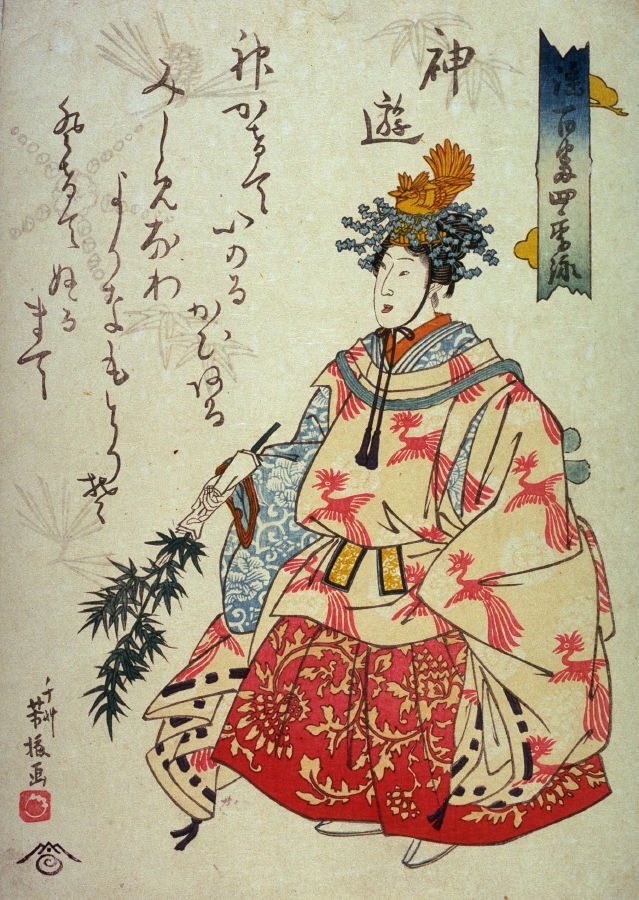
Kagura
神楽
1848–1852
Color woodblock print (nishiki-e), ink and color on paper
Dancer Standing Beside a Drum
1848–1852
Color woodblock print (nishiki-e), ink and color on paper
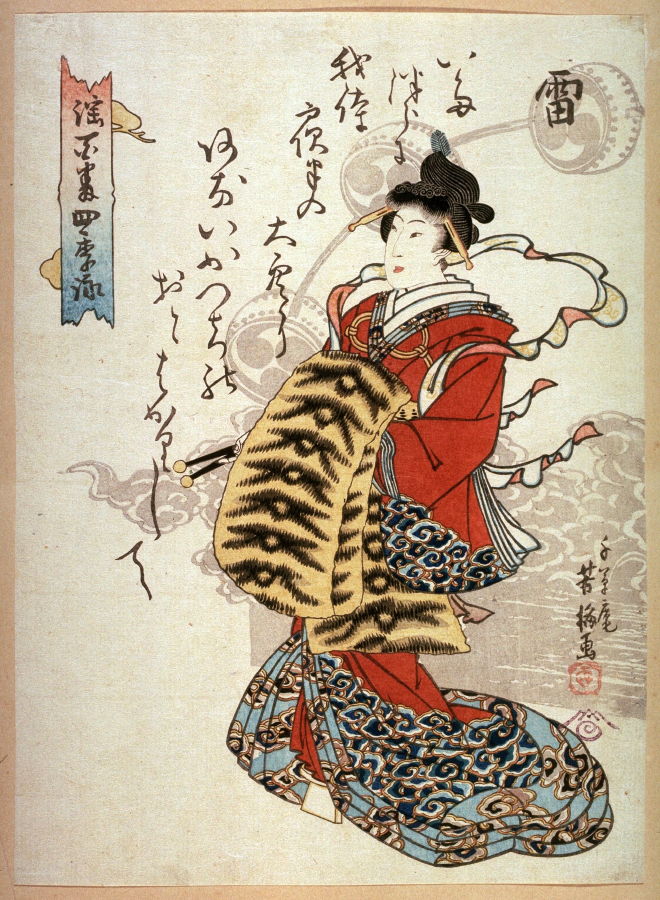
Kaminari
雷
1848–1852
Color woodblock print (nishiki-e), ink and color on paper
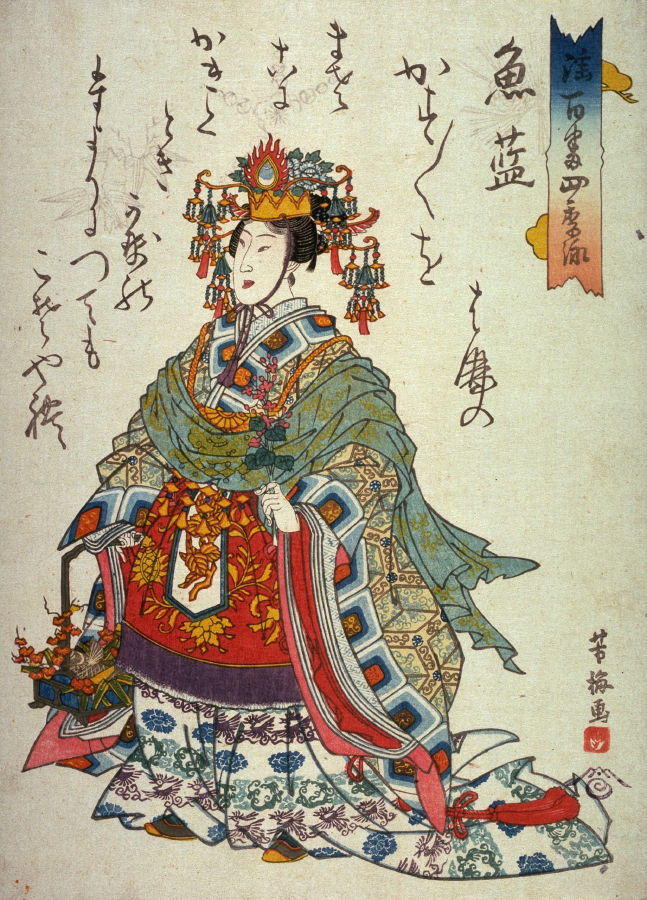
Gyeran
1848–1852
Color woodblock print (nishiki-e), ink and color on paper
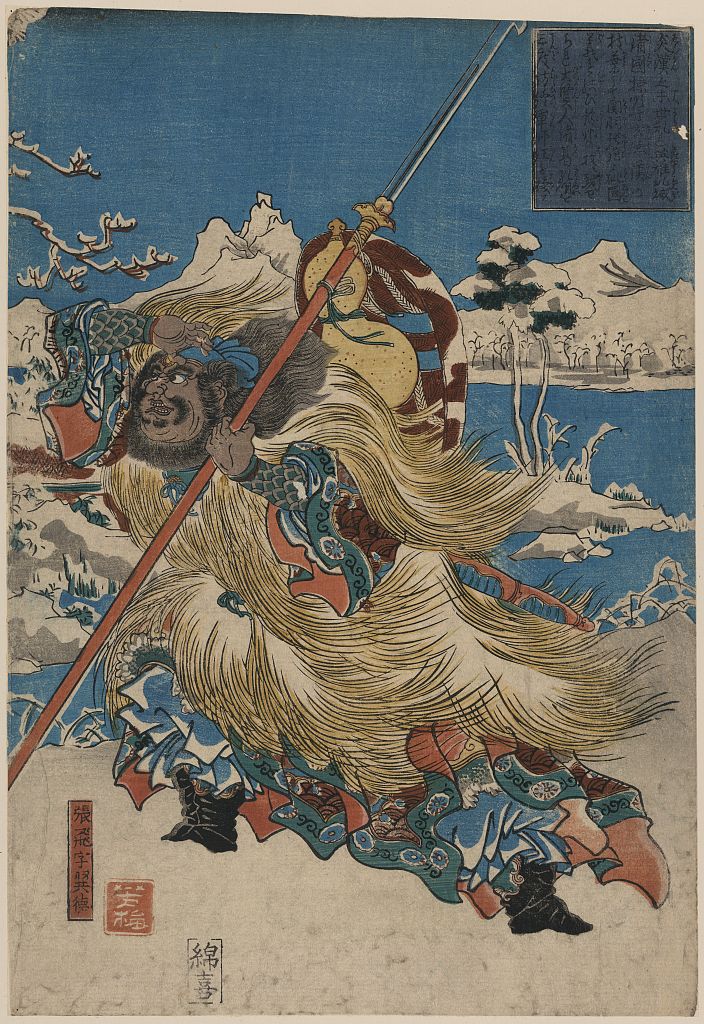
The Chinese Three Kingdoms warrior Zhang Fei
[186-]
Color woodblock print (nishiki-e), ink and color on paper