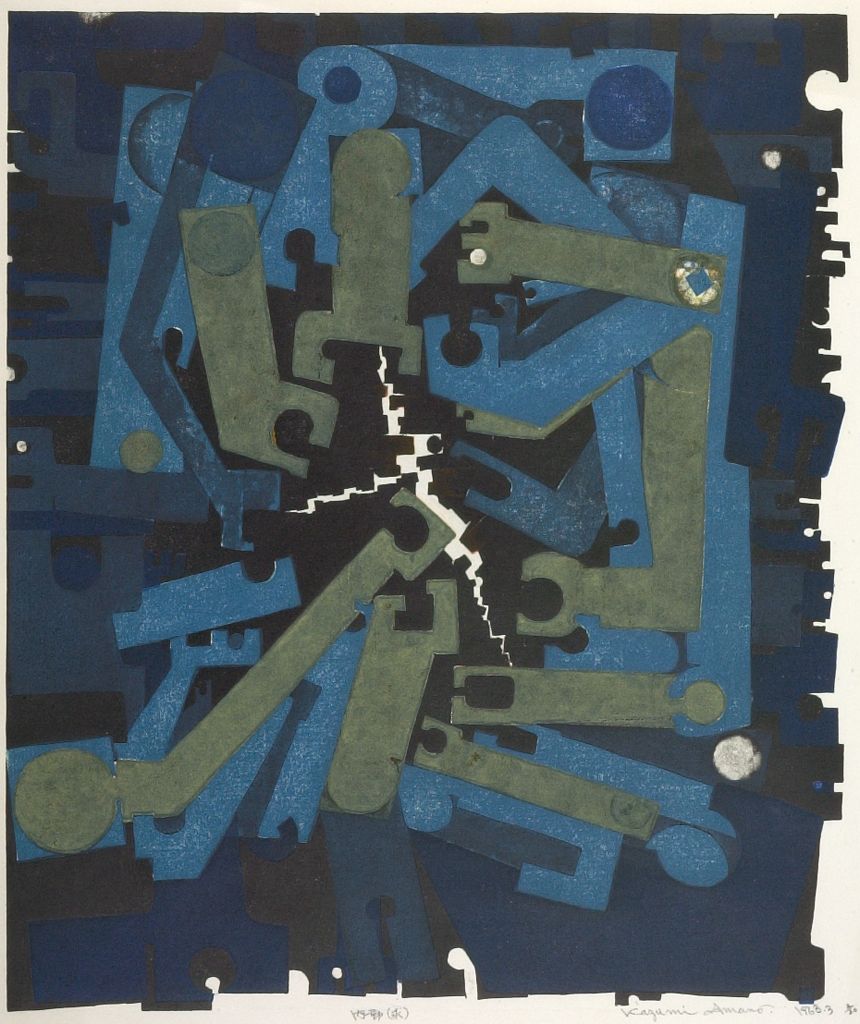
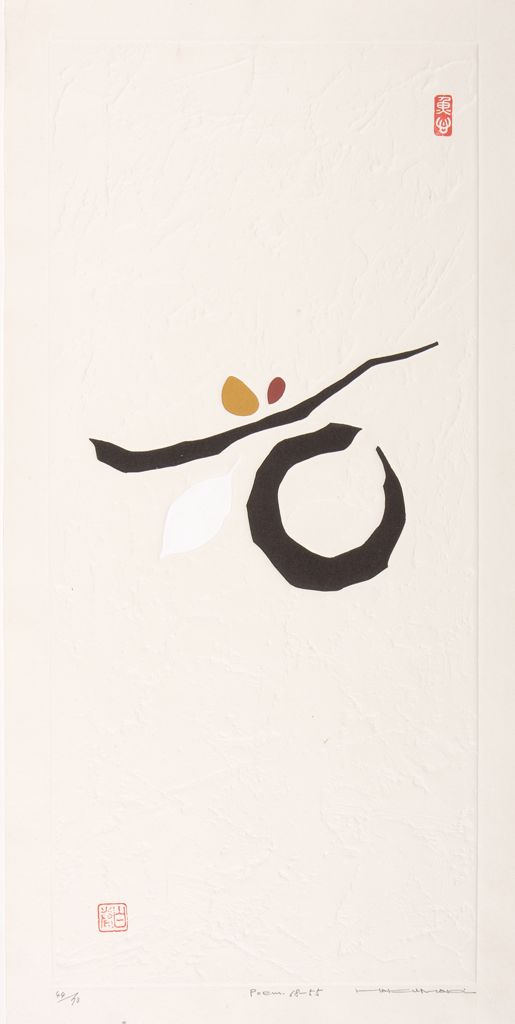
Naido (Motomu), Shôwa period, dated 1963
by Amano Kazumi
- Medium:
- Woodblock print
- Edition:
- Self-printed
- Source:
- Harvard Art Museums
Description
Naido (Motomu), dated to 1963 during the Showa period, combines two Japanese terms that create a contemplative frame for the visual work. Motomu means to seek or to desire, expressing an active reaching toward something not yet possessed. Naido suggests an interior path or inner way, directing this seeking impulse inward rather than outward.
This woodblock print belongs to Amano's early 1960s body of work, a period when he was consolidating his commitment to abstraction within the sosaku-hanga framework. The seeking quality implied by the title may reflect Amano's own artistic position during this period, actively searching for visual forms adequate to express states of consciousness that representational imagery could not reach. The sosaku-hanga movement's emphasis on the artist as sole creator, responsible for every stage of the print's existence, gave Amano the freedom to pursue this inward investigation without compromise or committee.
More Prints by Amano Kazumi
![Untitled [musicians performing Owara-bushi] by Amano Kazumi](https://1.api.artsmia.org/800/135476.jpg)
![Untitled [two roosters] by Amano Kazumi](https://1.api.artsmia.org/800/135977.jpg)
More Calligraphy Prints

Frequently Asked Questions
Naido (Motomu), Shôwa period, dated 1963 was created by Amano Kazumi (天野和美).
Naido (Motomu), Shôwa period, dated 1963 depicts calligraphy and abstract.