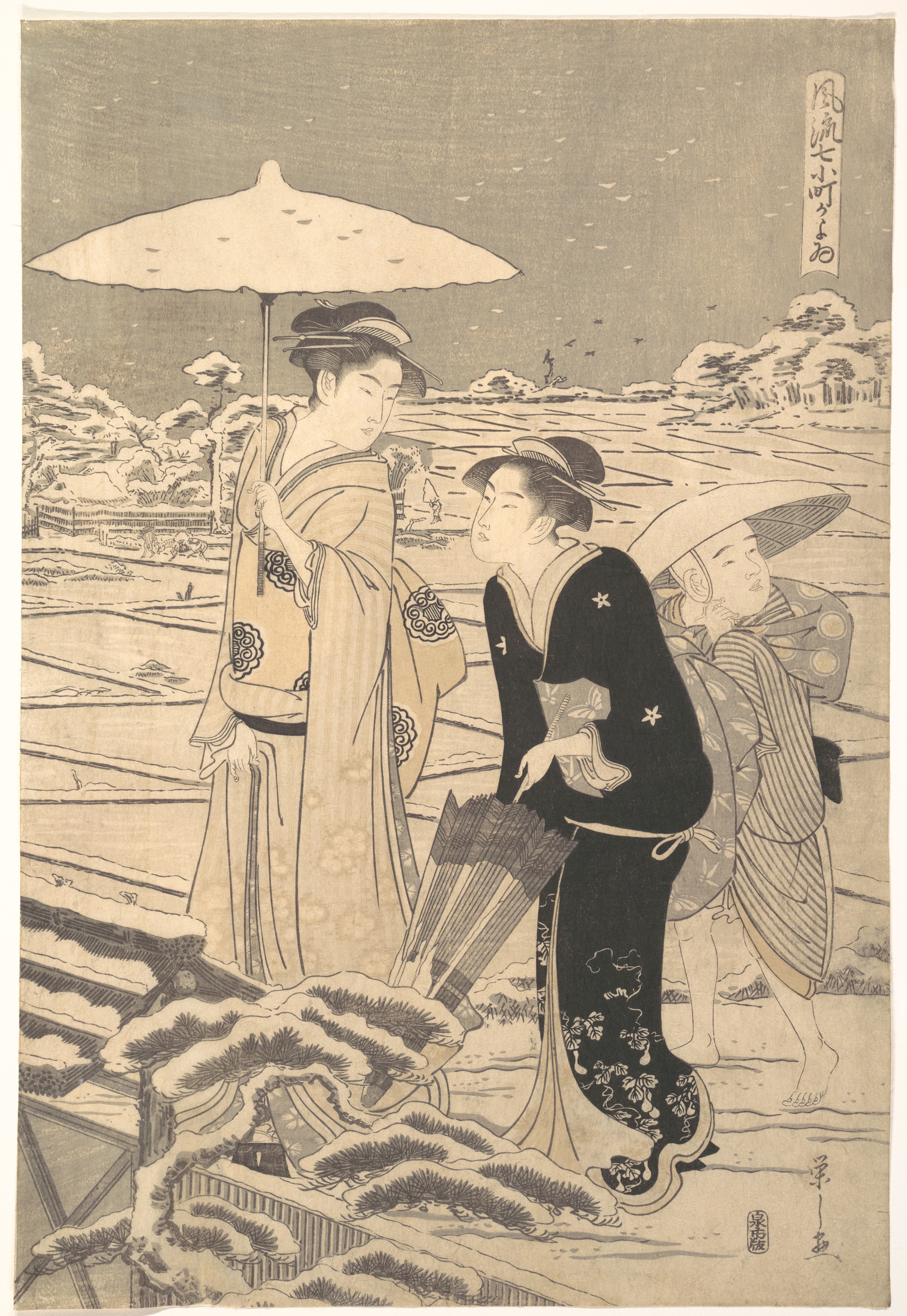
Kayoi Komachi, from the series "Seven Elegant Episodes of the Poet Komachi" (Fūryū nanakomachi kayoi)
- Date:
- ca. 1795
- Medium:
- Woodblock print; ink and color on paper
- Source:
- Metropolitan Museum of Art
Description
Chobunsai Eishi designed this 1785 print as part of the series Furyu nanakomachi, or Seven Elegant Episodes of the Poet Komachi, in which contemporary beauties replace the celebrated Heian poetess Ono no Komachi in iconic scenes from her legend. The Kayoi Komachi episode refers to the courtier Fukakusa no Shosho, who was said to have visited the unyielding poet on a hundred consecutive nights, dying on the last. Eishi transposes this poignant tale into an updated Edo bijin-ga register, presenting the figure with the elongated proportions, sloping shoulders, and tapered fingers that became the artist's hallmark. As a Kano-trained ukiyo-e designer who had studied under Kano Eisen'in before entering the floating-world market, Eishi brought an aristocratic restraint to the print. The kimono patterns are arranged in calm, evenly weighted folds rather than the assertive curves favored by his contemporary Utamaro, and the figure's gaze is averted in a manner inherited from courtly painting traditions. Issued by a leading Edo publisher, the sheet uses the small-color palette typical of mid-1780s nishiki-e, with delicate fleshtones offset by deeper indigo and brown garments. The Metropolitan Museum of Art preserves an impression with strong line work and only minor toning, recorded in its online collection under accession search 56827. The print is representative of Eishi's earliest mature series, in which he demonstrated that the literary subjects long handled by the Kano academy could be re-imagined as fashionable images of women without losing their poetic gravity. It anchors his transition from samurai painter to recognized master of Edo bijin-ga.
More Prints by Chōbunsai Eishi

Komurasaki of the Kadotamaya with Attendants Hatsune and Utano
c. 1790
Color woodblock print; oban

A Parody of the Tales of Ise
c. 1789/95
Color woodblock print; right sheet of oban triptych

Kiyomizu, from the series "Seven Komachi (Nana Komachi)"
c. 1791/92
Color woodblock print; chuban

A Woman's Poetry Party
c. 1793
Color woodblock print; oban triptych
Frequently Asked Questions
Kayoi Komachi, from the series "Seven Elegant Episodes of the Poet Komachi" (Fūryū nanakomachi kayoi) was created by Chōbunsai Eishi (鳥文斎栄之) in ca. 1795.