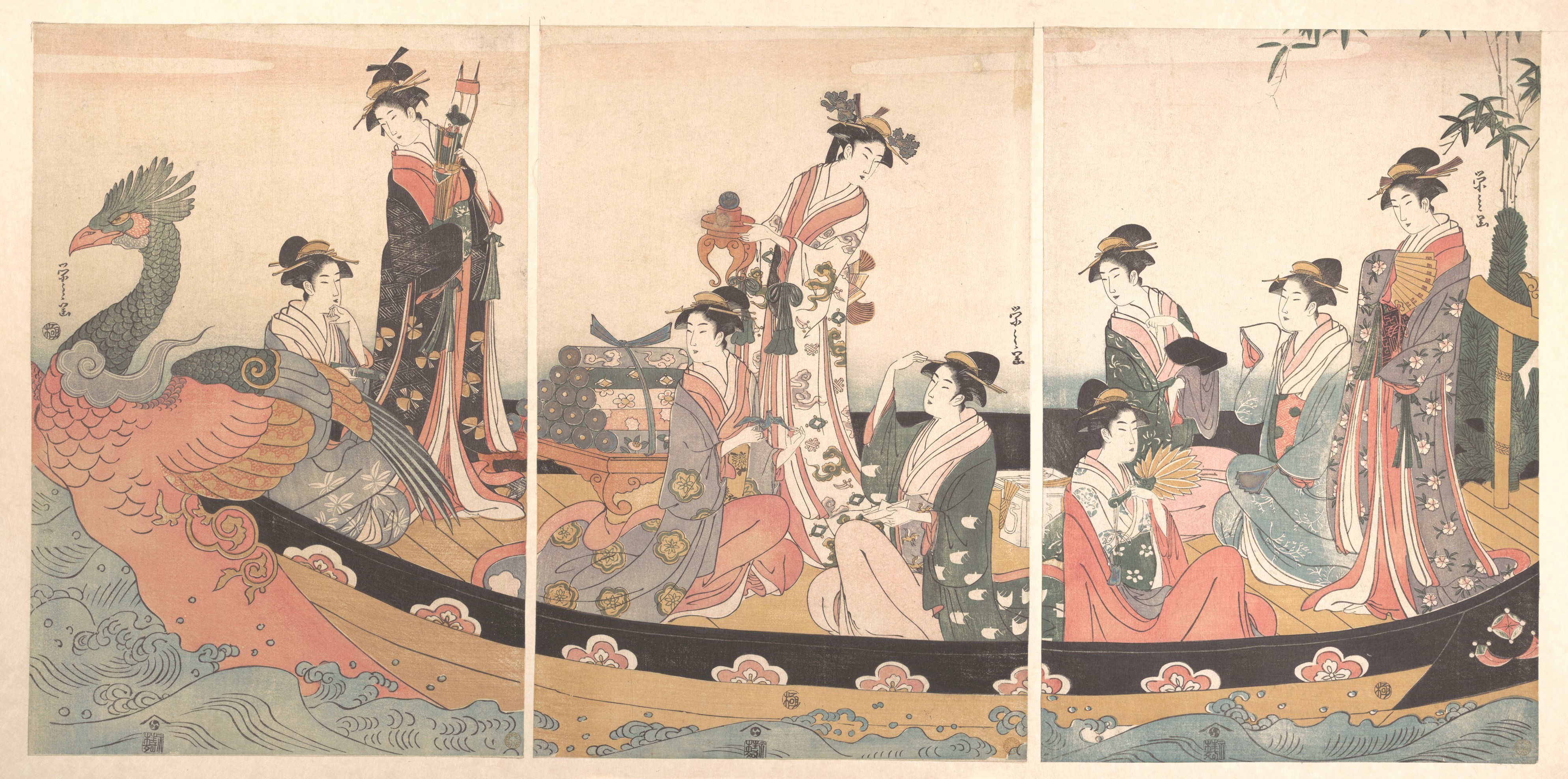
The Treasure Boat
- Date:
- ca. 1795
- Medium:
- Triptych of woodblock prints; ink and color on paper
- Source:
- Metropolitan Museum of Art
Description
The Treasure Boat draws on one of the most beloved auspicious motifs of Japanese popular culture, the takarabune that carries the Seven Lucky Gods and their precious cargo into the new year. Chobunsai Eishi adapts the subject in a manner characteristic of his career, replacing or supplementing the traditional male deities with an arrangement of elegantly dressed women whose presence transforms the takarabune into a vehicle of bijin-ga celebration. The Metropolitan Museum of Art preserves this impression. The composition uses the curving hull of the boat as a generous arc against which the figures and their accessories can be arrayed, allowing Eishi to display his signature elongated forms in a slightly more horizontal format. As Edo bijin-ga, the print joins fashionable portraiture to seasonal good wishes, of the kind that circulated widely in late eighteenth-century Japan as new-year prints. Eishi's Kano-trained ukiyo-e background, traceable to his apprenticeship with Kano Eisen-in, lends the design its disciplined draftsmanship and restrained palette, giving even a celebratory subject a sense of refined decorum. Symbolic treasures, lucky cranes, or precious objects nestled within the boat would have been instantly read by his audience as conveyors of prosperity, longevity, and good fortune. Chobunsai Eishi here exemplifies the way ukiyo-e designers could fold beneficent traditions into the visual languages of popular print, making The Treasure Boat both a private object of seasonal blessing and a public expression of his mature, sophisticated style.
More Prints by Chōbunsai Eishi

Komurasaki of the Kadotamaya with Attendants Hatsune and Utano
c. 1790
Color woodblock print; oban

A Parody of the Tales of Ise
c. 1789/95
Color woodblock print; right sheet of oban triptych

Kiyomizu, from the series "Seven Komachi (Nana Komachi)"
c. 1791/92
Color woodblock print; chuban

A Woman's Poetry Party
c. 1793
Color woodblock print; oban triptych
Frequently Asked Questions
The Treasure Boat was created by Chōbunsai Eishi (鳥文斎栄之) in ca. 1795.