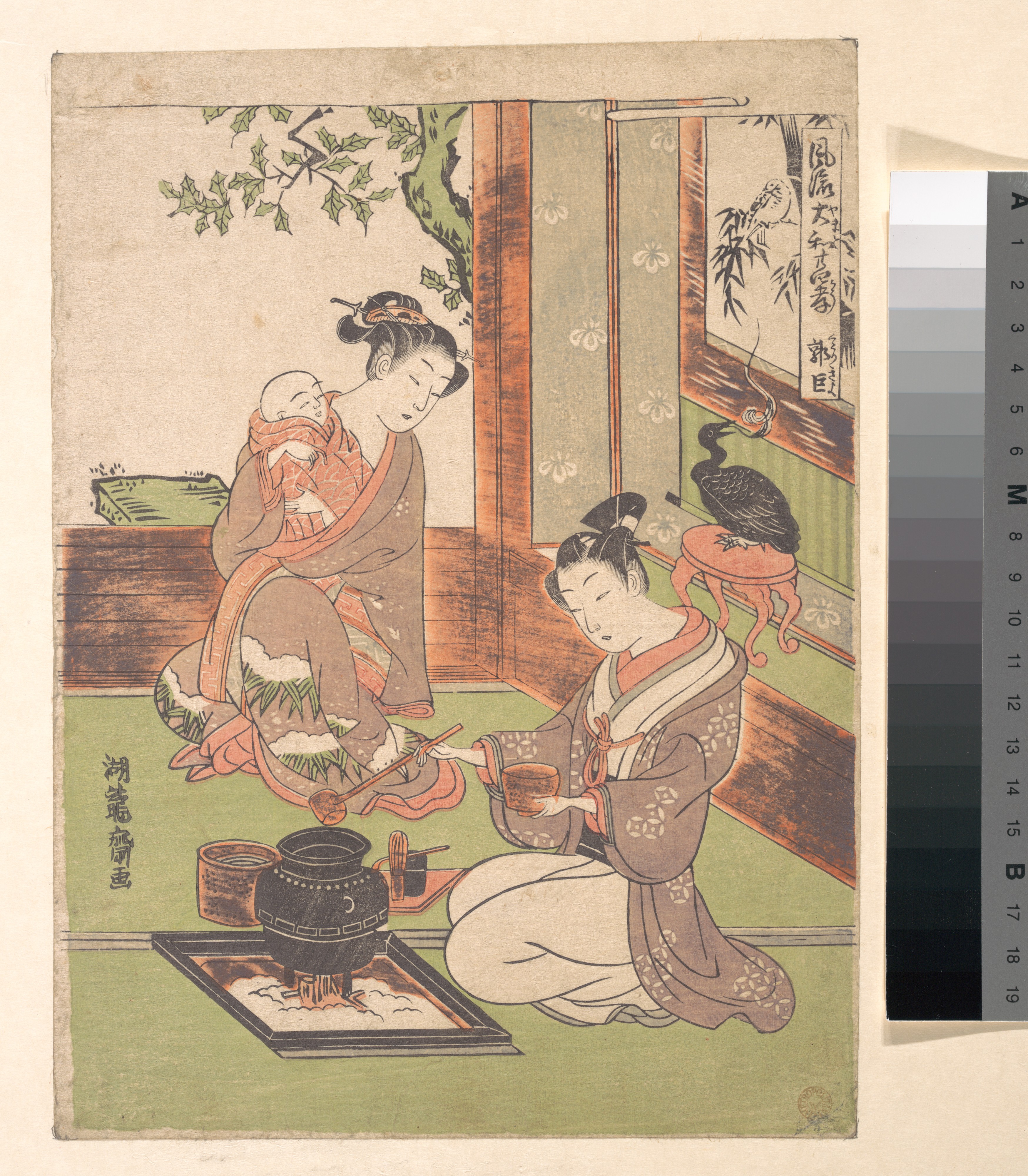
Modern Versions of the twenty-four Paragons of Filial Piety: Guo Zhu
- Date:
- ca. 1770
- Medium:
- Woodblock print; ink and color on paper
- Source:
- Metropolitan Museum of Art
Description
Modern Versions of the Twenty-four Paragons of Filial Piety: Guo Zhu, a woodblock print attributed to Isoda Koryusai and held by the Metropolitan Museum of Art, exemplifies the mitate tradition through which the Edo bijin-ga master engaged with classical Chinese ethical literature. The Twenty-four Paragons of Filial Piety was a Yuan-dynasty Chinese anthology recounting exemplary acts of devotion by sons and daughters to their parents, and the text became foundational moral reading throughout East Asia during the Confucian-saturated centuries that followed. Guo Zhu was one of the most famous of the paragons: a poor man who, unable to feed both his mother and his infant son, resolved to bury the child so that the limited food could go to his mother, and was rewarded when his digging unearthed a pot of gold sent from heaven. By placing this loaded narrative within his Modern Versions series, Koryusai allowed Edo viewers to enjoy both the classical reference and the gentle reworking that recast the figures in contemporary dress or setting. His samurai background brought a particular sensitivity to the ethical weight of the original story, and the disciplined contour drawing he applied to bijin-ga is fully evident here. The series ran in parallel with other mitate projects on classical themes that prepared the visual literacy on which his celebrated Yoshiwara fashion series Hinagata Wakana no Hatsu Moyo would later depend. The Metropolitan Museum of Art holds this impression among its Koryusai holdings.


