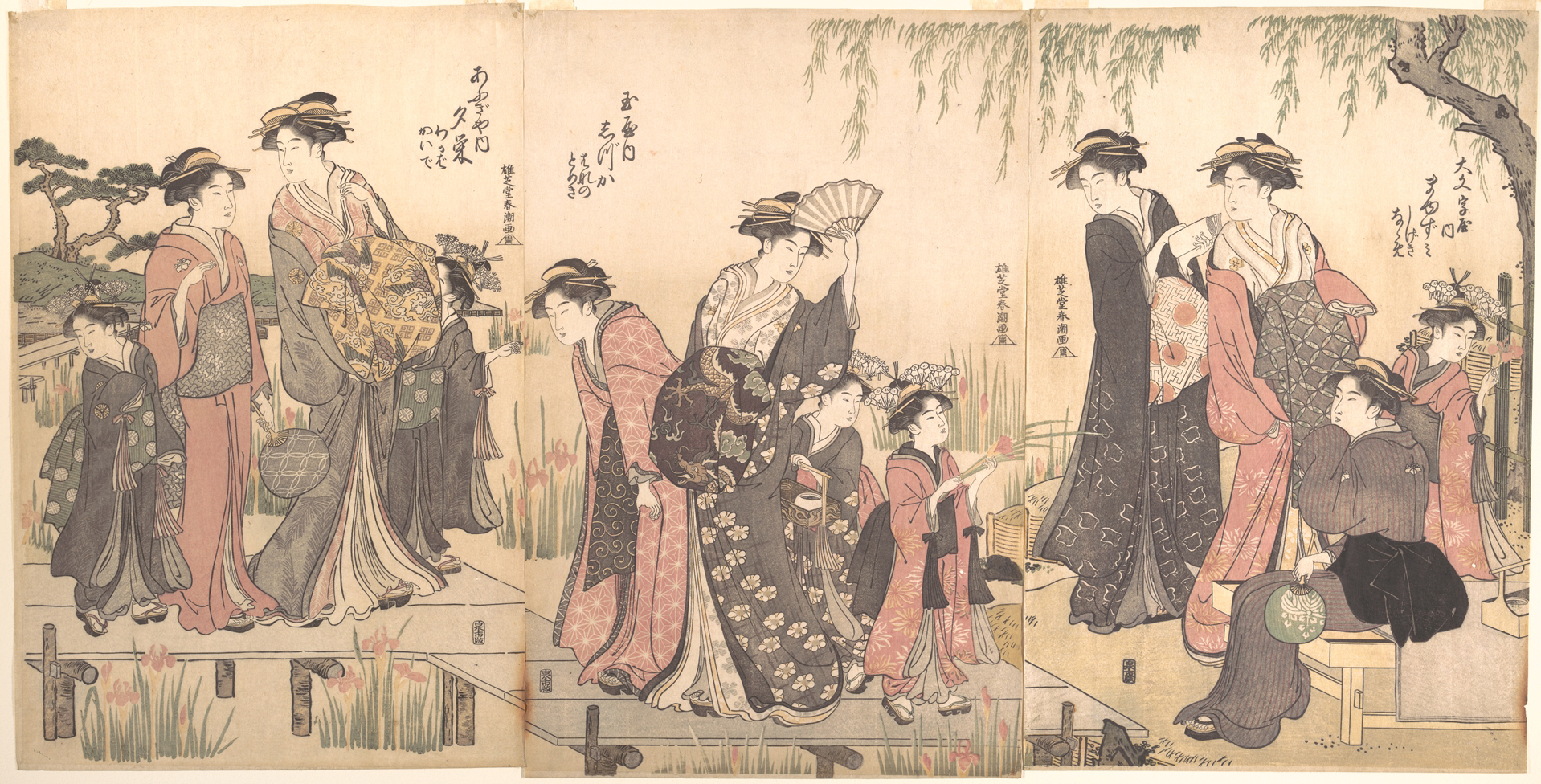
Courtesans in an Iris Garden
- Date:
- late 18th century
- Medium:
- Triptych of woodblock prints; ink and color on paper
- Source:
- Metropolitan Museum of Art
Description
Courtesans in an Iris Garden is a refined Edo bijin-ga composition by Katsukawa Shuncho, an artist whose career flourished in the late eighteenth century within the influential Katsukawa school. Held in the collection of the Metropolitan Museum of Art, the print places elegantly attired women within a garden setting where irises stand in formal bloom. Shuncho composes the scene with the measured rhythm that defined Katsukawa school bijin-ga of his generation, balancing tall, willowy figures against the vertical accents of the iris leaves so that the women themselves seem almost to grow from the garden bed. The figures are drawn with elongated proportions and unhurried postures, a stylistic direction Shuncho absorbed from his teacher Katsukawa Shunsho before pushing toward the more attenuated grace that came to characterize his independent work. Their robes are patterned with seasonal motifs that echo the irises around them, demonstrating the close attention Edo print designers paid to the harmony between dress and setting. The iris garden itself was a beloved subject in late-eighteenth-century Edo culture, associated with early summer outings and with poetic allusions to classical literature, so a viewer of the period would have read this image as both a fashionable beauty print and a gentle literary reference. Shuncho's handling of color is restrained, allowing the cool blues and purples of the irises to set the emotional temperature while the figures' garments provide complementary warmth. As one of Katsukawa Shuncho's contributions to Edo bijin-ga, the print exemplifies how the Katsukawa school carried the genre forward in the years just before Utamaro reshaped it. The Metropolitan Museum of Art preserves this impression as part of its broad holdings of Japanese woodblock prints.
More Prints by Katsukawa Shunchō

Women Admiring Peonies
c. 1789/1801
Color woodblock print; oban triptych

The Tanabata Festival, from the series "Amusements of the Five Festival Days (Gosetsu asobi)"
About 1790
Color woodblock print; chūban

Narcissus in Winter, from the series "Choicest Odes upon Flowers of the Four Seasons (Shuku awase, shiki no hana)"
c. 1792
Color woodblock print; chuban

Women Boarding a Pleasure Boat
1780s
Color woodblock print; oban diptych
More Birds & Flowers Prints
Frequently Asked Questions
Courtesans in an Iris Garden was created by Katsukawa Shunchō (勝川春潮) in late 18th century.
Courtesans in an Iris Garden depicts birds & flowers.