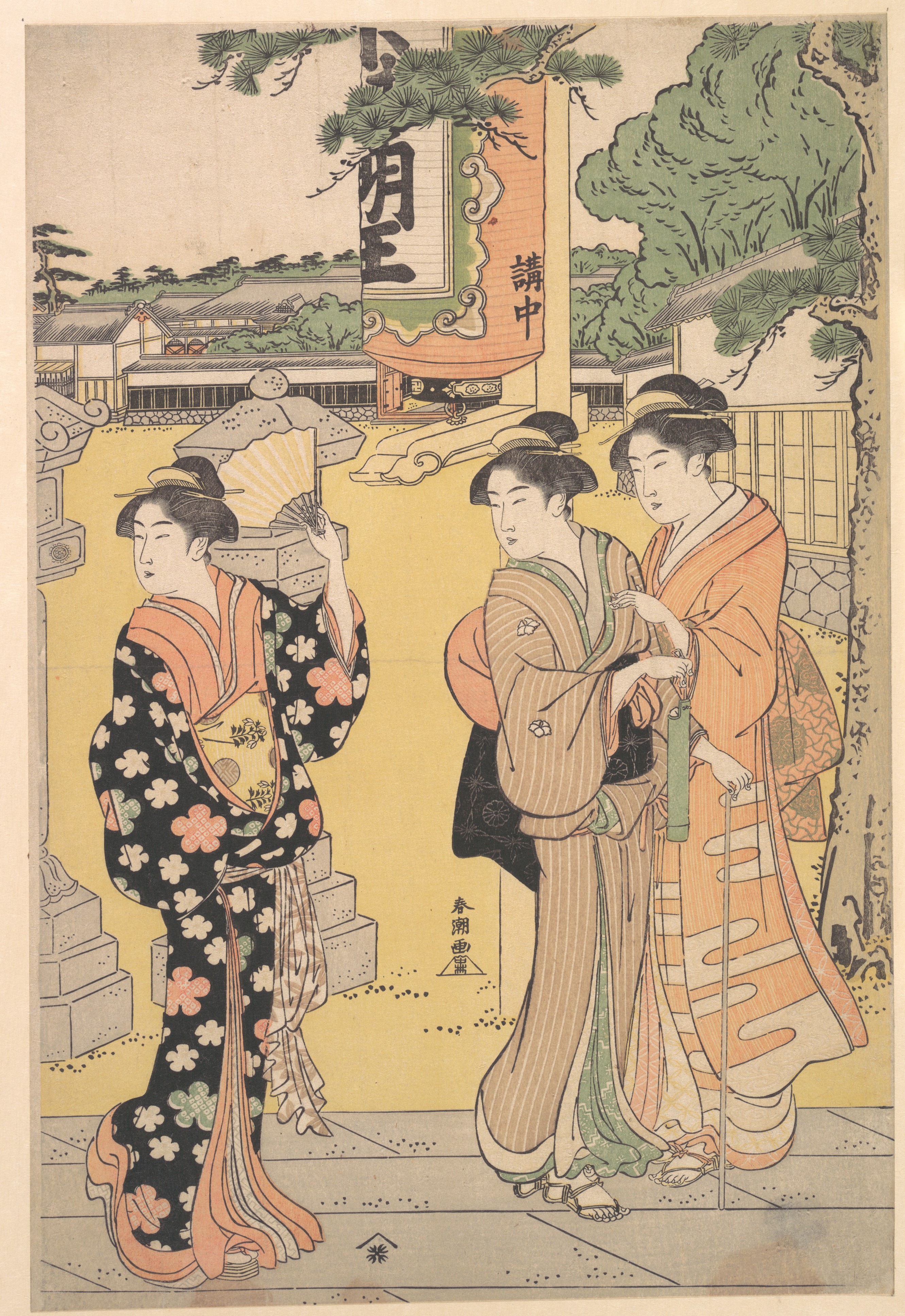
Fair Visitors in the Compound of a Buddhist Temple
- Date:
- ca. 1789
- Medium:
- One sheet of a triptych of woodblock prints; ink and color on paper
- Source:
- Metropolitan Museum of Art
Description
Fair Visitors in the Compound of a Buddhist Temple is a multi-figure bijin-ga by Katsukawa Shuncho, preserved at the Metropolitan Museum of Art. Shuncho was a prominent designer of the Katsukawa school in the 1780s, and prints of this kind, depicting fashionably dressed women within identifiable Edo settings, were a staple of his output. The temple compound provides Shuncho with an architectural framework in which to arrange a group of visitors: tile-roofed buildings, fences, and open ground organize the figures into the natural clusters of a sightseeing crowd. The women, dressed in seasonal robes of varied pattern, move through the precincts as visitors rather than as devotees, reflecting the way Edo Buddhist temples often functioned as semi-public gathering places, hosting periodic fairs, markets, and entertainments alongside their religious activities. Shuncho's figures are drawn with the elongated proportions and crisp outlines characteristic of his mature Edo bijin-ga, and the variety of poses — standing, turning, leaning toward a companion — gives the composition a sense of accumulated incident rather than a single staged event. The Katsukawa school's strength in textile description is evident throughout: each robe is patterned with care, and the visual contrast between the women's clothing and the muted architectural surfaces keeps attention on the figures. Within Shuncho's body of work, the print stands as an example of how the Edo bijin-ga tradition extended naturally into the depiction of urban leisure and how temple compounds functioned as social as well as religious spaces. The Metropolitan Museum of Art holds this impression among its Japanese print holdings.
More Prints by Katsukawa Shunchō

Women Admiring Peonies
c. 1789/1801
Color woodblock print; oban triptych

The Tanabata Festival, from the series "Amusements of the Five Festival Days (Gosetsu asobi)"
About 1790
Color woodblock print; chūban

Narcissus in Winter, from the series "Choicest Odes upon Flowers of the Four Seasons (Shuku awase, shiki no hana)"
c. 1792
Color woodblock print; chuban

Women Boarding a Pleasure Boat
1780s
Color woodblock print; oban diptych
Frequently Asked Questions
Fair Visitors in the Compound of a Buddhist Temple was created by Katsukawa Shunchō (勝川春潮) in ca. 1789.