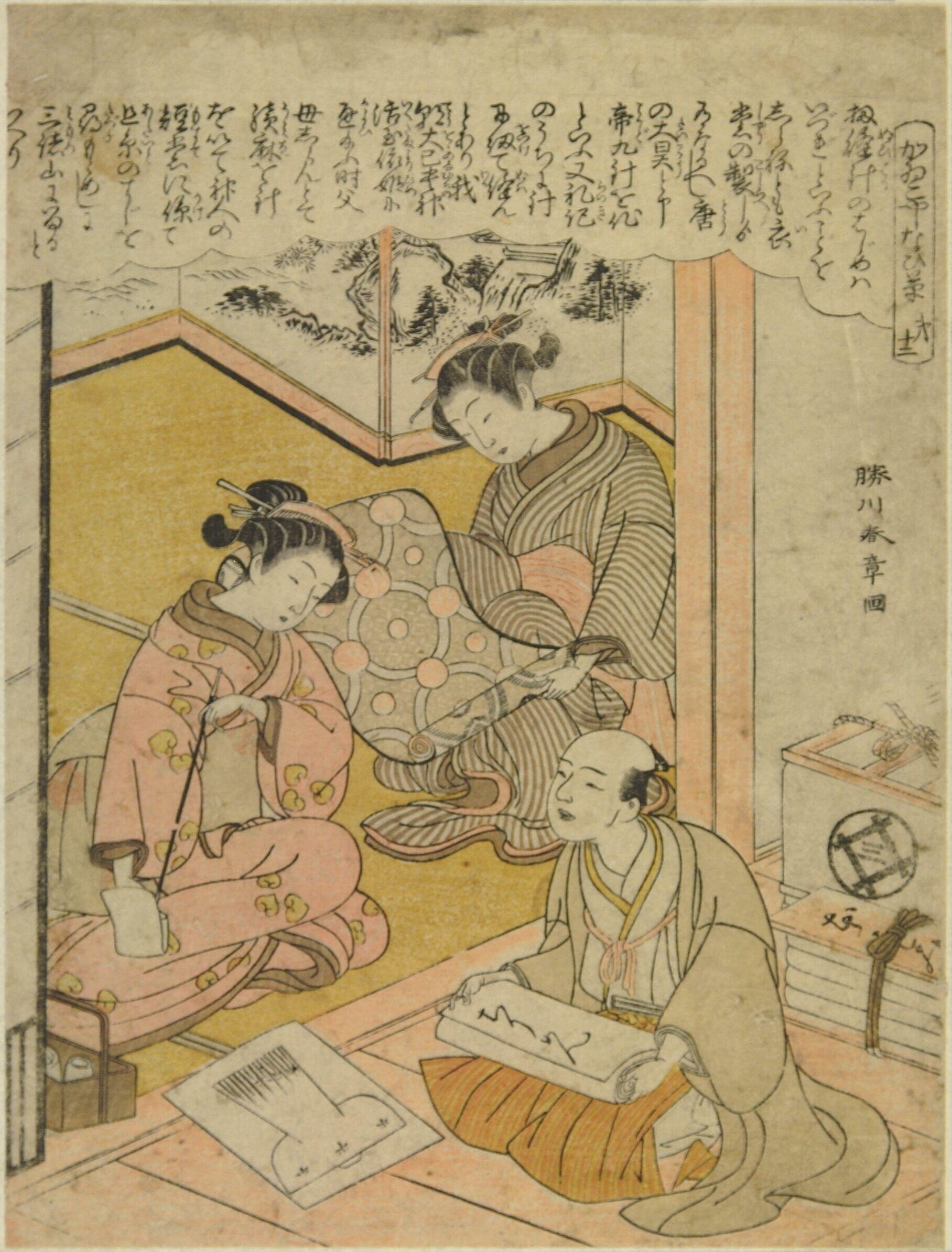
The Cultivation of Silkworms
- Date:
- 1786
- Medium:
- Source:
- Victoria and Albert Museum
Description
Preserved by the Victoria and Albert Museum, this Katsukawa Shunsho print belongs to a sequence devoted to the cultivation of silkworms, a subject combining genre observation with the period's broader interest in productive labor and the agricultural economy. Sericulture was a major cottage industry across rural Japan, and the silkworm subject offered ukiyo-e designers a rare chance to engage with the daily lives of working women in the countryside. Shunsho approaches the theme through the Katsukawa school's signature attention to individualized figure types, the women rendered with the close attention to posture, gesture, and costume that distinguished his actor and beauty prints. The composition documents specific stages of silk production, from the tending of mulberry leaves through the management of the silkworms themselves, and may have circulated as part of a larger sequence depicting successive phases of the process. The Victoria and Albert Museum's holding preserves the print as an important example of Edo ukiyo-e's engagement with rural labor, a subject category sometimes overshadowed by the more frequently studied urban subjects of theater and pleasure-quarter. As founder of the Katsukawa school, Shunsho extended his observational practice from named individuals into typological documentation of working life, and his treatment of sericulture set precedents for later artists working in the same subject area, including Kitagawa Utamaro and Kitao Shigemasa.
More Prints by Katsukawa Shunshō

The Actor Arashi Sangoro II as Sakura-maru in the Play Sugawara Denju Tenarai Kagami, Performed at the Ichimura Theater in the First Month, 1772
c. 1772
Color woodblock print; hosoban; right sheet of a multisheet print

The Actor Nakamura Tomijuro I as the female fox from Mt. Ubagadake in the play "Chigo Torii Tobiiri Kitsune," performed at the Ichimura Theater in the eleventh month, 1777
c. 1777
Color woodblock print; one sheet of hosoban tetraptych

The Warrior Ômori Hikoshichi Carrying a Demon on His Back
About 1772
Color woodblock print; chûban

The Actor Segawa Tomisaburo I as the Heron Maiden (Sagi Musume)
c. 1774
Color woodblock print; hosoban
Frequently Asked Questions
The Cultivation of Silkworms was created by Katsukawa Shunshō (勝川春章) in 1786.