
Summer Parlor (Kajin kōzai)
佳人好在
- Date:
- 1925
- Medium:
- Painting; mineral pigments on silk
Description
Summer Parlor (佳人好在, Kajin kōzai) is a 1925 painting by Kawabata Ryūshi held by the National Museum of Modern Art, Kyoto. Executed in mineral pigments on silk at 136.3 by 115.1 centimeters, the work belongs to the period in which Ryūshi was still exhibiting with the Nihon Bijutsuin (Inten) and had not yet broken away to found his own Seiryūsha society. The painting depicts a young woman in summer dress in a domestic interior, treated with the heightened color and broad planar handling that would soon become Ryūshi's signature. The Japanese title carries a literary flavor — 'the lovely person is at home' — that signals an allusion to the long East Asian tradition of bijinga, the genre of beautiful-women painting that Ryūshi inherited both from late Edo nihonga and from his early study of European figure painting. The picture sits on the cusp of his transition from the chamber-scale nihonga of the early Taishō Inten to the wall-sized 'exhibition-hall art' (kaijō geijutsu) he developed in the late 1920s, and demonstrates the firm pigment handling and tonal control on which the later large-scale work depended.
More Prints by Kawabata Ryūshi


More Summer Prints
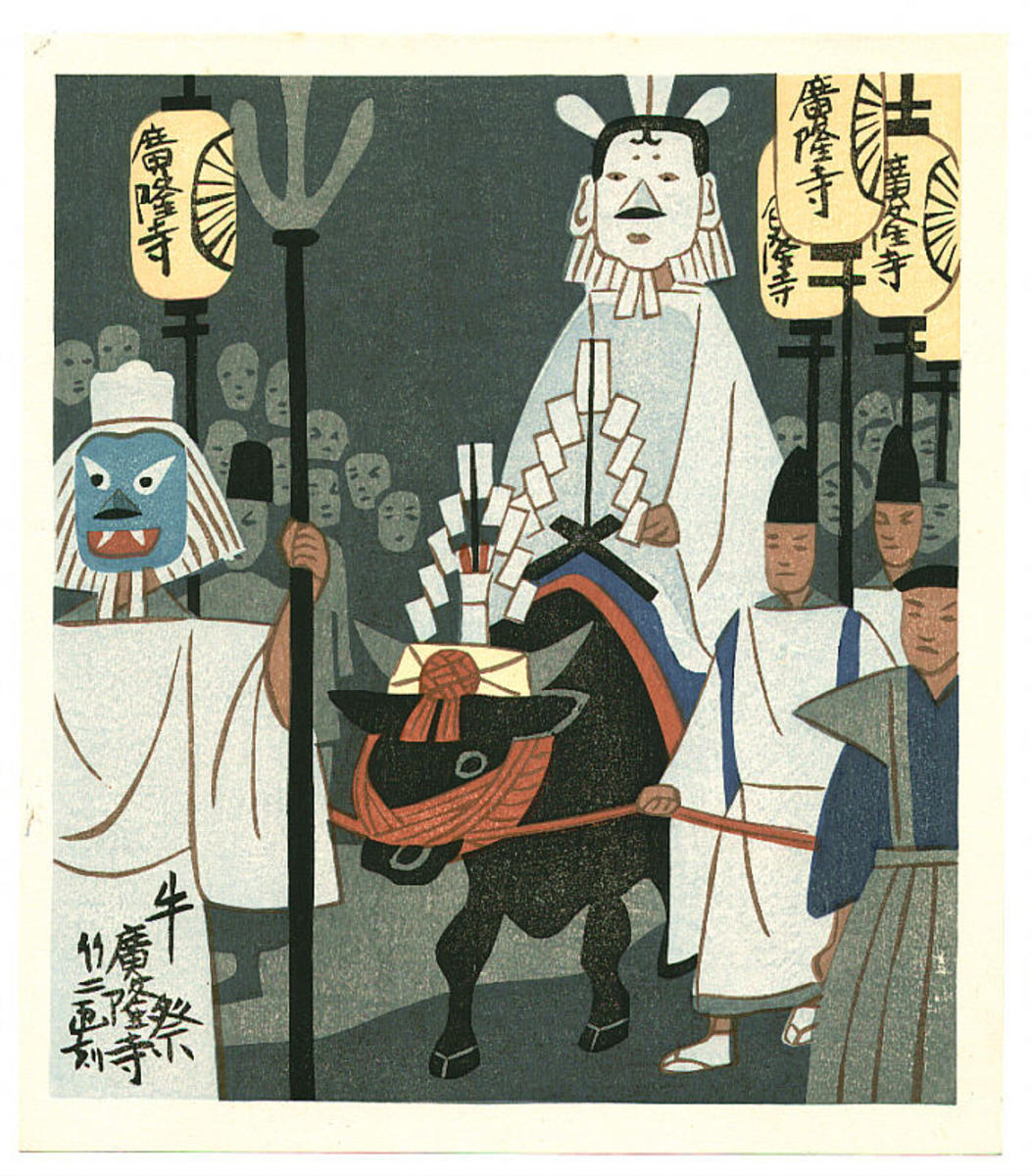
Bull Festival at Koryuji
広隆寺牛祭
Woodblock print
February (The Annual Festival of the Fushimi Inari)
二月 (伏見稲荷大社祭)
second half 20th century
Woodblock print, ink and color on paper

July (Gorgeous Procession of Yama-hoko or the Floats at the Gion Festival)
七月 (祇園祭山鉾巡行)
second half 20th century
Woodblock print, ink and color on paper

August (The Bonfire Festival of the Daimonji Hill Viewed from the Sanjo Bridge)
八月 (三条大橋より大文字)
second half 20th century
Woodblock print, ink and color on paper
Frequently Asked Questions
Summer Parlor (Kajin kōzai) (佳人好在) was created by Kawabata Ryūshi (川端龍子) in 1925.
Summer Parlor (Kajin kōzai) depicts summer.