
July (Gorgeous Procession of Yama-hoko or the Floats at the Gion Festival)
七月 (祇園祭山鉾巡行)
- Series:
- Twelve Months of Kyoto (print 7 of 12)
- Date:
- second half 20th century
- Medium:
- Woodblock print, ink and color on paper
- Format:
- Chuban
- Dimensions:
- 25.1 × 28.3 cm
- Publisher:
- Unsodo
- Source:
- Minneapolis Institute of Art
Description
July (Gorgeous Procession of Yama-hoko or the Floats at the Gion Festival) captures the spectacular parade of towering festival floats through the streets of central Kyoto during the Gion Matsuri, one of Japan's three greatest festivals. This print is part of Tomikichiro Tokuriki's Twelve Months of Kyoto series, created around 1970, which pairs each month with its most representative Kyoto scene.
The Gion Festival, held annually since 869 CE, originated as a purification ritual to ward off plague and has evolved over more than a millennium into Kyoto's grandest cultural celebration. The festival's climax is the Yamahoko Junko, the procession of massive wooden floats (yama and hoko) through the downtown streets. These floats, some reaching heights of twenty-five meters and weighing up to twelve tons, are decorated with elaborate tapestries, lacquerwork, and metal ornaments, many of which are designated as Important Cultural Properties.
Tokuriki's composition depicts the procession with characteristic vibrancy, showing the ornate floats moving through Kyoto's streets accompanied by festival participants in traditional costume. The hoko floats, with their distinctive tall spires (shingi) rising above the rooftops, create dramatic vertical elements in the composition. The rich decorative details of the float tapestries and structural elements are rendered in Tokuriki's bold, colorful style, conveying the visual spectacle of the event.
As the July entry in the Twelve Months series, the Gion Festival is a natural and essential choice — the festival so thoroughly defines July in Kyoto that the entire month is locally known as "Gion Festival month." Tokuriki's treatment captures the festive energy and visual magnificence of this UNESCO Intangible Cultural Heritage event with the graphic directness that characterizes his best work. The print serves as both an artistic celebration and a cultural document of one of Japan's most enduring and spectacular traditions.
More Prints by Tomikichiro Tokuriki

Heian Shrine in the Spring
Woodblock print
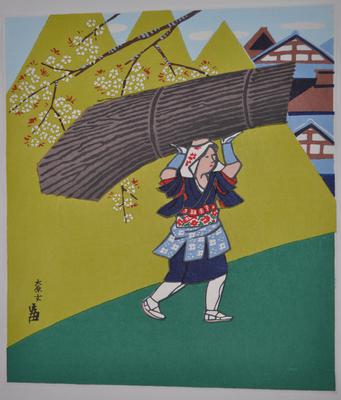
An Oharame Girl Carrying Firewood on Her Head
20th century
Woodblock print, ink and color on paper

April (Arashiyama Park, a Famous Scenic Resort)
四月 (嵐山)
second half 20th century
Woodblock print, ink and color on paper

June (Rainy Scene of the Sen-ke, Japanese Tea Ceremony Founder's House)
六月 (千家雨景)
second half 20th century
Woodblock print, ink and color on paper
More Summer Prints
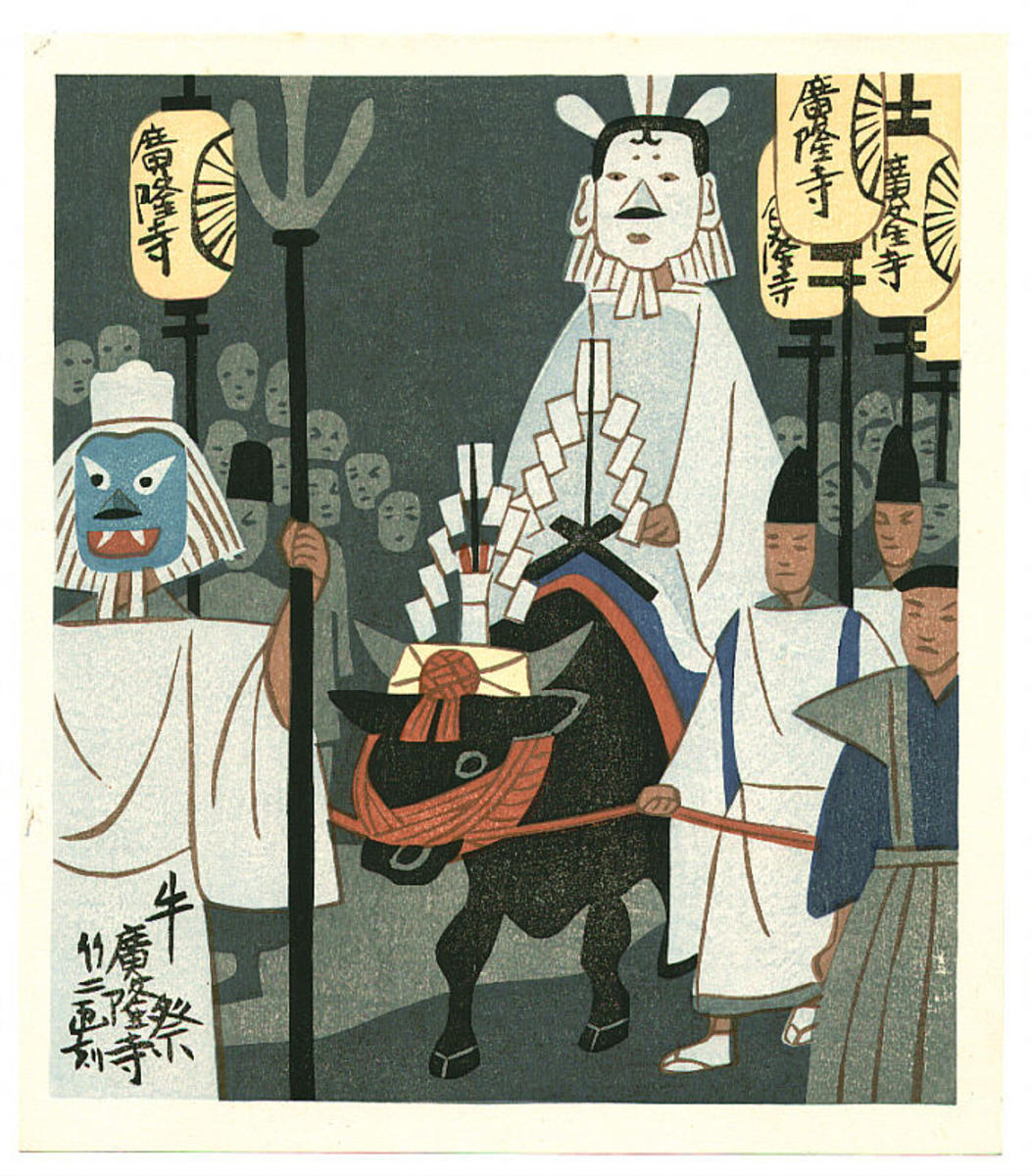
Bull Festival at Koryuji
広隆寺牛祭
Woodblock print
February (The Annual Festival of the Fushimi Inari)
二月 (伏見稲荷大社祭)
second half 20th century
Woodblock print, ink and color on paper

August (The Bonfire Festival of the Daimonji Hill Viewed from the Sanjo Bridge)
八月 (三条大橋より大文字)
second half 20th century
Woodblock print, ink and color on paper
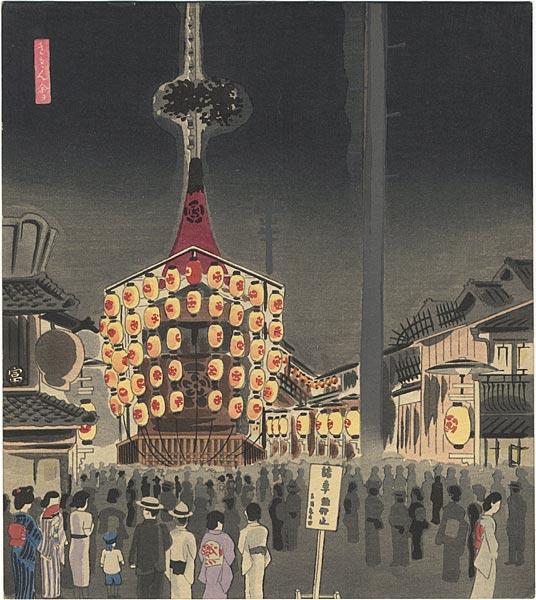
Gion Festival
Woodblock print
Featured in Collections
Curated cross-cuts that include this print.
Frequently Asked Questions
July (Gorgeous Procession of Yama-hoko or the Floats at the Gion Festival) (七月 (祇園祭山鉾巡行)) was created by Tomikichiro Tokuriki (徳力富吉郎) in second half 20th century.
Yes — July (Gorgeous Procession of Yama-hoko or the Floats at the Gion Festival) is part of the Twelve Months of Kyoto series (print 7 of 12) by Tomikichiro Tokuriki.
July (Gorgeous Procession of Yama-hoko or the Floats at the Gion Festival) uses Nishiki-e, Moku-hanga, and Kento, on woodblock print, ink and color on paper.
July (Gorgeous Procession of Yama-hoko or the Floats at the Gion Festival) was published by Unsodo (second half 20th century).
July (Gorgeous Procession of Yama-hoko or the Floats at the Gion Festival) depicts summer and travel scenes, set at Kyoto, Gion.
July (Gorgeous Procession of Yama-hoko or the Floats at the Gion Festival) measures 25.1 × 28.3 cm (Chuban format).