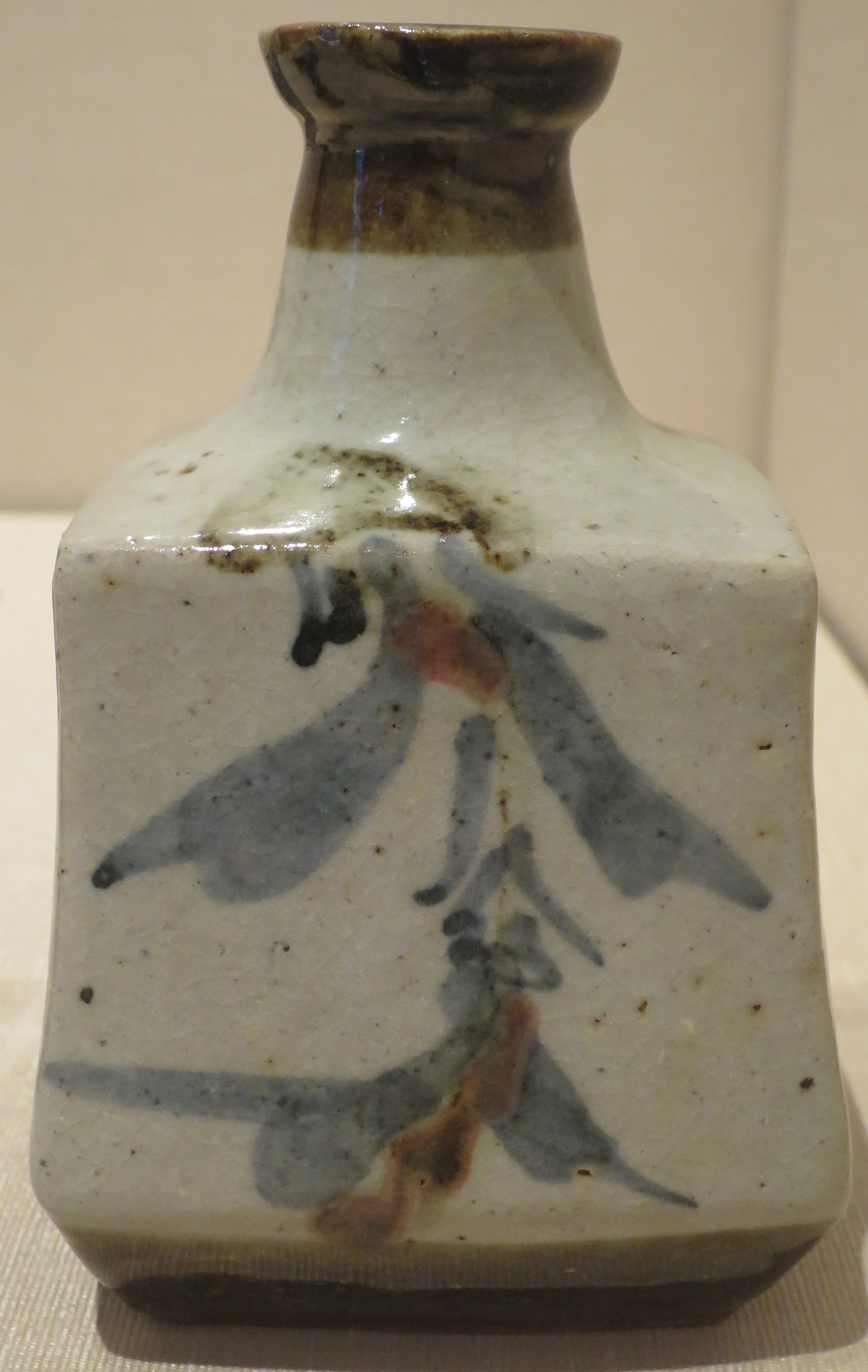
Sake Bottle
徳利
- Date:
- Mid-20th century
- Medium:
- Glazed stoneware
Description
This stoneware sake bottle (tokkuri, 徳利) represents the central functional vessel of Kawai Kanjirō's domestic-ware production — the small heavy-shouldered bottle from which sake is poured at the table — and one of the most foundational objects in the Mingei vocabulary. The form descends from Korean Joseon-period rural stoneware bottles that Yanagi Sōetsu had systematically collected for the Nihon Mingeikan, and shows the structural integrity, comfortable weight in the hand, and patient potter's-wheel rhythm that Kawai considered the proper hallmarks of unselfconscious folk-craft work. The bottle is finished in a saturated stoneware glaze with the slight thickening at the shoulder and thinning at the rim that hand-glazing produces, and bears no signature on the foot — a deliberate Mingei refusal of the named-artist mark. Tokkuri of this kind were produced in substantial numbers at Kawai's Gojōzaka kiln during his Mingei period and were sold for ordinary table use as well as for the Mingei-aligned shops in Tokyo and Kyoto that distributed his work to collectors. The piece is held in the Honolulu Museum of Art (accession 6252.1) and has been released to the public domain under a Creative Commons CC0 dedication.
More Prints by Kawai Kanjirō


Frequently Asked Questions
Sake Bottle (徳利) was created by Kawai Kanjirō (河井寬次郎) in Mid-20th century.