2 WOMEN
- Medium:
- Ink on paper
- Source:
- Harvard Art Museums
Description
Two women in half-length view lean close together over a spray of chrysanthemums, the foreground figure in a pale blue kimono with small floral motifs and a coral under-robe holding a pair of scissors near the blooms, while the second woman behind her in a blue plaid-patterned kimono with coral collar rests a hand on her companion's shoulder. Both wear elaborate black coiffures studded with combs and long ornamental hairpins, their faces rendered in the pale, fine-lined style typical of the print with small red mouths and downcast eyes. The palette is limited to indigo blue, coral red, tan, and black against an unpainted cream ground, with a vertical cartouche of Japanese characters and the artist's signature at left; medium is ink on paper, artist Kitagawa Utamaro.
More Prints by Kitagawa Utamaro
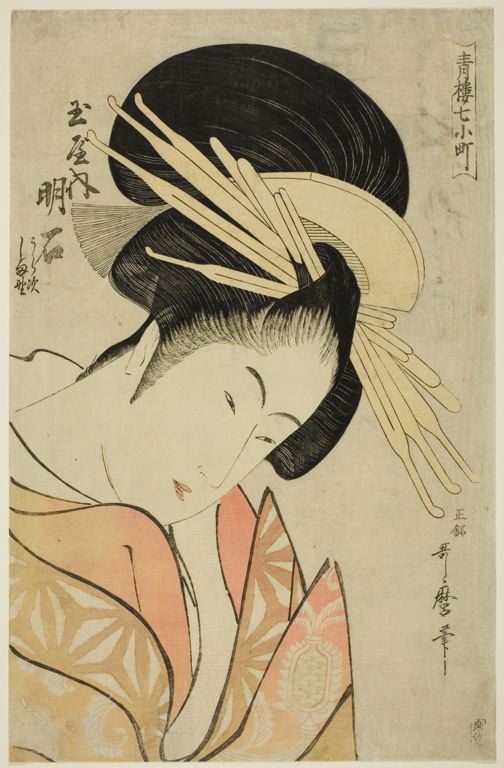
Akashi of the Tamaya, from the series Seven Komachis of Yoshiwara (Seiro nana Komachi) (Tamaya uchi Akashi, Uraji, Shimano)
Woodblock print
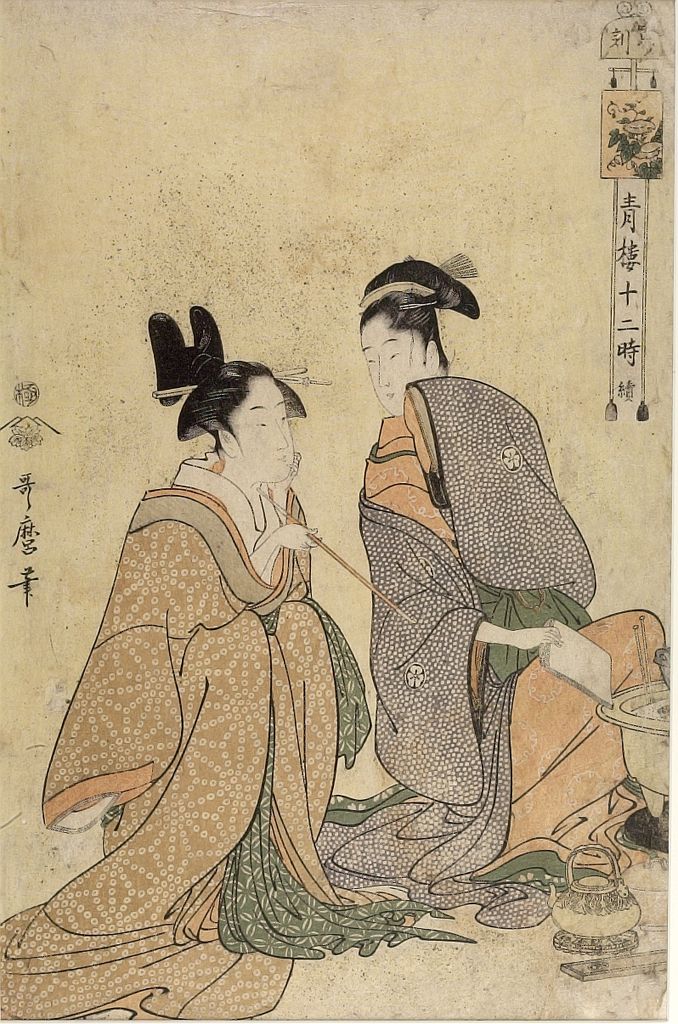
Hour of the Tiger (Tora no koku = 4 AM) from the series Twelve Hours in Yoshiwara (Seirô jûni toki tsuzuki), Late Edo period, circa 1794
Woodblock print
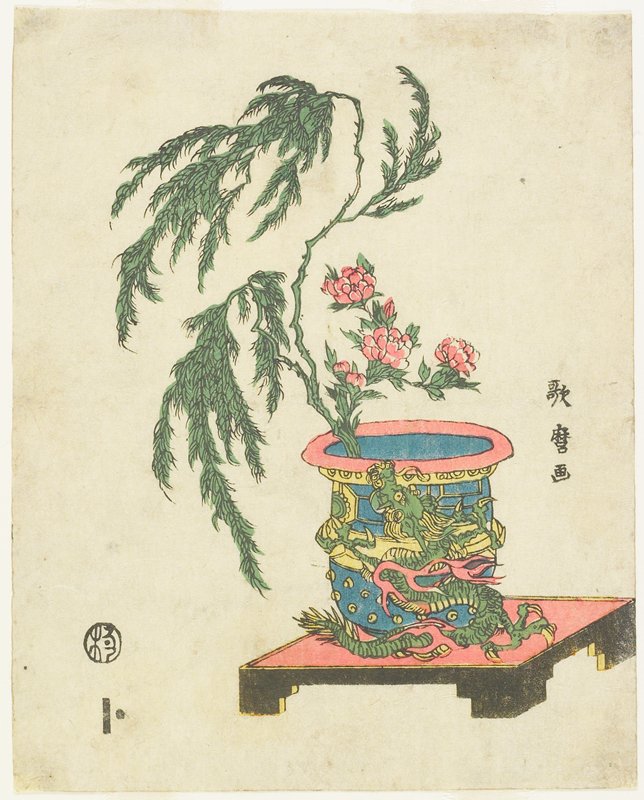
Ikebana arrangement of Peony and Willow in Dragon Pot
1781–1806
Woodblock print (nishiki-e), ink and color on paper
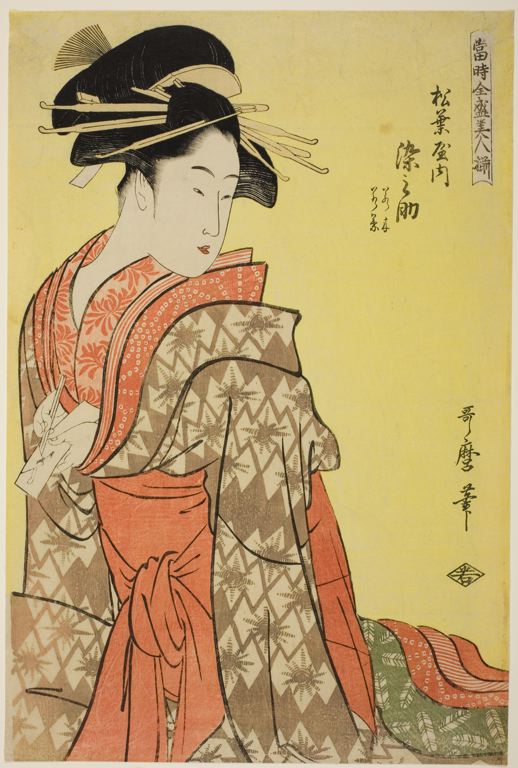
The Greatest Beauties of Our Time (Toji zensei bijin zoroe): Somenosuke of the Matsubaya with Attendants Wakagi and Wakaba
Woodblock print
Frequently Asked Questions
2 WOMEN was created by Kitagawa Utamaro (喜多川歌麿).