2 WOMENS HEADS
- Medium:
- Ink on paper
- Source:
- Harvard Art Museums
Description
Recorded under the descriptive cataloguing title 2 Women's Heads, this ukiyo-e print by Kitagawa Utamaro participates in the okubi-e or large-head portrait tradition that the artist pioneered in the 1790s. Where most bijin-ga had previously shown women full length, Utamaro and his publisher Tsutaya Juzaburo realized that bringing a beauty's head and shoulders close to the viewer let them invest the figure with unprecedented psychological presence. Pairing two such heads on a single sheet doubles the interpretive opportunity: the women may converse, compete, or simply illustrate two distinct emotional registers, allowing the print to function as a kind of comparative essay on female character. Utamaro renders the two faces with his familiar elongated ovals, slender necks, and calligraphic features, but the very closeness of the composition turns small choices of expression, the tilt of the head, the parting of the lips, the angle of the gaze, into the carriers of meaning. Behind the figures, the ground of unprinted paper or a single tint allows the heads to read as crisply as a fine watercolor. The Harvard Art Museums preserves this impression (object 208350), where it documents the artist's central role in shaping the okubi-e as the most innovative bijin-ga format of the late eighteenth century.
More Prints by Kitagawa Utamaro
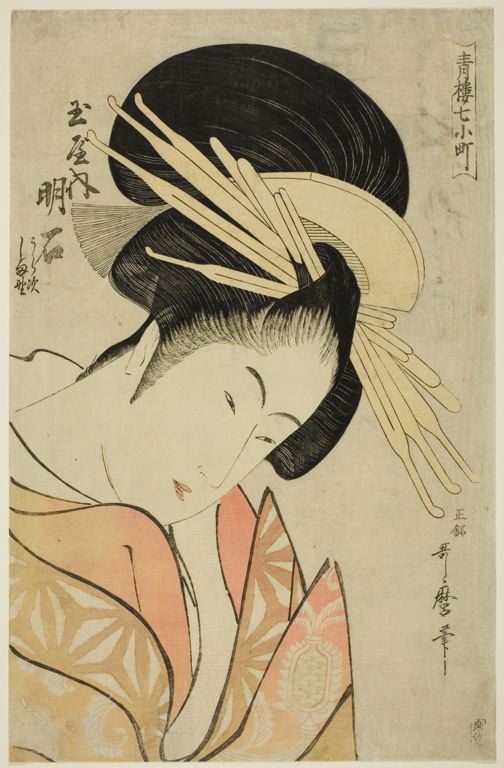
Akashi of the Tamaya, from the series Seven Komachis of Yoshiwara (Seiro nana Komachi) (Tamaya uchi Akashi, Uraji, Shimano)
Woodblock print
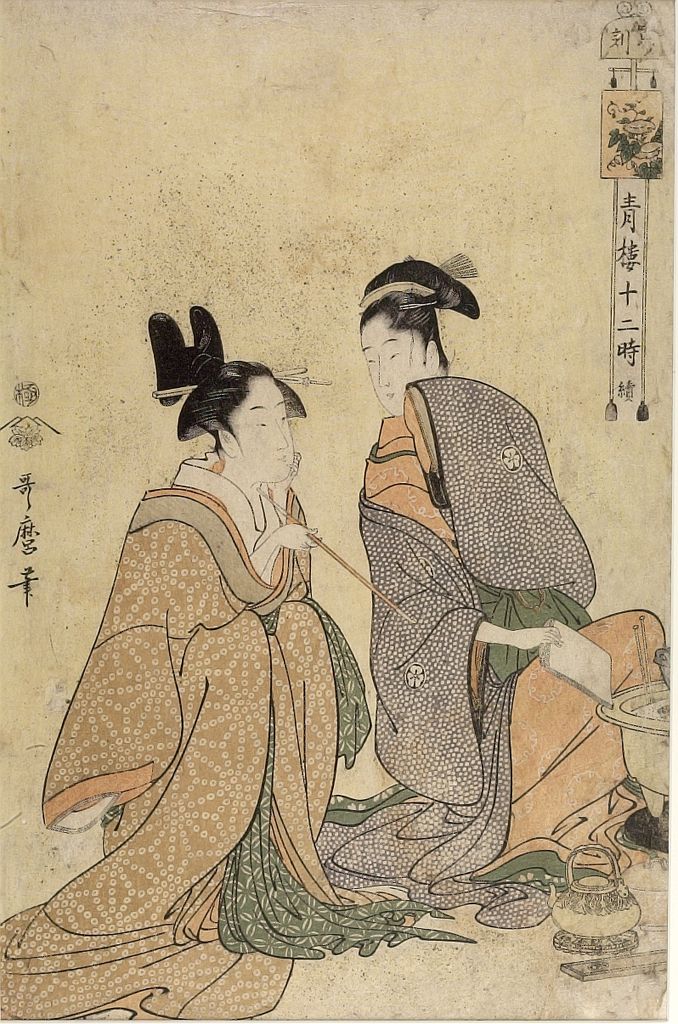
Hour of the Tiger (Tora no koku = 4 AM) from the series Twelve Hours in Yoshiwara (Seirô jûni toki tsuzuki), Late Edo period, circa 1794
Woodblock print
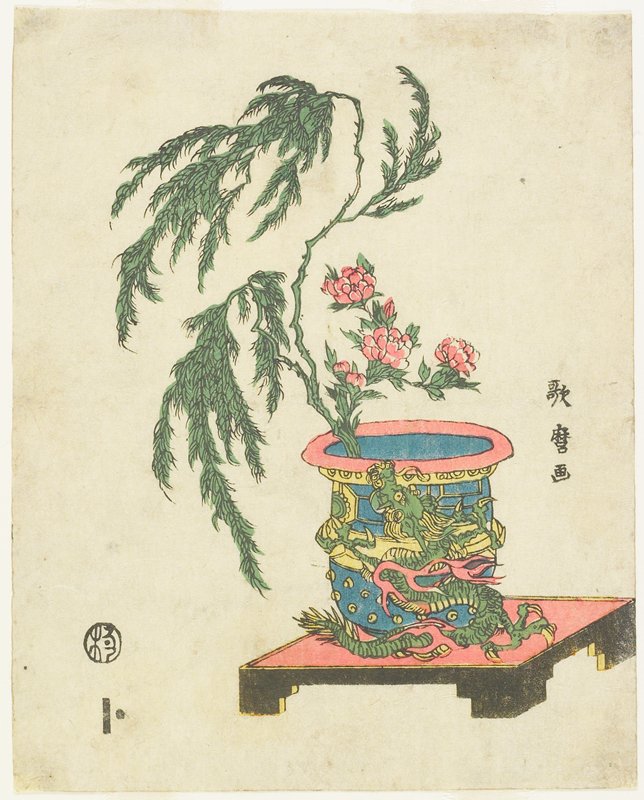
Ikebana arrangement of Peony and Willow in Dragon Pot
1781–1806
Woodblock print (nishiki-e), ink and color on paper
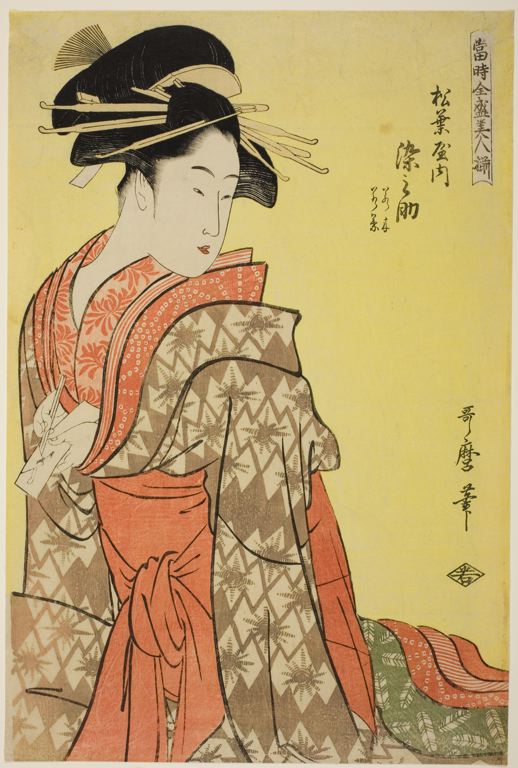
The Greatest Beauties of Our Time (Toji zensei bijin zoroe): Somenosuke of the Matsubaya with Attendants Wakagi and Wakaba
Woodblock print
Frequently Asked Questions
2 WOMENS HEADS was created by Kitagawa Utamaro (喜多川歌麿).