
A Set of Three Romantic Journeys (Michiyuki sanpuku tsui)
- Date:
- c. 1799
- Medium:
- Color woodblock print; sheet of oban triptych
- Source:
- Art Institute of Chicago
Description
Kitagawa Utamaro's A Set of Three Romantic Journeys (Michiyuki sanpuku tsui), produced around 1794, takes up one of the most affecting motifs of Edo popular literature and theater, the michiyuki travel scene in which lovers walk together toward their fate. In jōruri puppet plays and kabuki adaptations, the michiyuki was the lyrical centerpiece, a stretch of poetry sung over the lovers' final journey before catastrophe or reunion. Utamaro and his publisher organized the present set as a triad of such moments drawn from celebrated narratives, allowing collectors to assemble three sheets that read together as a meditation on devotion, transgression, and movement through landscape. Each design pairs a man and woman in distinctive costume against a setting that hints at the locale of their story, the figural composition more important than topographic accuracy. Within Utamaro's ukiyo-e output, the michiyuki prints belong to a sustained engagement with literary subjects in dialogue with his core practice of Edo bijin-ga, treating the named heroines of jōruri and kabuki as members of the same gallery of beauties that included Yoshiwara courtesans and Edo townswomen. The Art Institute of Chicago houses the impression, where it serves as a representative example of Utamaro's literary-theatrical work alongside his better-known portraits of named contemporaries.
More Prints by Kitagawa Utamaro
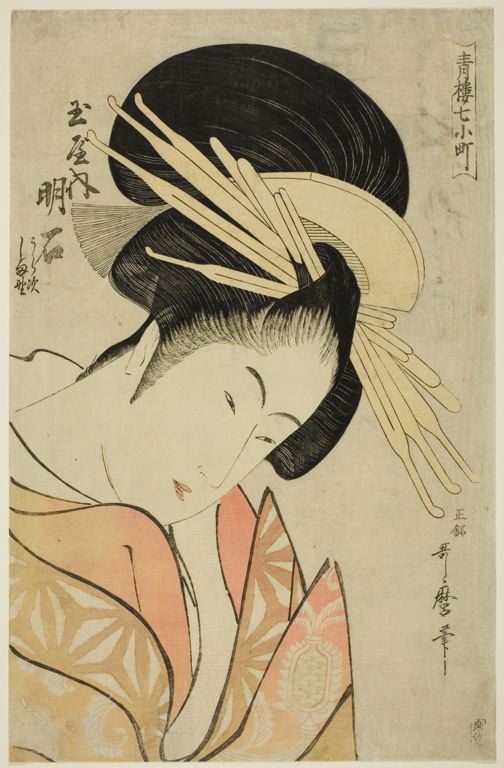
Akashi of the Tamaya, from the series Seven Komachis of Yoshiwara (Seiro nana Komachi) (Tamaya uchi Akashi, Uraji, Shimano)
Woodblock print
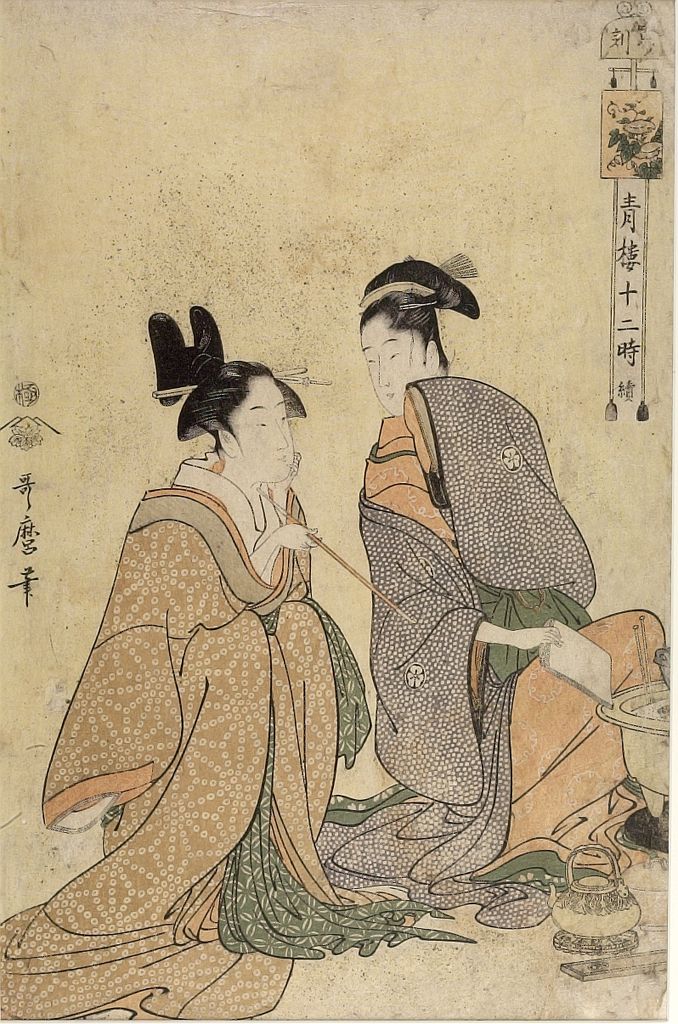
Hour of the Tiger (Tora no koku = 4 AM) from the series Twelve Hours in Yoshiwara (Seirô jûni toki tsuzuki), Late Edo period, circa 1794
Woodblock print
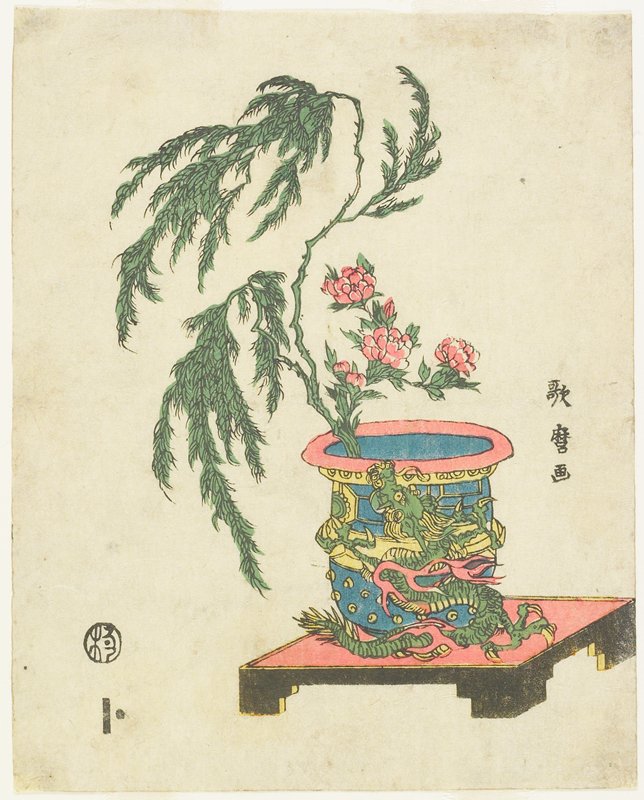
Ikebana arrangement of Peony and Willow in Dragon Pot
1781–1806
Woodblock print (nishiki-e), ink and color on paper
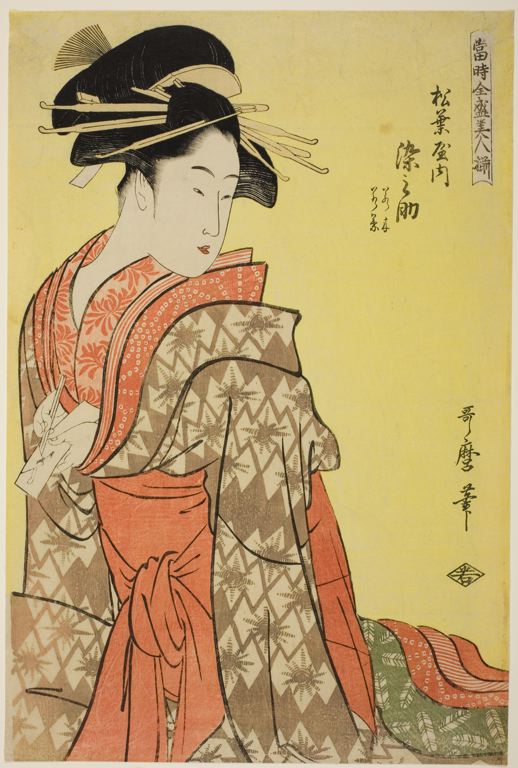
The Greatest Beauties of Our Time (Toji zensei bijin zoroe): Somenosuke of the Matsubaya with Attendants Wakagi and Wakaba
Woodblock print
Frequently Asked Questions
A Set of Three Romantic Journeys (Michiyuki sanpuku tsui) was created by Kitagawa Utamaro (喜多川歌麿) in c. 1799.