
A Wife of the Lower Rank (Gebon no nyōbō), from the series A Guide to Women's Contemporary Styles (Tōsei onna fūzoku tsū)
- Date:
- c. 1801–2
- Medium:
- color woodblock print
- Source:
- Art Institute of Chicago
Description
From the Art Institute of Chicago, this 1801 design by Kitagawa Utamaro presents A Wife of the Lower Rank (Gebon no nyōbō), from the series A Guide to Women's Contemporary Styles (Tōsei onna fūzoku tsū). The series uses a tripartite ranking, upper, middle, and lower wives, to survey women of contemporary Edo society, presenting each rank with distinctive details of costume, accessory, and demeanor. The lower-rank wife is by no means presented as plain; rather, she embodies the more practical, less ostentatious end of fashionable urban womanhood, with simpler patterns, more functional accessories, and a less elaborate hairstyle. Utamaro's vision of Edo bijin-ga here turns toward an almost sociological project: cataloguing femininity across class lines while still keeping each subject within his own idealized formal vocabulary. The composition focuses on the figure herself, the half-length okubi-e format allowing his line and color to do their work close to the picture surface. By the early 1800s, ukiyo-e was operating under heightened censorship, and series of women categorized by rank or social type offered a less politically sensitive vehicle for the bijin-ga tradition than overtly named Yoshiwara portraits. The Art Institute impression illustrates how Utamaro continued to evolve his graphic language during this restrictive period, weaving social commentary into elegant, instantly readable images that retained their commercial appeal in the rapidly changing Edo print market.
More Prints by Kitagawa Utamaro
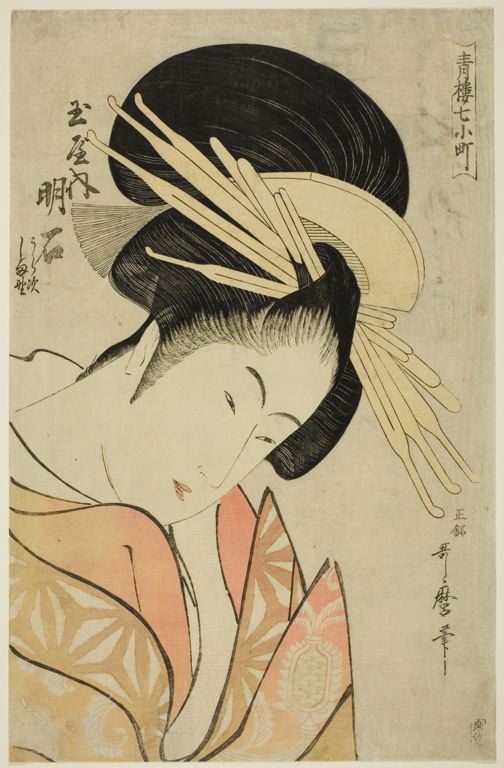
Akashi of the Tamaya, from the series Seven Komachis of Yoshiwara (Seiro nana Komachi) (Tamaya uchi Akashi, Uraji, Shimano)
Woodblock print
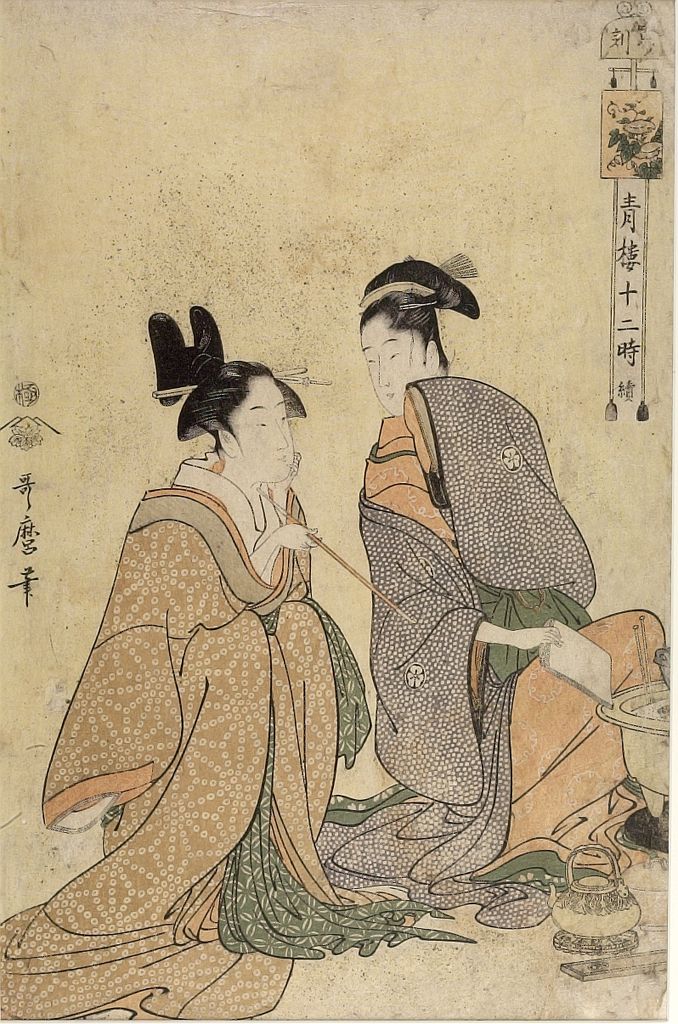
Hour of the Tiger (Tora no koku = 4 AM) from the series Twelve Hours in Yoshiwara (Seirô jûni toki tsuzuki), Late Edo period, circa 1794
Woodblock print
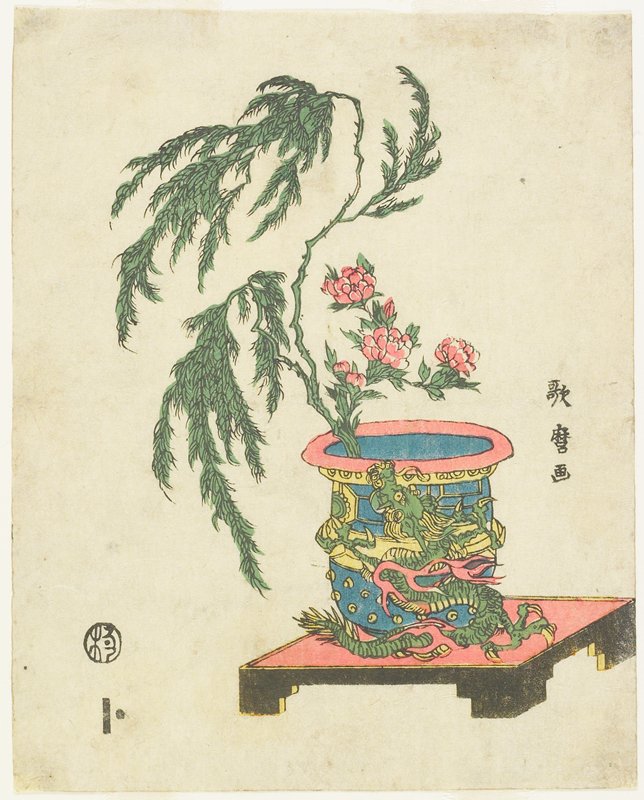
Ikebana arrangement of Peony and Willow in Dragon Pot
1781–1806
Woodblock print (nishiki-e), ink and color on paper
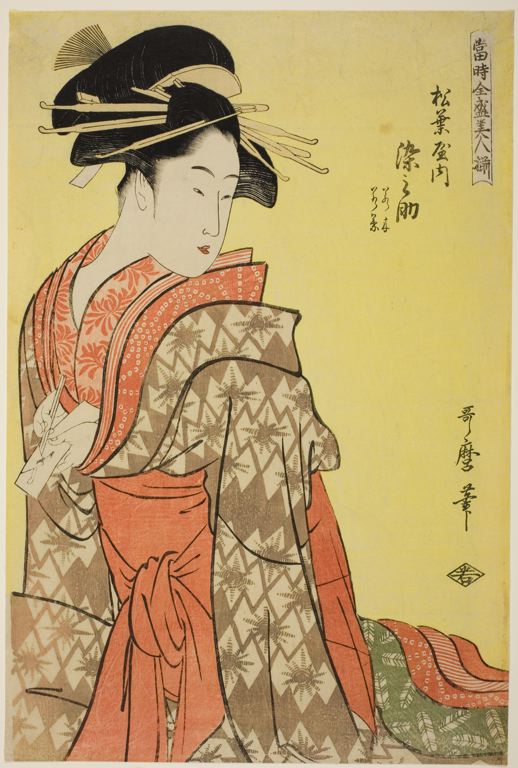
The Greatest Beauties of Our Time (Toji zensei bijin zoroe): Somenosuke of the Matsubaya with Attendants Wakagi and Wakaba
Woodblock print
Frequently Asked Questions
A Wife of the Lower Rank (Gebon no nyōbō), from the series A Guide to Women's Contemporary Styles (Tōsei onna fūzoku tsū) was created by Kitagawa Utamaro (喜多川歌麿) in c. 1801–2.