Aburaya Osome and the Shop Boy Hisamatsu
- Date:
- Edo period, circa 1800
- Medium:
- Ukiyo-e woodblock print in "hashira-e" format; ink and color on paper
- Source:
- Harvard Art Museums
Description
Aburaya Osome and the Shop Boy Hisamatsu is a Kitagawa Utamaro design of about 1800 at the Harvard Art Museums. The lovers Osome of the Aburaya oil shop and the young clerk Hisamatsu were among the most beloved tragic pairs of the Osaka and Edo theatres, their story of impossible love and double suicide retold in numerous jouri and kabuki plays throughout the late seventeenth and eighteenth centuries. Utamaro depicts them in his mature Edo bijin-ga manner, with elongated bodies, refined features and patterned robes that adapt the appearance of theatrical costume to the visual conventions of ukiyo-e. The composition concentrates on the intimacy and discretion of the pair, with the slight inclinations of their heads conveying the suppressed emotion that drives the narrative. By rephrasing Osome and Hisamatsu in the idiom of his contemporary beauty prints, Utamaro participates in the wider ukiyo-e practice of mitate, in which characters from literature and drama are brought into the present through the visual language of fashion and youth. As preserved at Harvard, the print provides a clear example of how the artist's late work consolidated his role as the leading interpreter of female emotion in late-eighteenth-century Edo print culture, while extending bijin-ga firmly into the territory of narrative.
More Prints by Kitagawa Utamaro
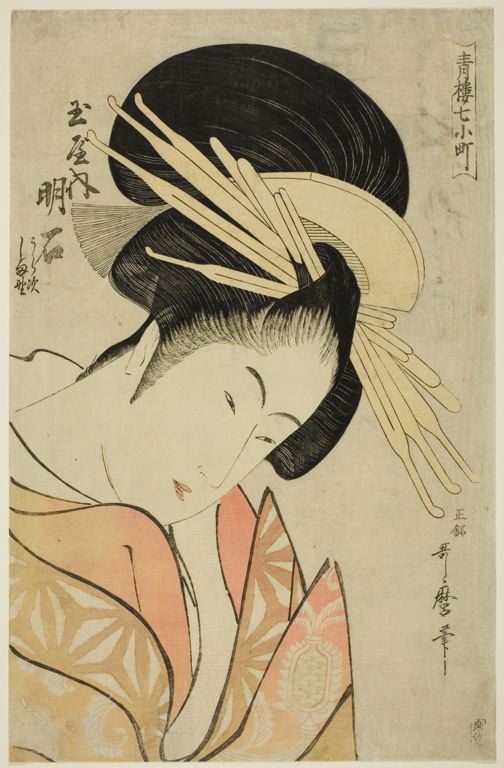
Akashi of the Tamaya, from the series Seven Komachis of Yoshiwara (Seiro nana Komachi) (Tamaya uchi Akashi, Uraji, Shimano)
Woodblock print
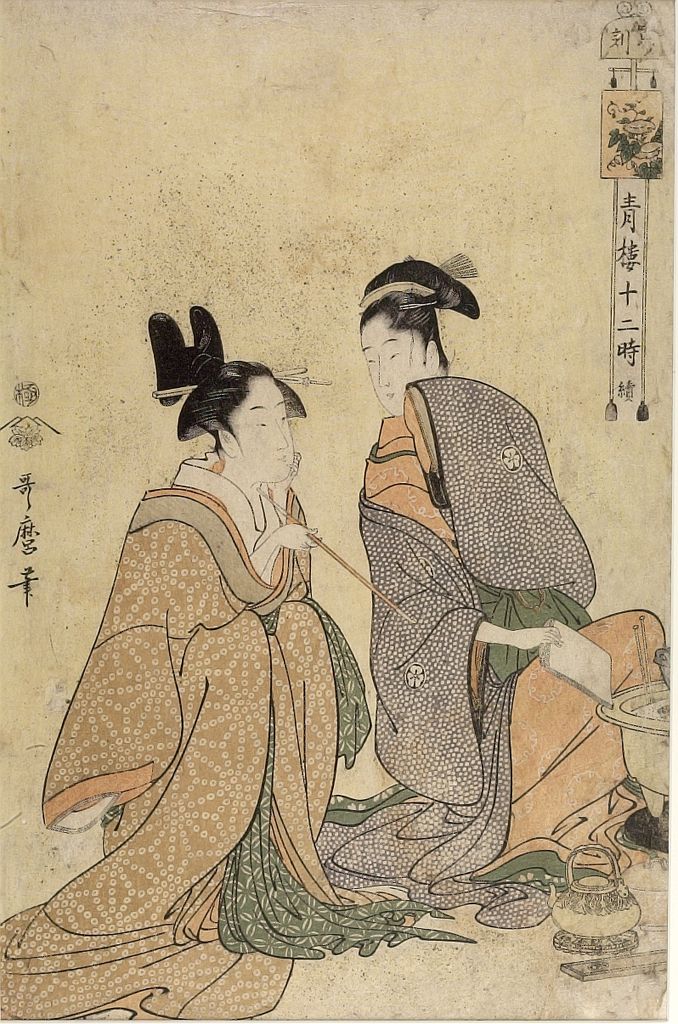
Hour of the Tiger (Tora no koku = 4 AM) from the series Twelve Hours in Yoshiwara (Seirô jûni toki tsuzuki), Late Edo period, circa 1794
Woodblock print
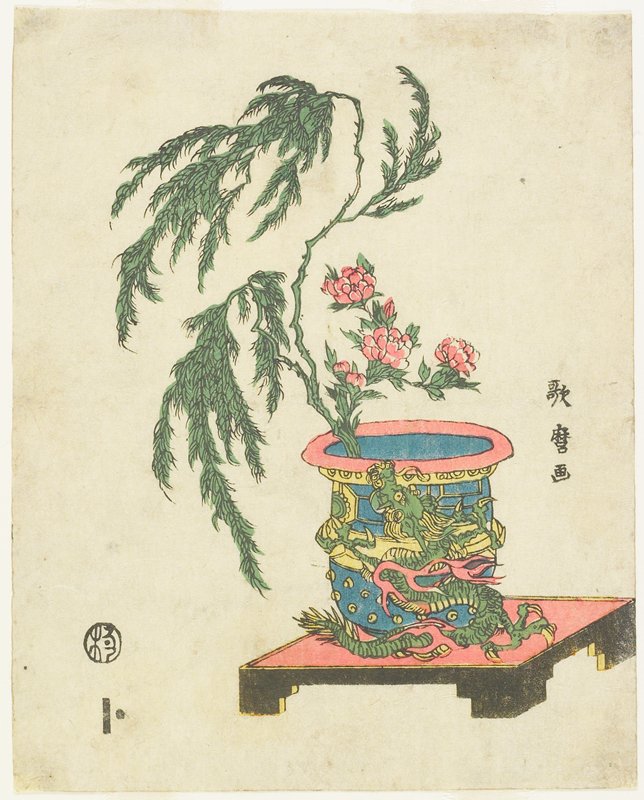
Ikebana arrangement of Peony and Willow in Dragon Pot
1781–1806
Woodblock print (nishiki-e), ink and color on paper
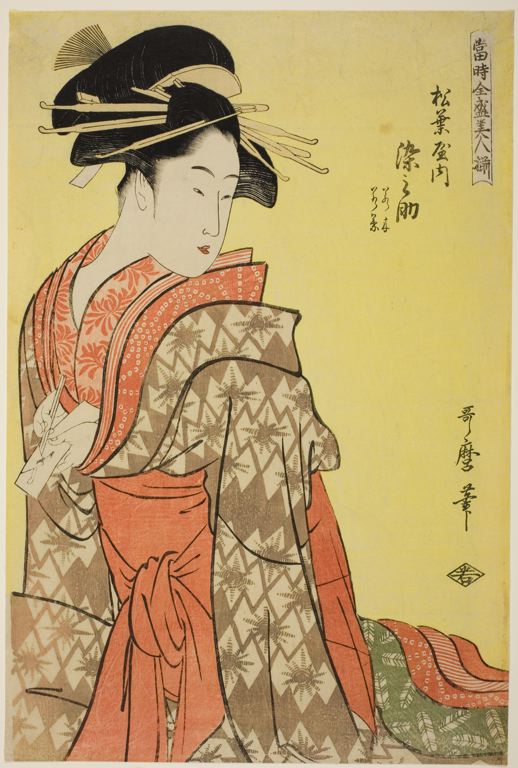
The Greatest Beauties of Our Time (Toji zensei bijin zoroe): Somenosuke of the Matsubaya with Attendants Wakagi and Wakaba
Woodblock print
More Children Prints
Frequently Asked Questions
Aburaya Osome and the Shop Boy Hisamatsu was created by Kitagawa Utamaro (喜多川歌麿) in Edo period, circa 1800.
Aburaya Osome and the Shop Boy Hisamatsu depicts children.