
Act Seven, from the series "Treasury of the Loyal Retainers (Chushingura) (Shichi-damme)"
- Date:
- c. 1801/02
- Medium:
- Color woodblock print, oban
- Source:
- Art Institute of Chicago
Description
Act Seven, from the series Treasury of the Loyal Retainers (Chushingura) (Shichi-damme), designed by Kitagawa Utamaro around 1796 and held by the Art Institute of Chicago, takes one of Edo's most beloved kabuki stories and refracts it through the lens of Edo bijin-ga. Act Seven, the famous Ichiriki teahouse scene set in Kyoto's Gion district, was a favorite subject of ukiyo-e because it allowed designers to dwell on courtesans, hidden letters, and the high tension between revenge plot and floating-world pleasure. Utamaro stages the moment in his own idiom: women dominate the composition, drawn with the slender necks and soft features that defined his bijin manner, while the male hero Yuranosuke and other retainers play supporting roles. By embedding the Chushingura plot in a print whose visual logic remains anchored in the Yoshiwara aesthetic, Kitagawa Utamaro invites viewers to read the scene simultaneously as drama and as a portrait gallery of fashionable beauties. The color scheme uses warm reds and gold-tinged yellows to evoke teahouse light, with carefully printed black for hair and patterned robes. Within the broader history of ukiyo-e Chushingura prints, where Hokusai, Toyokuni, and others competed, this design stands out for the dominance of female presence and gesture. The Art Institute of Chicago impression preserves Utamaro's command of stagecraft within the small theater of a single sheet.
More Prints by Kitagawa Utamaro
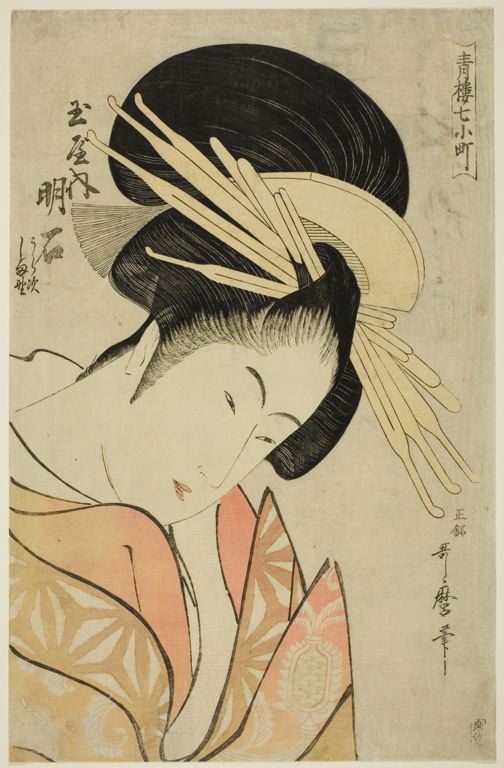
Akashi of the Tamaya, from the series Seven Komachis of Yoshiwara (Seiro nana Komachi) (Tamaya uchi Akashi, Uraji, Shimano)
Woodblock print
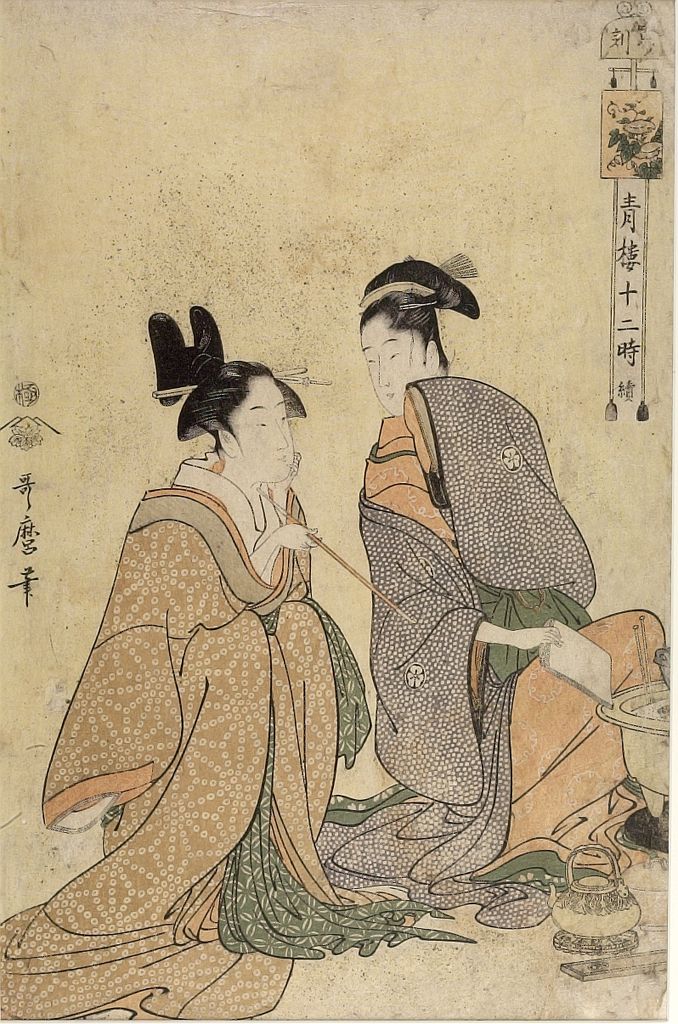
Hour of the Tiger (Tora no koku = 4 AM) from the series Twelve Hours in Yoshiwara (Seirô jûni toki tsuzuki), Late Edo period, circa 1794
Woodblock print
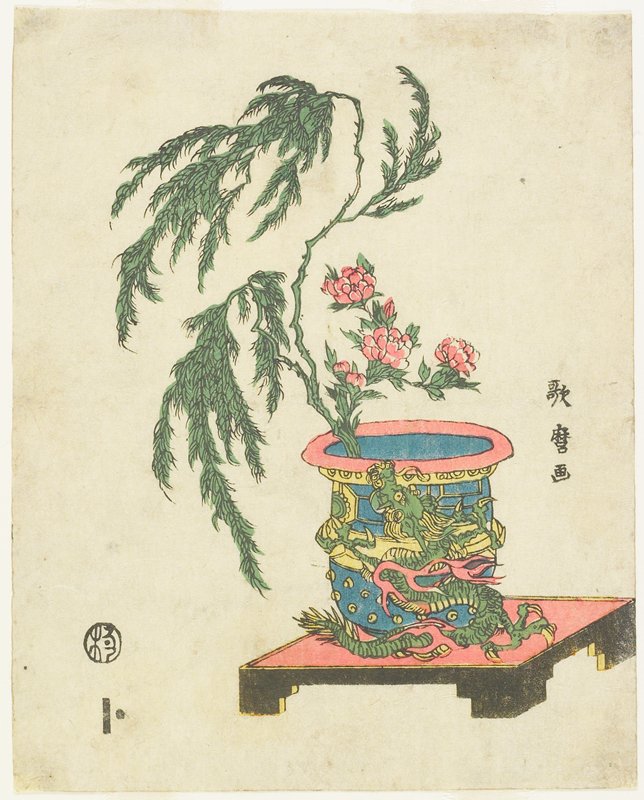
Ikebana arrangement of Peony and Willow in Dragon Pot
1781–1806
Woodblock print (nishiki-e), ink and color on paper
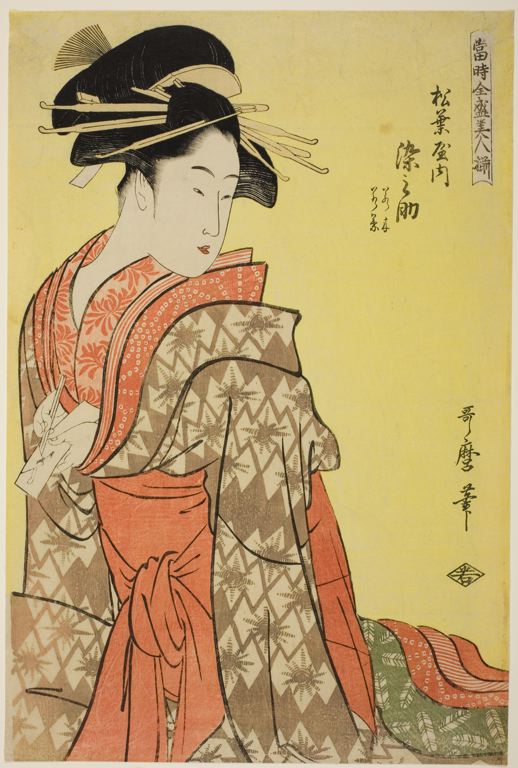
The Greatest Beauties of Our Time (Toji zensei bijin zoroe): Somenosuke of the Matsubaya with Attendants Wakagi and Wakaba
Woodblock print
Frequently Asked Questions
Act Seven, from the series "Treasury of the Loyal Retainers (Chushingura) (Shichi-damme)" was created by Kitagawa Utamaro (喜多川歌麿) in c. 1801/02.