After the Bath, from an untitled series of everyday scenes
- Date:
- c. 1799-1800 (Kansei 11-12)
- Medium:
- Woodblock print; ink and color on paper
- Source:
- Harvard Art Museums
Description
Dated about 1796 and preserved at the Harvard Art Museums, After the Bath comes from an untitled series of everyday scenes by Kitagawa Utamaro, a body of work in which the artist explored the rhythms of ordinary domestic life rather than the public spectacle of the Yoshiwara quarter. The print depicts a beauty in the act of dressing or drying herself after a bath, with hair still gathered loosely, light cotton garments wrapped or half-arranged, and the unguarded posture of a moment behind closed doors. Utamaro's command of Edo bijin-ga shows in the careful management of the body's silhouette: an elongated neck and softly bent torso establish vertical rhythm, while the slight downward tilt of the head registers a quiet introspection. Color is deliberately restrained, allowing the white of an under-robe and the pale flesh of the figure's face and arms to act as the visual focal points. The everyday-scene series belongs to a moment in Utamaro's career when shifting censorship pushed him toward less explicit identification of named courtesans, prompting more universal subject matter without sacrificing the careful, almost ethnographic attention to women's daily routines. For students of ukiyo-e, the Harvard sheet illustrates how Utamaro absorbed and refined earlier bath-time prints by his predecessors, transforming a familiar genre into the contemplative, near-private scene that came to define his late bijin-ga work.
More Prints by Kitagawa Utamaro
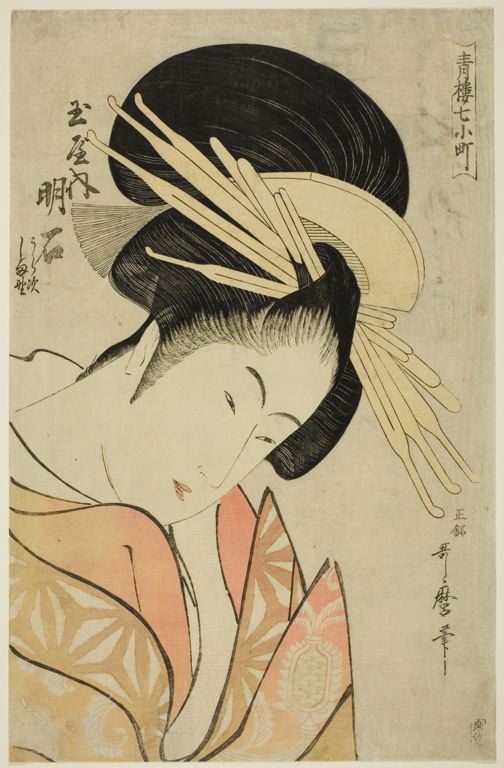
Akashi of the Tamaya, from the series Seven Komachis of Yoshiwara (Seiro nana Komachi) (Tamaya uchi Akashi, Uraji, Shimano)
Woodblock print
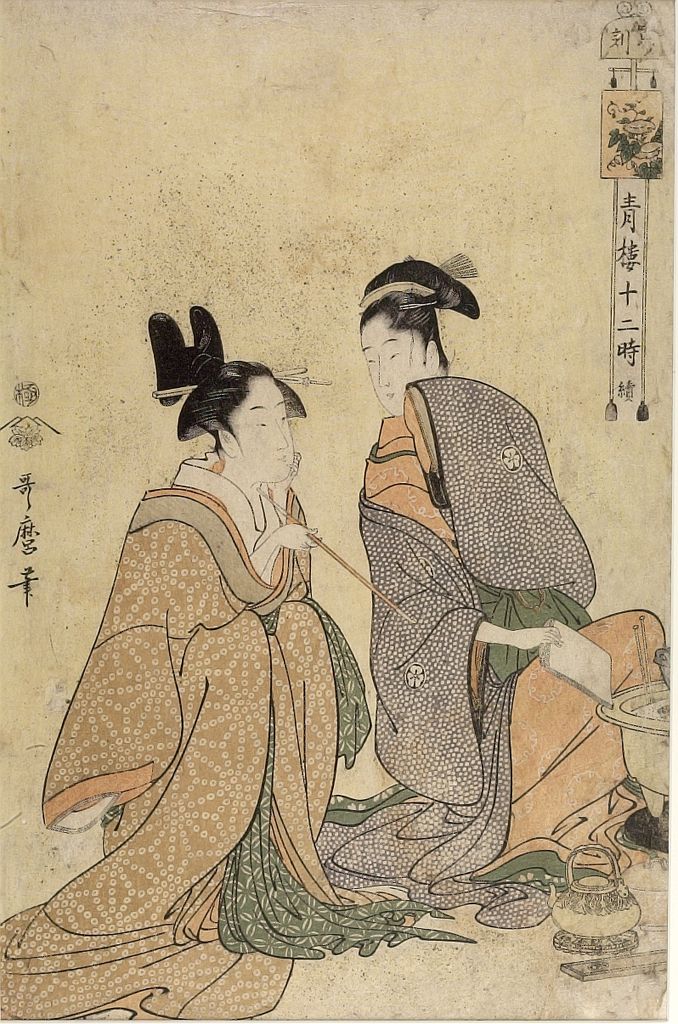
Hour of the Tiger (Tora no koku = 4 AM) from the series Twelve Hours in Yoshiwara (Seirô jûni toki tsuzuki), Late Edo period, circa 1794
Woodblock print
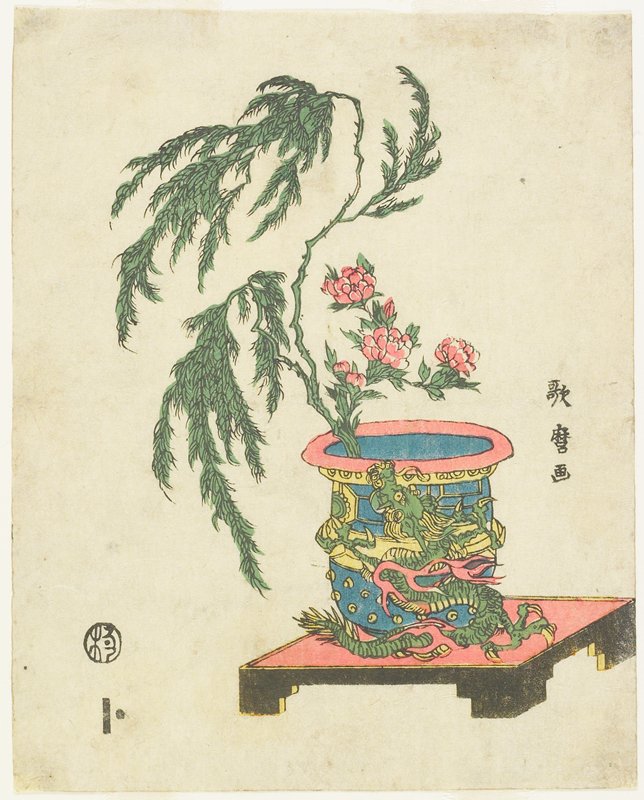
Ikebana arrangement of Peony and Willow in Dragon Pot
1781–1806
Woodblock print (nishiki-e), ink and color on paper
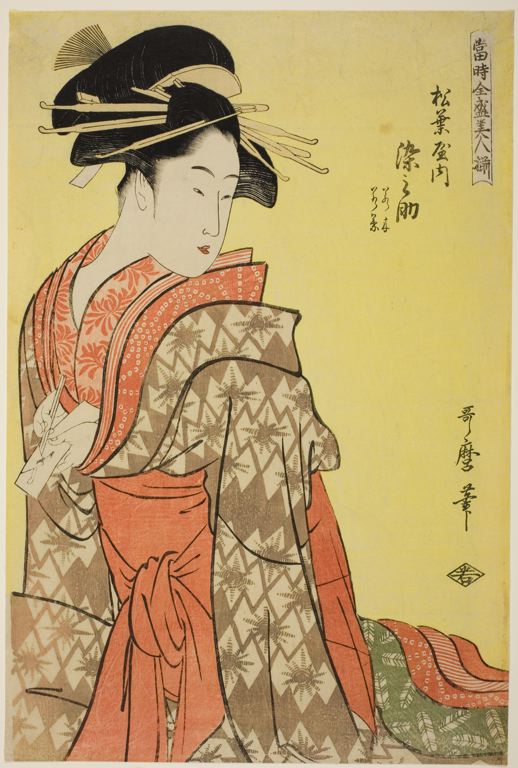
The Greatest Beauties of Our Time (Toji zensei bijin zoroe): Somenosuke of the Matsubaya with Attendants Wakagi and Wakaba
Woodblock print
Frequently Asked Questions
After the Bath, from an untitled series of everyday scenes was created by Kitagawa Utamaro (喜多川歌麿) in c. 1799-1800 (Kansei 11-12).