
An Arrangement of Morning Glories
- Date:
- c. 1796
- Medium:
- Color woodblock print; chuban
- Source:
- Art Institute of Chicago
Description
An Arrangement of Morning Glories, dated 1791 and held in the Art Institute of Chicago, is a finely observed flower print by Kitagawa Utamaro that complements his better-known portraits of Edo bijin-ga. Morning glories (asagao) bloomed at the height of summer in eighteenth-century Edo and were the subject of intense connoisseurship, with townsmen cultivating exotic varieties and gathering in early-morning shows to compare specimens. In this print, the artist composes a single arrangement of asagao, balancing the twining vines, heart-shaped leaves, and trumpet-like flowers against an open ground that focuses attention on the plant's structural rhythms. Subtle color gradations within the petals, ranging from clear blue to softer mauve and white, suggest the early-morning translucence of the blooms, and the leaves' veining is drawn with the kind of precise keyblock work normally reserved for textile patterns. The plant's vertical reach gives the image a strong central axis, while small downward-turning blossoms create syncopated rests in the composition. As an exercise in restrained ukiyo-e design, the print reflects Utamaro's regular collaboration with kyoka poets and surimono enthusiasts who prized close observation of seasonal flowers. Within the Art Institute of Chicago's collection, this Kitagawa Utamaro print provides a strong example of how the artist could move from the human face to a single climbing vine without loss of conceptual coherence, demonstrating the breadth of late-eighteenth-century ukiyo-e beyond the categorical boundaries of bijin-ga.
More Prints by Kitagawa Utamaro
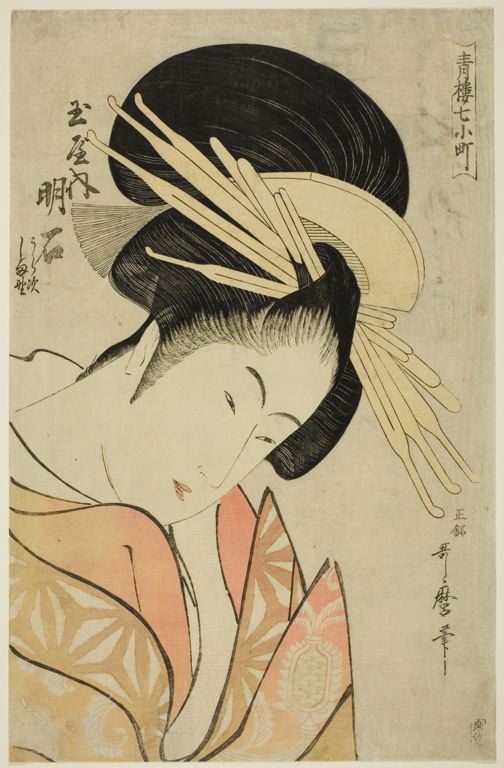
Akashi of the Tamaya, from the series Seven Komachis of Yoshiwara (Seiro nana Komachi) (Tamaya uchi Akashi, Uraji, Shimano)
Woodblock print
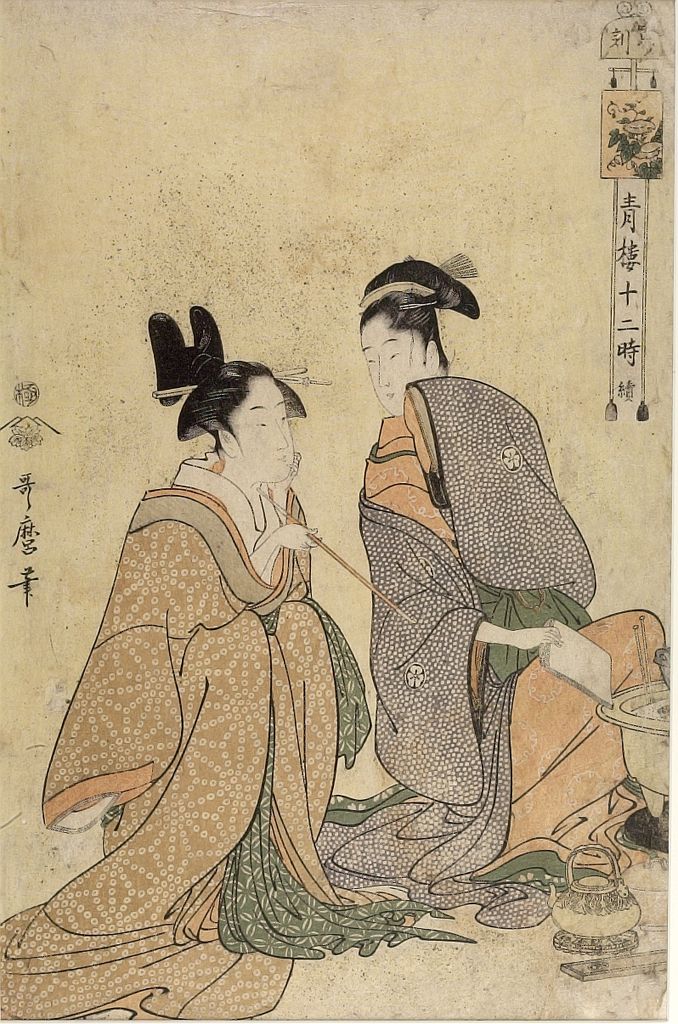
Hour of the Tiger (Tora no koku = 4 AM) from the series Twelve Hours in Yoshiwara (Seirô jûni toki tsuzuki), Late Edo period, circa 1794
Woodblock print
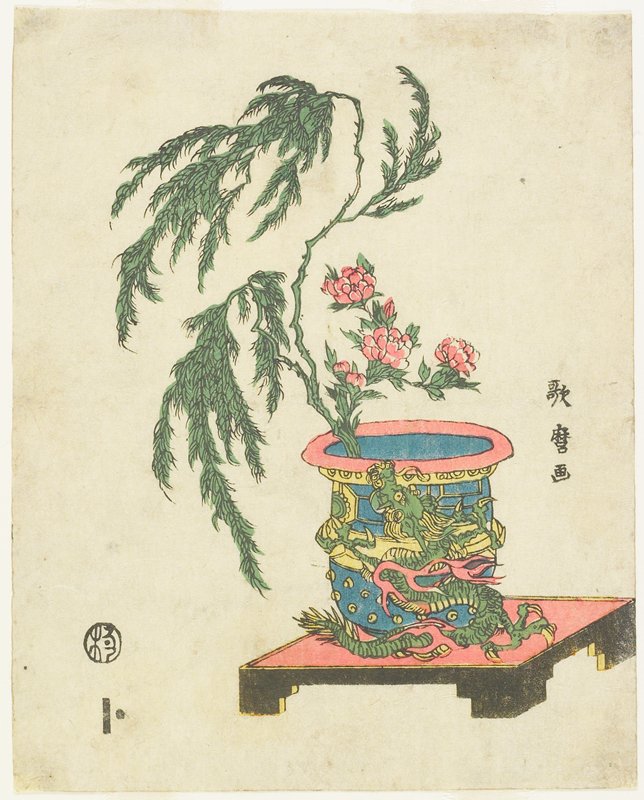
Ikebana arrangement of Peony and Willow in Dragon Pot
1781–1806
Woodblock print (nishiki-e), ink and color on paper
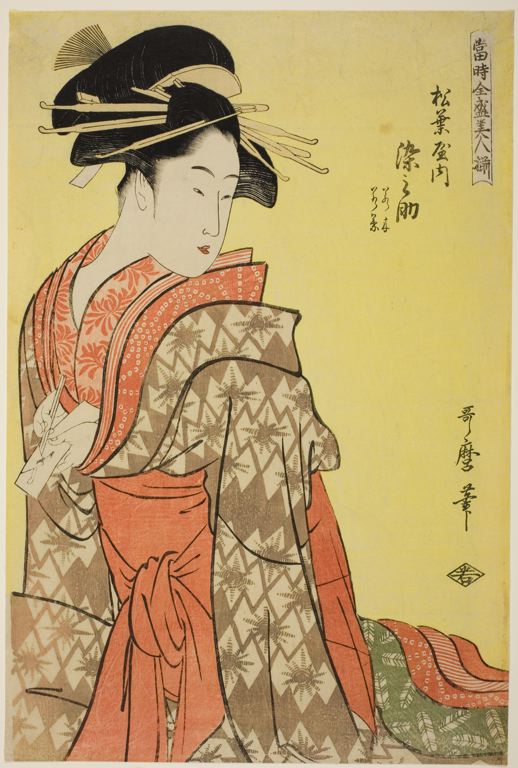
The Greatest Beauties of Our Time (Toji zensei bijin zoroe): Somenosuke of the Matsubaya with Attendants Wakagi and Wakaba
Woodblock print
Frequently Asked Questions
An Arrangement of Morning Glories was created by Kitagawa Utamaro (喜多川歌麿) in c. 1796.