
An Arrangement of Shuro Palm Leaves in a Bronze Jar
- Date:
- c. 1796
- Medium:
- Color woodblock print; aiban
- Source:
- Art Institute of Chicago
Description
An Arrangement of Shuro Palm Leaves in a Bronze Jar, dated 1791 and held in the Art Institute of Chicago, is a quiet still life that demonstrates how Kitagawa Utamaro adapted the language of Edo bijin-ga to the subject of ikebana. Although the artist is best known for portraits of Yoshiwara courtesans and teahouse beauties, he frequently designed flower arrangements and bird-and-flower compositions, often as luxury surimono or as illustrations for kyoka anthologies. Here, the broad fan-shaped leaves of the shuro palm are gathered in a sturdy bronze vessel and rendered in carefully modulated ink and color. Utamaro contrasts the deeply incised leaf lobes with the smooth, polished surface of the bronze, suggesting the weight and patina of the jar through a few precisely placed highlights. The composition centers on the abstract geometry of the foliage rather than on narrative or figure, but the underlying sensibility, balancing pattern, mass, and empty ground, is the same one that organizes his bijin portraits. Such arrangements also reflect the seriousness with which Edo townsmen approached the seasonal display of flowers, an art form practiced by the same kyoka and tea-ceremony circles that supported ukiyo-e publishers like Tsutaya Juzaburo. As part of the Art Institute of Chicago's collection, the print invites comparison with Utamaro's other still-life designs and helps round out a fuller picture of Kitagawa Utamaro as a designer of refined domestic imagery within the broader ukiyo-e tradition.
More Prints by Kitagawa Utamaro
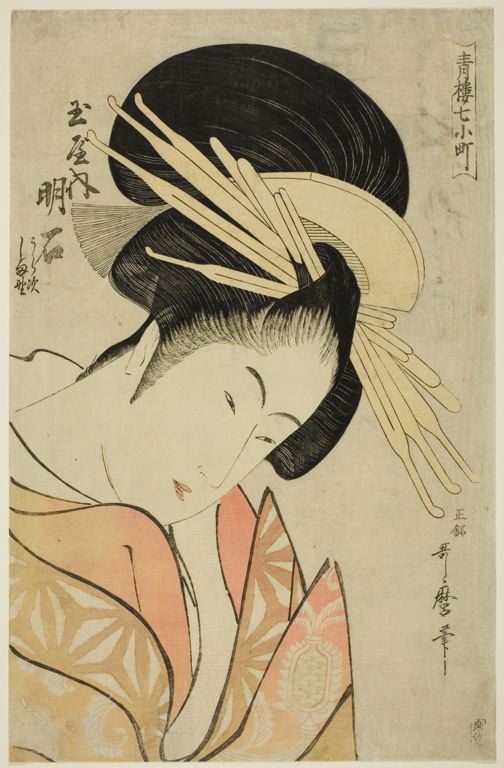
Akashi of the Tamaya, from the series Seven Komachis of Yoshiwara (Seiro nana Komachi) (Tamaya uchi Akashi, Uraji, Shimano)
Woodblock print
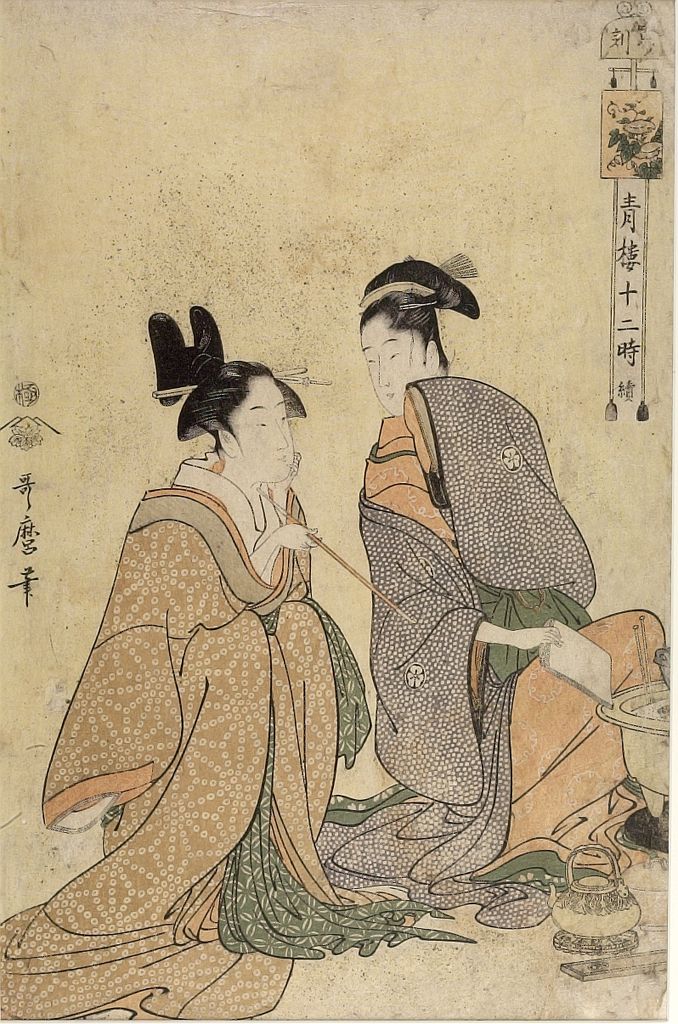
Hour of the Tiger (Tora no koku = 4 AM) from the series Twelve Hours in Yoshiwara (Seirô jûni toki tsuzuki), Late Edo period, circa 1794
Woodblock print
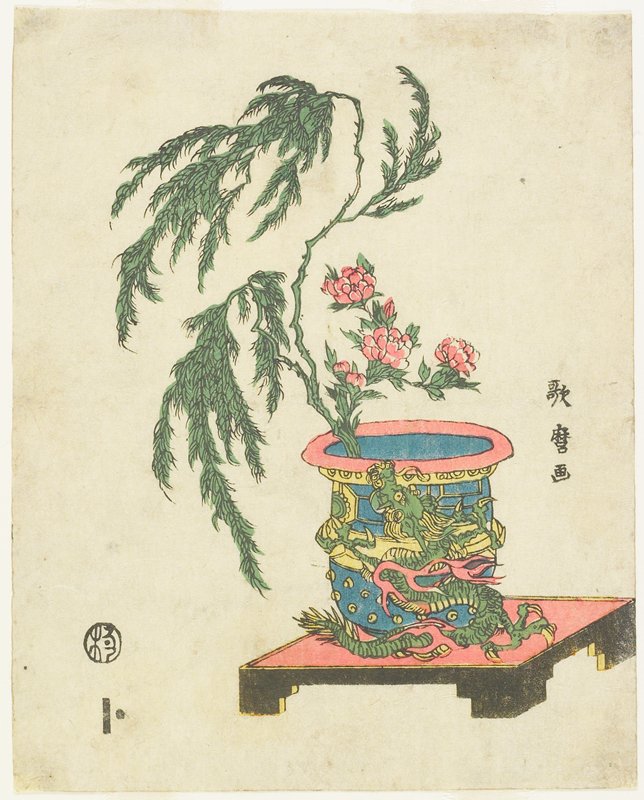
Ikebana arrangement of Peony and Willow in Dragon Pot
1781–1806
Woodblock print (nishiki-e), ink and color on paper
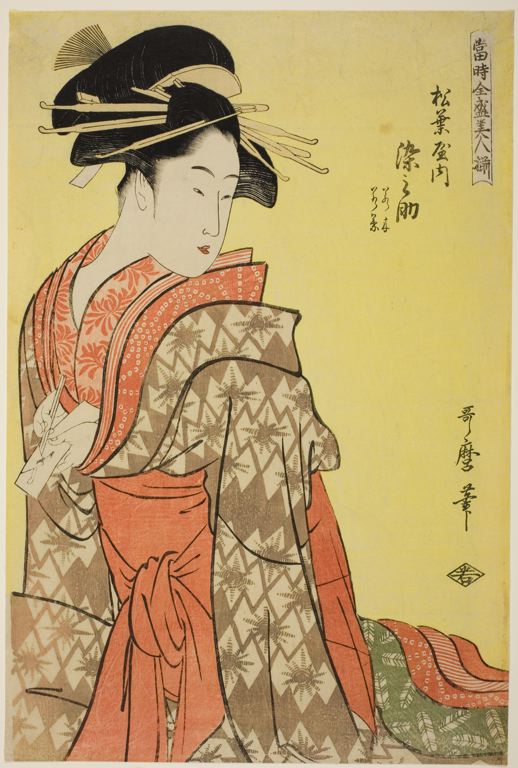
The Greatest Beauties of Our Time (Toji zensei bijin zoroe): Somenosuke of the Matsubaya with Attendants Wakagi and Wakaba
Woodblock print
Frequently Asked Questions
An Arrangement of Shuro Palm Leaves in a Bronze Jar was created by Kitagawa Utamaro (喜多川歌麿) in c. 1796.