
An Arrangement of Valerian and Chinese Bell Flowers
- Date:
- c. 1796
- Medium:
- Color woodblock print; aiban
- Source:
- Art Institute of Chicago
Description
A vertical arrangement of feathery yellow valerian blossoms and small pale bell-shaped flowers on leafy stems rises from a shallow green trumpet-form vase, its long neck balanced upright on the backs of two spotted toads seated side by side on a green-and-cream slatted stand. The palette is limited to soft yellows, greens, and browns against an unpainted cream background, with the artist's signature and seal in the upper right. Kitagawa Utamaro, "An Arrangement of Valerian and Chinese Bell Flowers," 1791, color woodblock print, aiban.
More Prints by Kitagawa Utamaro
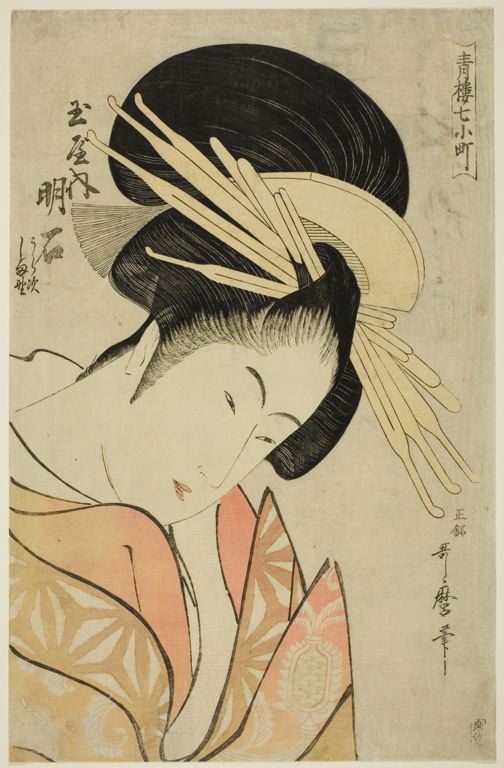
Akashi of the Tamaya, from the series Seven Komachis of Yoshiwara (Seiro nana Komachi) (Tamaya uchi Akashi, Uraji, Shimano)
Woodblock print
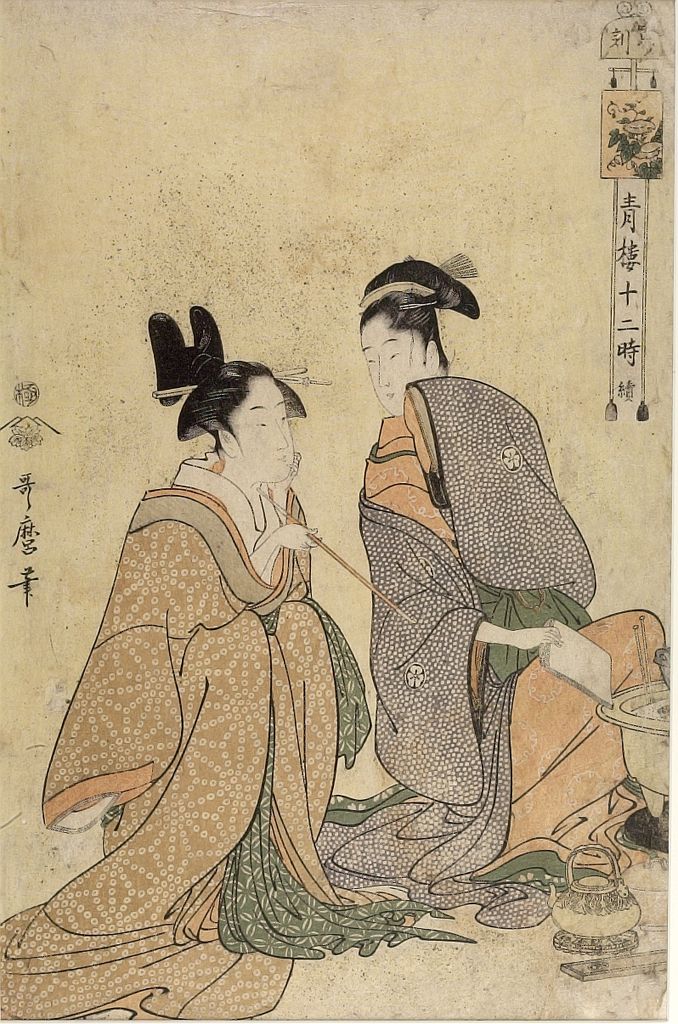
Hour of the Tiger (Tora no koku = 4 AM) from the series Twelve Hours in Yoshiwara (Seirô jûni toki tsuzuki), Late Edo period, circa 1794
Woodblock print
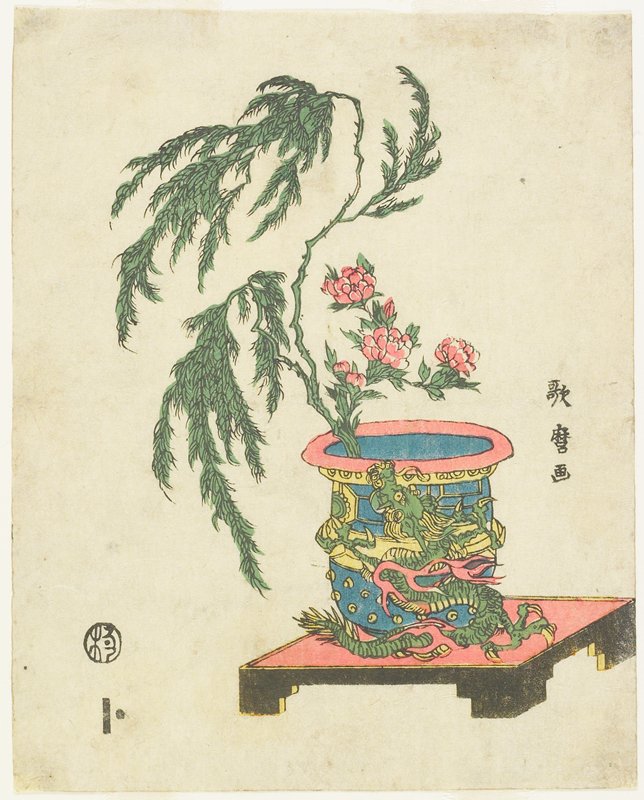
Ikebana arrangement of Peony and Willow in Dragon Pot
1781–1806
Woodblock print (nishiki-e), ink and color on paper
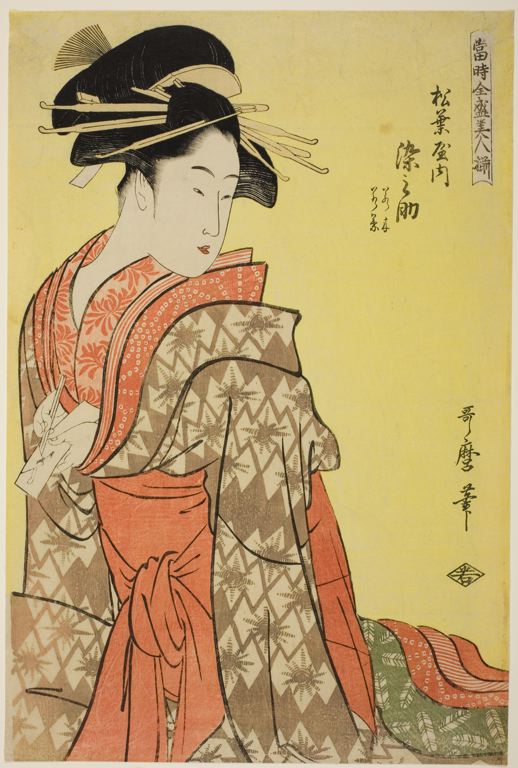
The Greatest Beauties of Our Time (Toji zensei bijin zoroe): Somenosuke of the Matsubaya with Attendants Wakagi and Wakaba
Woodblock print
More Birds & Flowers Prints
Frequently Asked Questions
An Arrangement of Valerian and Chinese Bell Flowers was created by Kitagawa Utamaro (喜多川歌麿) in c. 1796.
An Arrangement of Valerian and Chinese Bell Flowers depicts birds & flowers.