
An Imperial Carriage
- Date:
- c. 1801/04
- Medium:
- Color woodblock print; oban triptych
- Source:
- Art Institute of Chicago
Description
An Imperial Carriage, dated 1796 and held by the Art Institute of Chicago, is another of Kitagawa Utamaro's mitate-e reworkings of classical imagery, here taking the gosho-guruma ox-drawn carriage of Heian court life and recasting its passengers and attendants as fashionable Edo women. The conceit relies on his audience's familiarity with literature such as the Tale of Genji and the Tales of Ise, in which carriages mediate aristocratic encounters; replacing court figures with contemporary townswomen transposes those associations onto the Edo bijin-ga universe and rewards classical literacy with quiet humor. Utamaro's line is unhurried and confident: the curve of a carriage shaft and the arc of a sleeve are treated with the same elegant economy. Patterned silks, lacquered fittings, and the heavy weight of ox-cart wheels are rendered through restrained ukiyo-e color blocks and subtle gradations rather than detailed shading. The work exemplifies the mid-1790s vogue for parody designs in which past and present are made to share a single playful surface.
More Prints by Kitagawa Utamaro
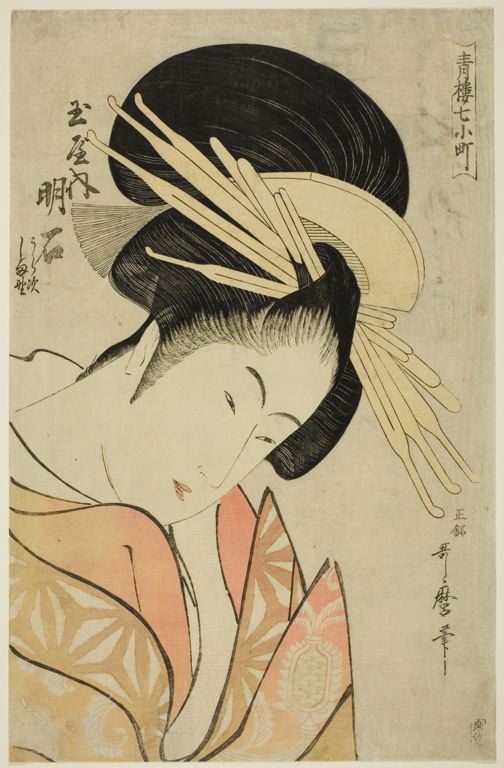
Akashi of the Tamaya, from the series Seven Komachis of Yoshiwara (Seiro nana Komachi) (Tamaya uchi Akashi, Uraji, Shimano)
Woodblock print
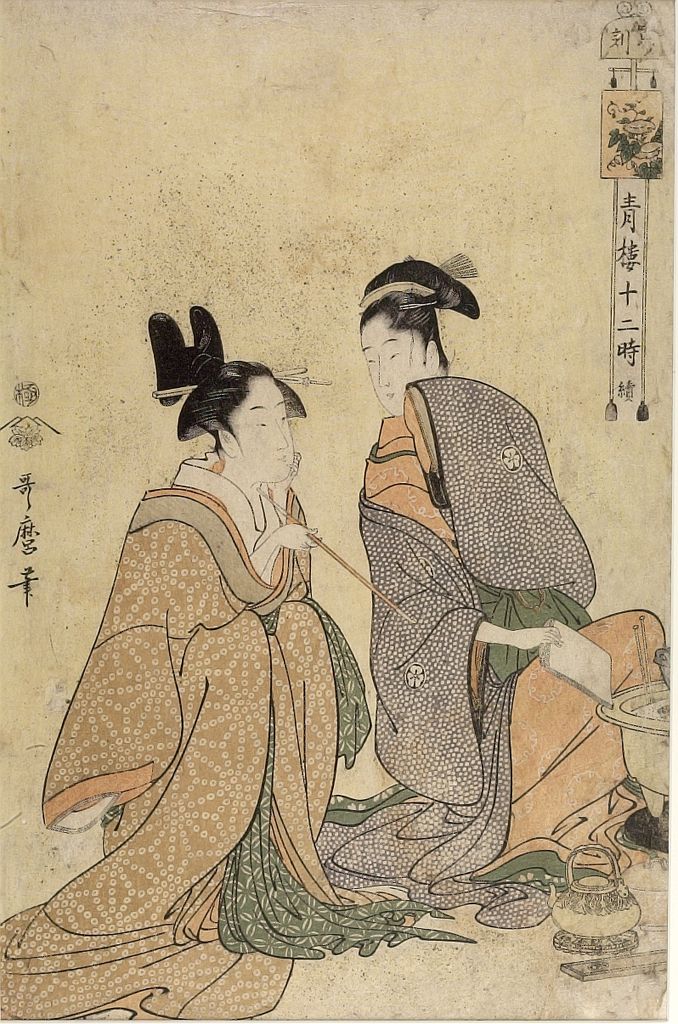
Hour of the Tiger (Tora no koku = 4 AM) from the series Twelve Hours in Yoshiwara (Seirô jûni toki tsuzuki), Late Edo period, circa 1794
Woodblock print
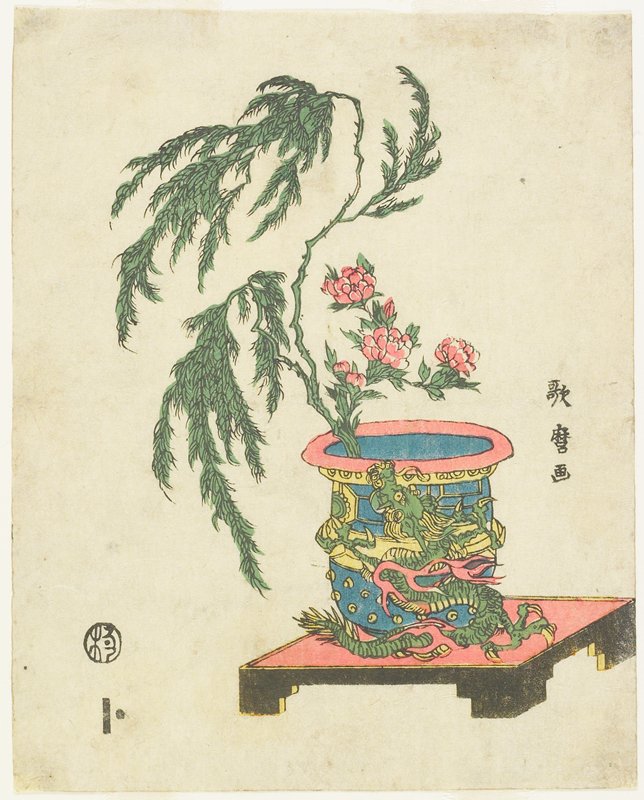
Ikebana arrangement of Peony and Willow in Dragon Pot
1781–1806
Woodblock print (nishiki-e), ink and color on paper
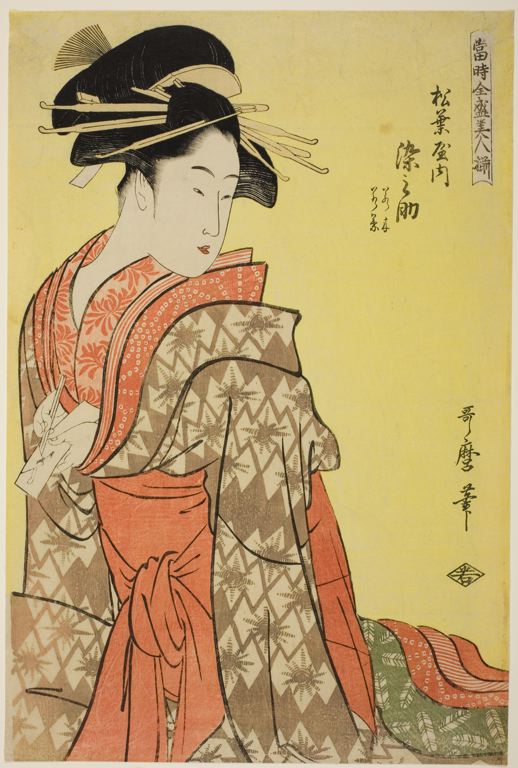
The Greatest Beauties of Our Time (Toji zensei bijin zoroe): Somenosuke of the Matsubaya with Attendants Wakagi and Wakaba
Woodblock print
Frequently Asked Questions
An Imperial Carriage was created by Kitagawa Utamaro (喜多川歌麿) in c. 1801/04.