
Ashi-gai, hamaguri, ko-gai, suzume-gai, akoya-gai, and katashi-gai, from the illustrated book "Gifts from the Ebb Tide (Shiohi no tsuto)"
- Date:
- 1789
- Medium:
- Color woodblock print; double-page illustration from book
- Source:
- Art Institute of Chicago
Description
Kitagawa Utamaro's Ashi-gai, hamaguri, ko-gai, suzume-gai, akoya-gai, and katashi-gai, from the illustrated book Gifts from the Ebb Tide (Shiohi no tsuto), is held by the Art Institute of Chicago (artwork 34835). Shiohi no tsuto is one of the most celebrated of Utamaro's three so-called kyoka ehon, illustrated books of comic verse, in which he combined natural-history precision with the literary culture of Edo's poetry clubs. Each opening in Shiohi no tsuto pairs printed kyoka verses by named poets with a meticulous still-life of seashells gathered at low tide, with several varieties identified by name on the sheet. The composition in question groups together ashi-gai, hamaguri (clam), ko-gai, suzume-gai (sparrow shell), akoya-gai (pearl oyster), and katashi-gai, depicting each species with careful attention to color, surface, and shape. By drawing shells with this level of accuracy, Utamaro and his publisher, Tsutaya Juzaburo, produced a work that operates simultaneously as a luxury kyoka project, a natural-history reference, and a refined nishiki-e statement. The book's status is also significant in Utamaro's career: alongside Picture Book of Insects (Ehon mushi erabi) and the bird album Momo chidori, Shiohi no tsuto cemented his reputation as a designer whose range extended far beyond Edo bijin-ga and Yoshiwara portraiture into the visual culture of natural history. The Art Institute of Chicago's record preserves the page for study and reproduction. For collectors and researchers of ukiyo-e, the print is a reminder that Utamaro's contribution to Edo printmaking included some of the period's most ambitious nature studies, executed with the same precision he brought to his portraits of women.
More Prints by Kitagawa Utamaro
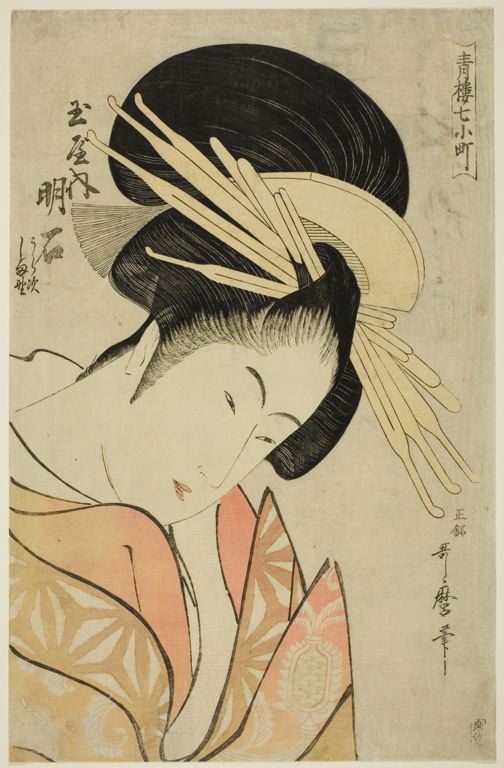
Akashi of the Tamaya, from the series Seven Komachis of Yoshiwara (Seiro nana Komachi) (Tamaya uchi Akashi, Uraji, Shimano)
Woodblock print
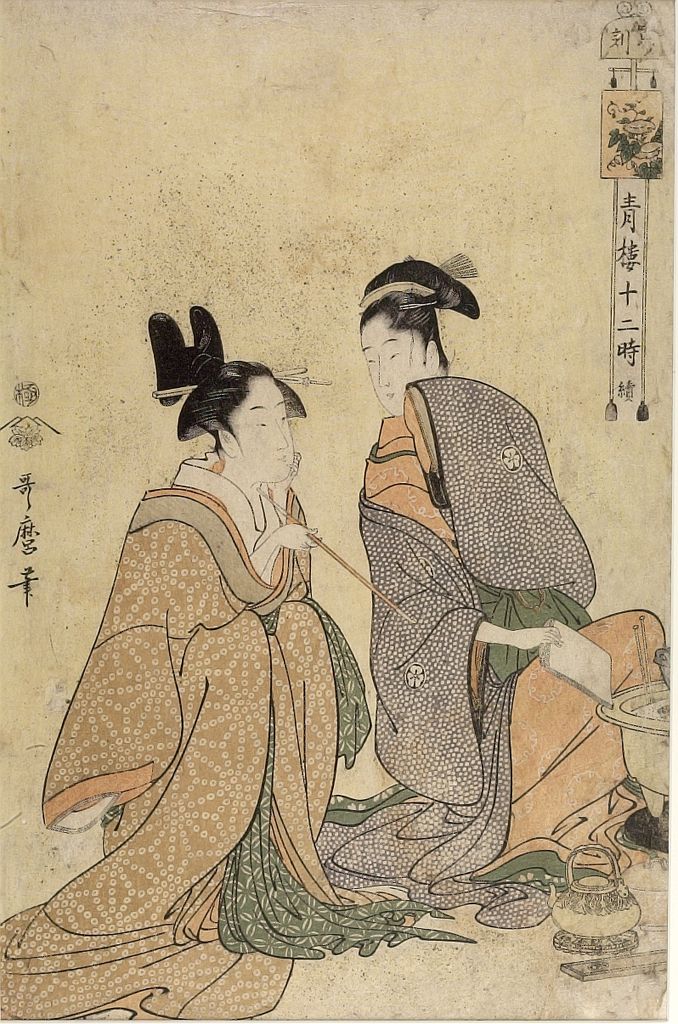
Hour of the Tiger (Tora no koku = 4 AM) from the series Twelve Hours in Yoshiwara (Seirô jûni toki tsuzuki), Late Edo period, circa 1794
Woodblock print
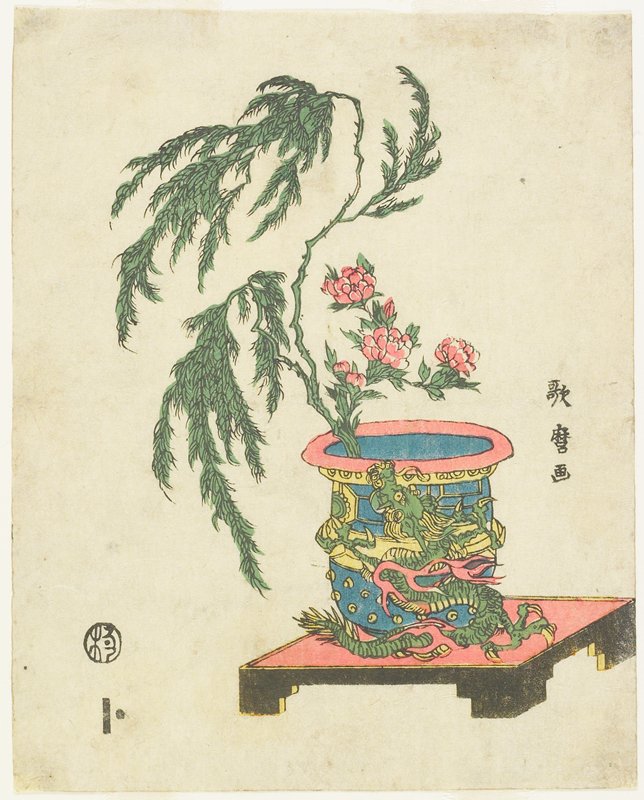
Ikebana arrangement of Peony and Willow in Dragon Pot
1781–1806
Woodblock print (nishiki-e), ink and color on paper
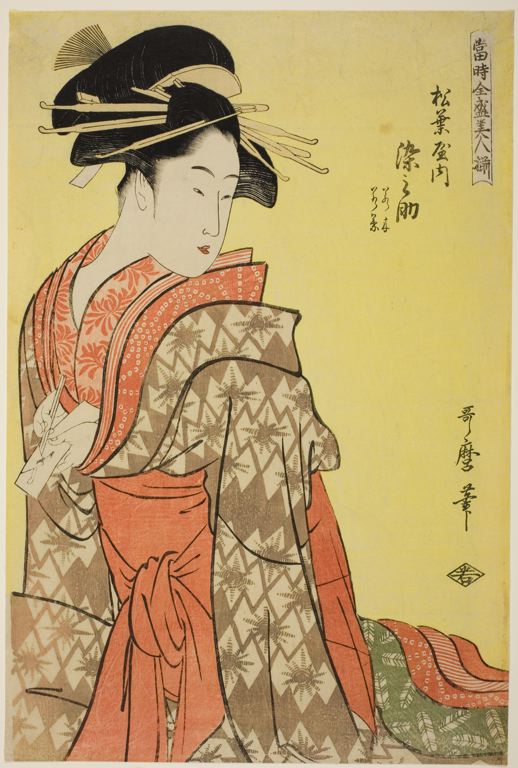
The Greatest Beauties of Our Time (Toji zensei bijin zoroe): Somenosuke of the Matsubaya with Attendants Wakagi and Wakaba
Woodblock print
Frequently Asked Questions
Ashi-gai, hamaguri, ko-gai, suzume-gai, akoya-gai, and katashi-gai, from the illustrated book "Gifts from the Ebb Tide (Shiohi no tsuto)" was created by Kitagawa Utamaro (喜多川歌麿) in 1789.