Beauties from Osaka, Edo and Kyoto by Utamaro, Kunisada and Tsukimaro, with poems by Santō Kyōzan, Tatekawa Danjūrō and Jippensha Ikkusen
- Date:
- Edo period, datable to 1813
- Medium:
- Ukiyo-e woodblock-printed surimono in "naga-surimono" format; ink, color, and metallic pigment on paper
- Source:
- Harvard Art Museums
Description
This collaborative ukiyo-e sheet, dated 1813, pairs designs by Kitagawa Utamaro with contributions by Utagawa Kunisada and Kikukawa Tsukimaro, presenting Beauties from Osaka, Edo and Kyoto accompanied by poems from the popular authors Santo Kyozan, Tatekawa Danjuro and Jippensha Ikku. By 1813 Utamaro himself was no longer living, but his name and templates continued to anchor luxury surimono-style projects that brought together leading artists and writers of the late Edo cultural scene. The print stages a refined competition: each city is personified by a beauty whose costume, hairstyle, and accessories speak to local fashion, while the inscribed verses by Edo's best-known kyoka and gesaku authors offer humorous, literary counterpoint. The Edo bijin in the Utamaro tradition is presented with the elongated face and graceful neck that had become the template for sophisticated bijin-ga, even as Kunisada's Osaka and Tsukimaro's Kyoto beauties point toward the next generation's more sculptural, animated style. Together the three figures map the geography of fashionable Japan, while the writers' verses turn a portrait into an album of regional taste. The Harvard Art Museums preserves this impression (object 207181), where it documents how ukiyo-e workshops perpetuated Utamaro's legacy through cross-studio collaborations well into the nineteenth century.
More Prints by Kitagawa Utamaro
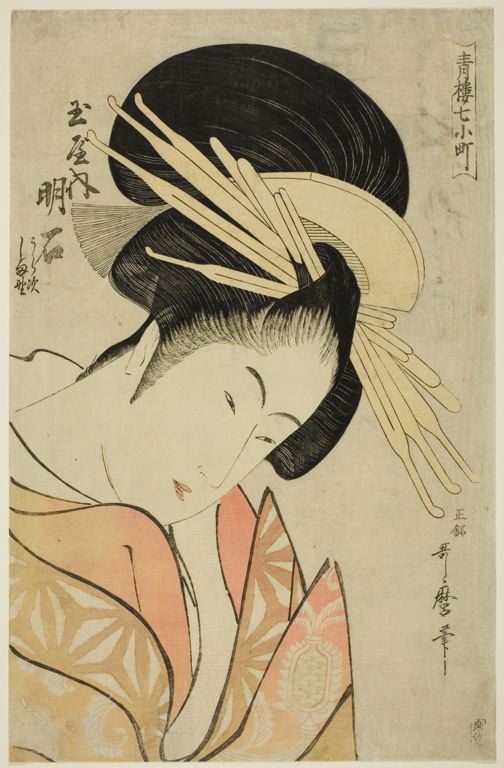
Akashi of the Tamaya, from the series Seven Komachis of Yoshiwara (Seiro nana Komachi) (Tamaya uchi Akashi, Uraji, Shimano)
Woodblock print
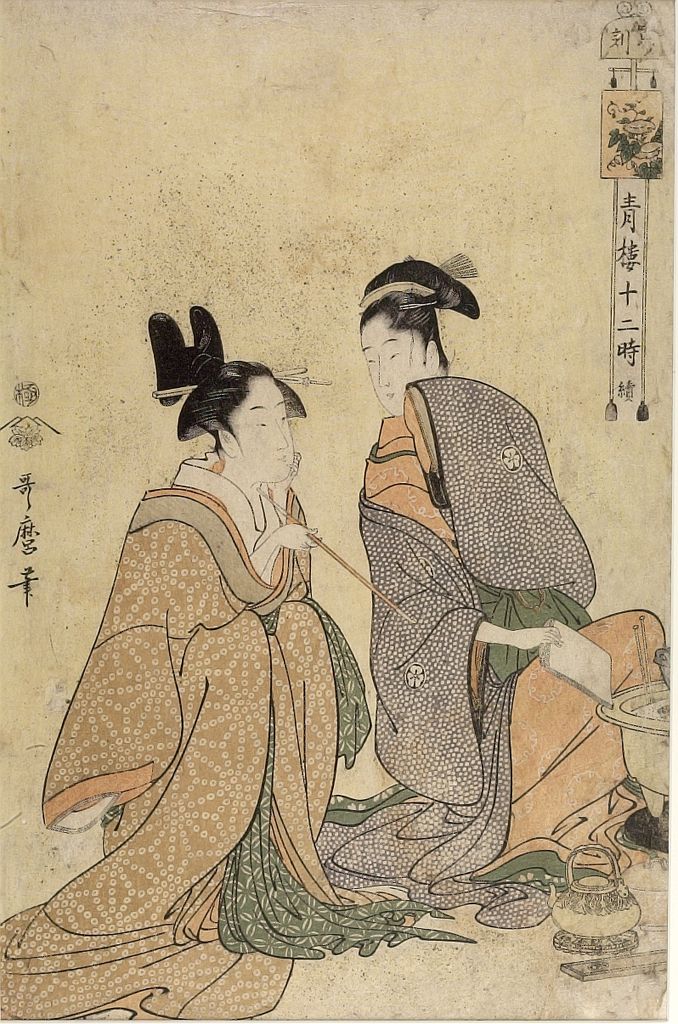
Hour of the Tiger (Tora no koku = 4 AM) from the series Twelve Hours in Yoshiwara (Seirô jûni toki tsuzuki), Late Edo period, circa 1794
Woodblock print
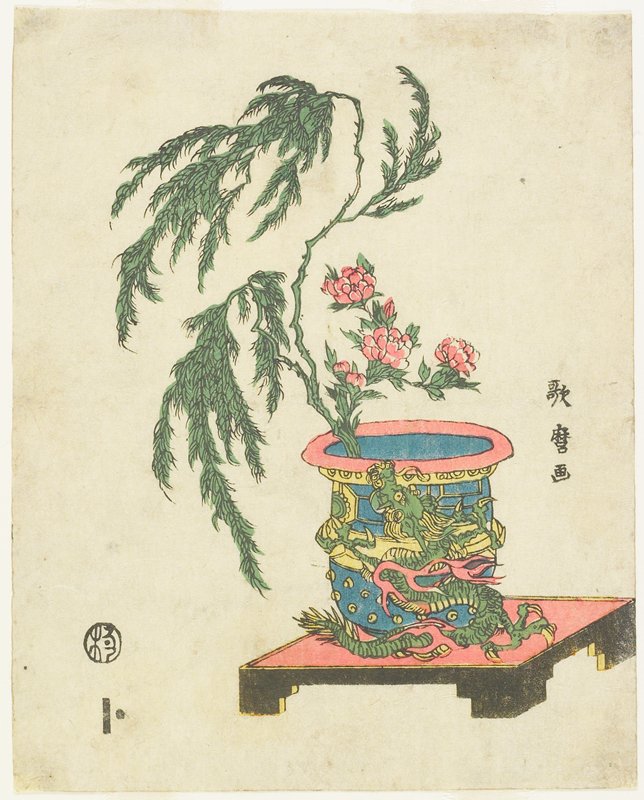
Ikebana arrangement of Peony and Willow in Dragon Pot
1781–1806
Woodblock print (nishiki-e), ink and color on paper
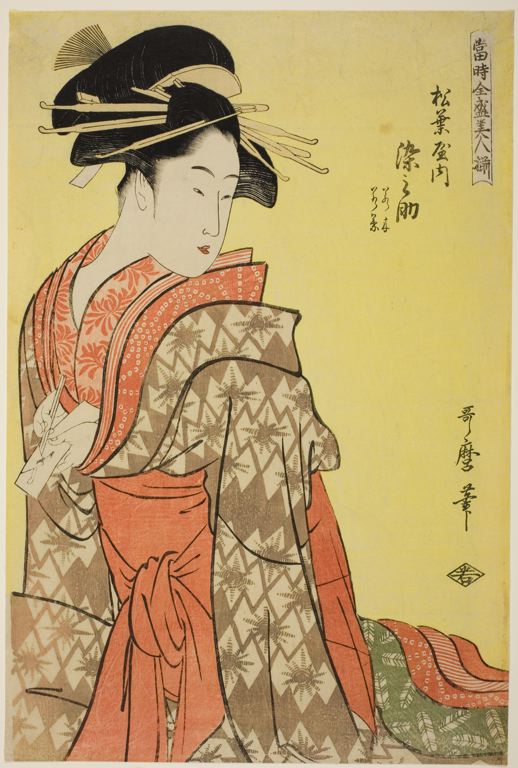
The Greatest Beauties of Our Time (Toji zensei bijin zoroe): Somenosuke of the Matsubaya with Attendants Wakagi and Wakaba
Woodblock print
Frequently Asked Questions
Beauties from Osaka, Edo and Kyoto by Utamaro, Kunisada and Tsukimaro, with poems by Santō Kyōzan, Tatekawa Danjūrō and Jippensha Ikkusen was created by Kitagawa Utamaro (喜多川歌麿) in Edo period, datable to 1813.