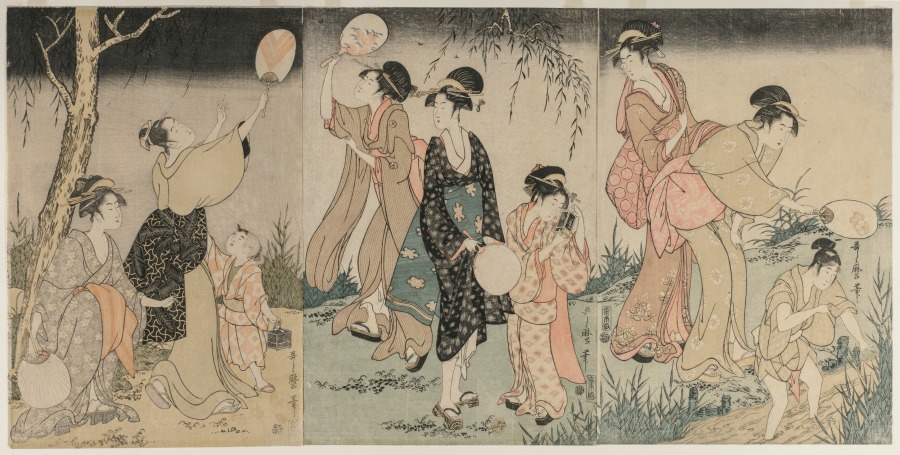
Catching Fireflies
- Date:
- c. 1796–97
- Medium:
- Triptych of woodblock prints; ink and color on paper
- Source:
- Cleveland Museum of Art
Description
Dated to 1796 and held by the Cleveland Museum of Art, "Catching Fireflies" is a quintessential Kitagawa Utamaro composition in the warm-weather mode of Edo bijin-ga. Firefly catching (hotaru-gari) was a beloved seasonal pastime in late-Edo summer evenings, a chance for young women, children, and lovers to gather by riversides and rice paddies armed with fans, cages, and trailing sleeves. Utamaro returned to this theme repeatedly because it offered everything his ukiyo-e demanded: graceful figures bent in animated postures, kimono falling open at the collar to suggest the heat of the night, lantern light glancing across faces, and the suggestion of an erotic charge in the dark. The scene allowed his publisher to indulge the deep midnight blues and pale silvery whites that printmakers of the Kansei era handled with such technical mastery. Cleveland's impression captures the quietly luminous mood that distinguishes his late-1790s output. While many Yoshiwara prints depicted the licensed quarters as a stagelike fantasy, firefly compositions placed beautiful women in the lived seasonal time of the city. Utamaro is the artist most responsible for elevating these intimate moments into a major theme of ukiyo-e, and a fine impression of "Catching Fireflies" demonstrates why his work remains a touchstone for representations of Edo period feminine leisure.
More Prints by Kitagawa Utamaro
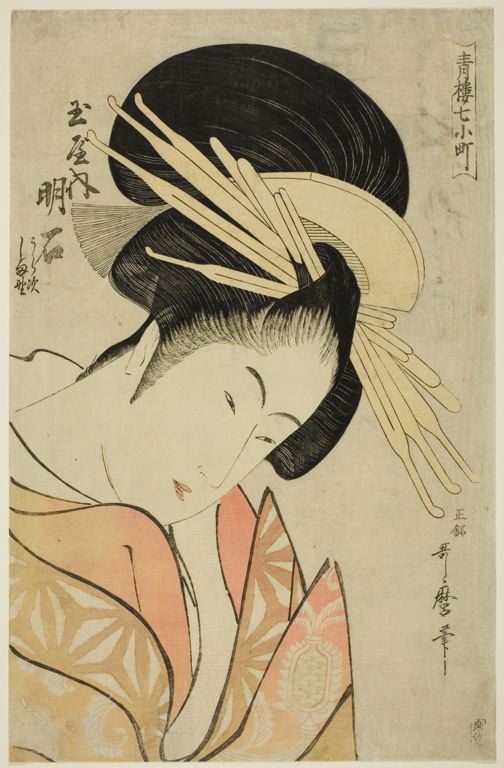
Akashi of the Tamaya, from the series Seven Komachis of Yoshiwara (Seiro nana Komachi) (Tamaya uchi Akashi, Uraji, Shimano)
Woodblock print
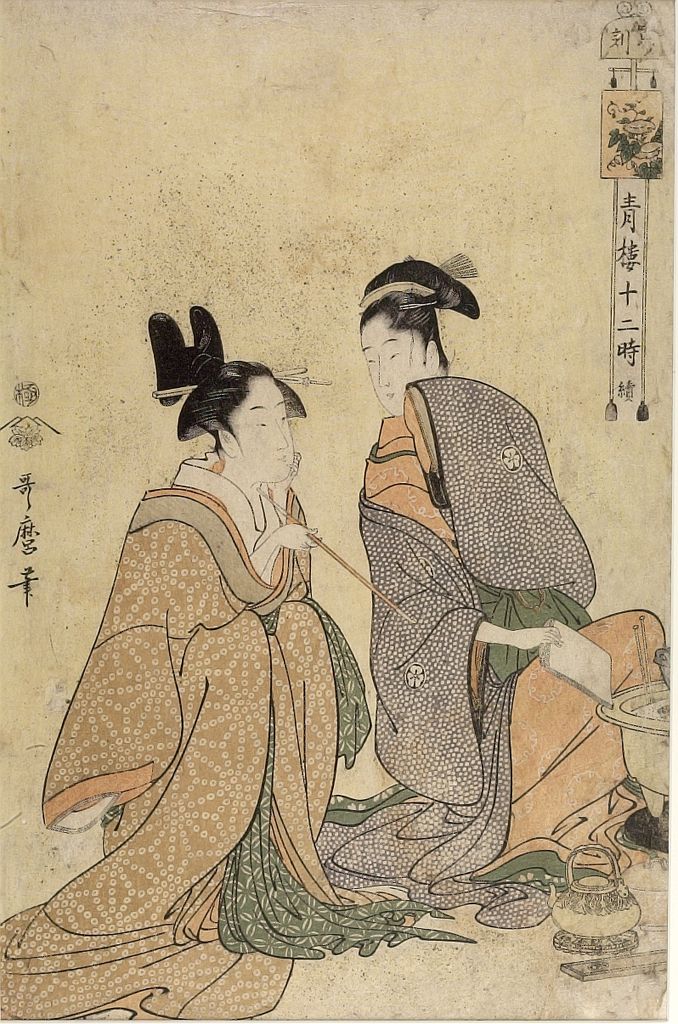
Hour of the Tiger (Tora no koku = 4 AM) from the series Twelve Hours in Yoshiwara (Seirô jûni toki tsuzuki), Late Edo period, circa 1794
Woodblock print
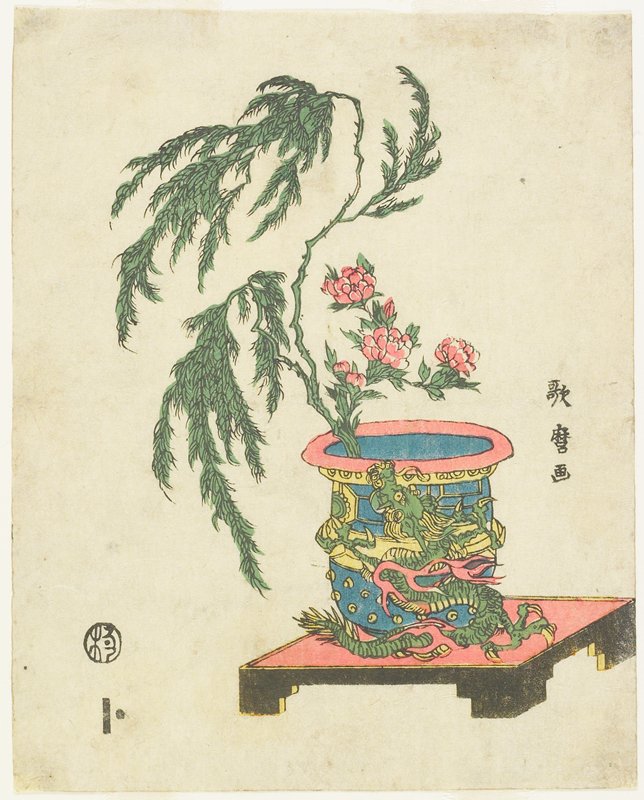
Ikebana arrangement of Peony and Willow in Dragon Pot
1781–1806
Woodblock print (nishiki-e), ink and color on paper
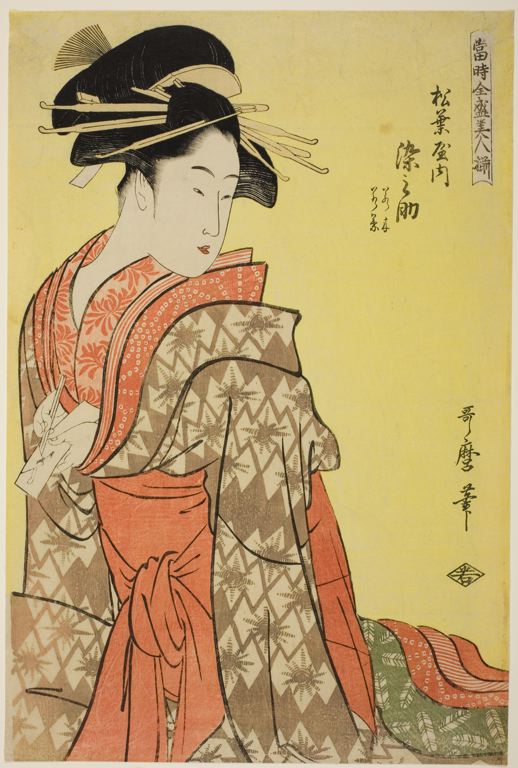
The Greatest Beauties of Our Time (Toji zensei bijin zoroe): Somenosuke of the Matsubaya with Attendants Wakagi and Wakaba
Woodblock print
Frequently Asked Questions
Catching Fireflies was created by Kitagawa Utamaro (喜多川歌麿) in c. 1796–97.