
Chrysanthemum Boy
- Date:
- c. 1801/02
- Medium:
- Color woodblock print; aiban
- Source:
- Art Institute of Chicago
Description
Chrysanthemum Boy, dated 1796 and held by the Art Institute of Chicago, is one of Kitagawa Utamaro's prints centered on a child, in this case associated with the chrysanthemum motif of the autumn ninth-month festival of Choyo, when long-life wishes were exchanged and chrysanthemums were prominently displayed. The 'chrysanthemum boy' (kikujido) is also a classical legendary figure, a Taoist child of immortality who lives among chrysanthemums in a mountain dale; Utamaro plays on these layered associations by casting a contemporary Edo child in the role, blending mitate parody with sentimental child portraiture. As elsewhere in his ukiyo-e, soft round faces and abbreviated patterning describe the figure with affectionate economy, while restrained background gives full attention to the child and the flower. Although the most famous Edo bijin-ga focuses on adult women, prints like this remind us that Utamaro applied the same observational care to children, and that his late-1790s practice systematically extended the conventions of the bijin-ga portrait to the inhabitants of the household more broadly.
More Prints by Kitagawa Utamaro
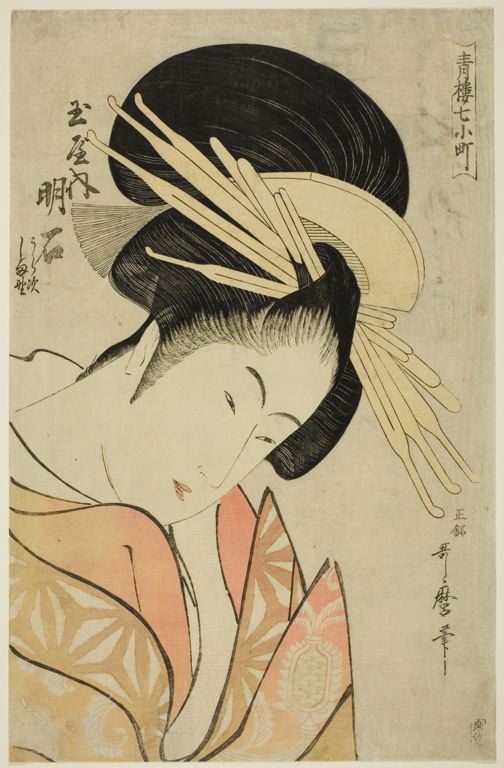
Akashi of the Tamaya, from the series Seven Komachis of Yoshiwara (Seiro nana Komachi) (Tamaya uchi Akashi, Uraji, Shimano)
Woodblock print
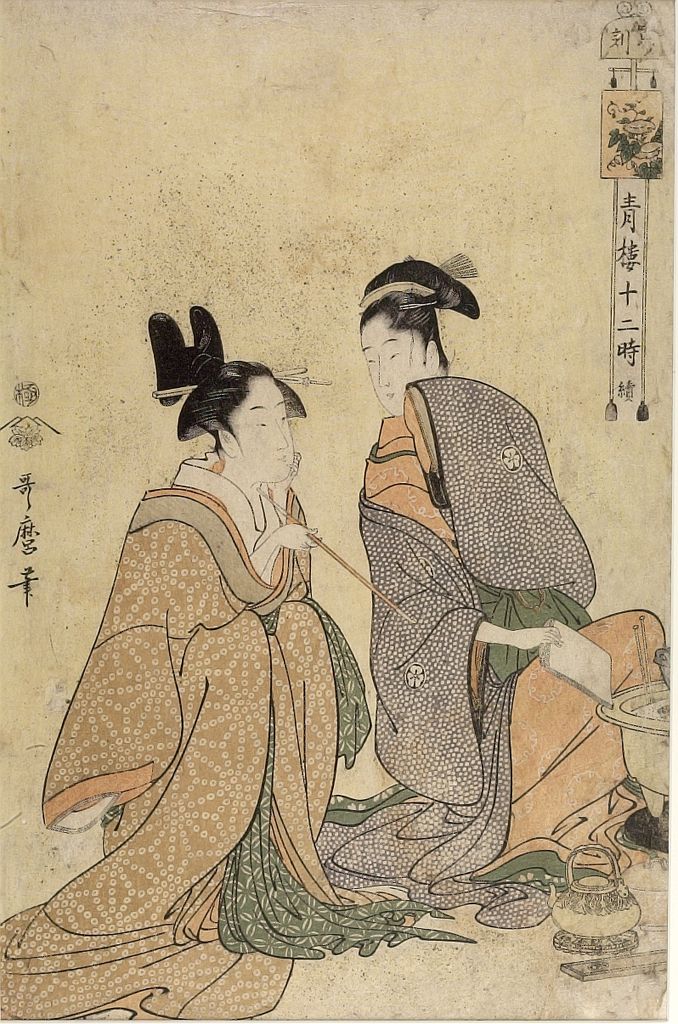
Hour of the Tiger (Tora no koku = 4 AM) from the series Twelve Hours in Yoshiwara (Seirô jûni toki tsuzuki), Late Edo period, circa 1794
Woodblock print
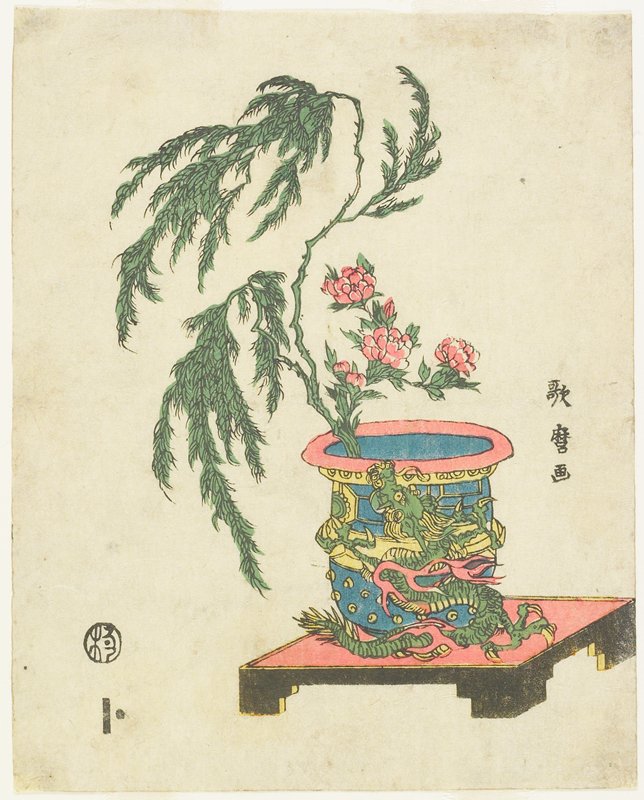
Ikebana arrangement of Peony and Willow in Dragon Pot
1781–1806
Woodblock print (nishiki-e), ink and color on paper
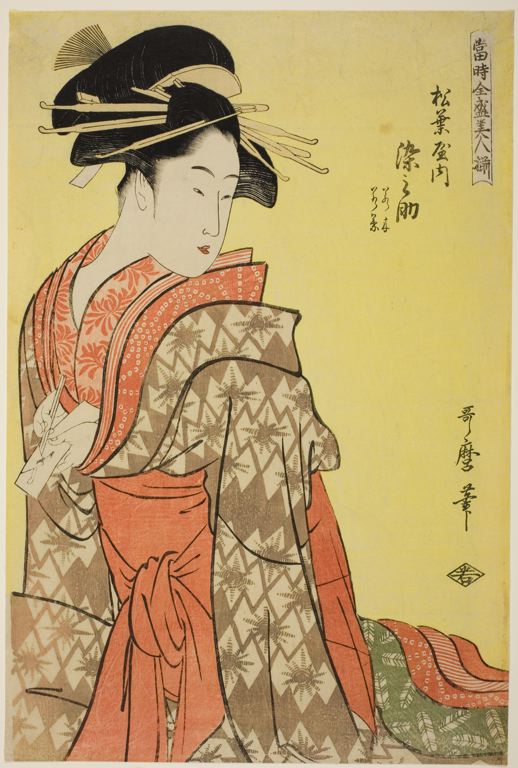
The Greatest Beauties of Our Time (Toji zensei bijin zoroe): Somenosuke of the Matsubaya with Attendants Wakagi and Wakaba
Woodblock print
Frequently Asked Questions
Chrysanthemum Boy was created by Kitagawa Utamaro (喜多川歌麿) in c. 1801/02.