Courtesan Utagawa of the Matsubaya (Matsubaya no Utagawa)
- Date:
- Late Edo period, circa 1799
- Medium:
- Center panel from an ukiyo-e woodblock-printed "ōban" triptych; ink and color on paper with printed signature reading "Utamaro hitsu"
- Source:
- Harvard Art Museums
Description
Courtesan Utagawa of the Matsubaya (Matsubaya no Utagawa) is a Kitagawa Utamaro design of about 1799 at the Harvard Art Museums. Utagawa was among the highest-ranking courtesans of the Matsubaya, one of the leading houses of the Yoshiwara, and her name appears repeatedly across Utamaro's mature oeuvre as he and his publishers documented the celebrities of the licensed quarter. In this portrait, the courtesan dominates the sheet, her elongated body and tilted neck typical of Utamaro's idealised Edo bijin-ga type. Her elaborate hair ornaments, layered robes and richly embroidered obi are rendered through nishiki-e printing's controlled colour separations, where each pattern carries information about season, fashion and personal taste. A small cartouche identifies the sitter by name, transforming the print from a generic beauty image into a named portrait that doubled as advertising for the Matsubaya. Utamaro's restrained line and economical use of background let the kimono surfaces and the courtesan's poised features carry the composition. As held at Harvard, the print contributes to a substantial body of Matsubaya material in the museum's ukiyo-e collection and offers an instance of late-1790s bijin-ga at its most refined, just before stricter sumptuary regulations would begin to constrain the scale and inscriptions of Edo prints.
More Prints by Kitagawa Utamaro
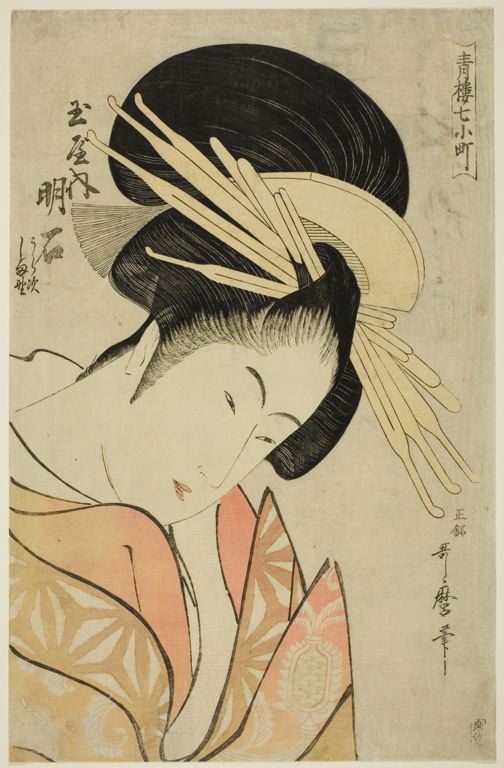
Akashi of the Tamaya, from the series Seven Komachis of Yoshiwara (Seiro nana Komachi) (Tamaya uchi Akashi, Uraji, Shimano)
Woodblock print
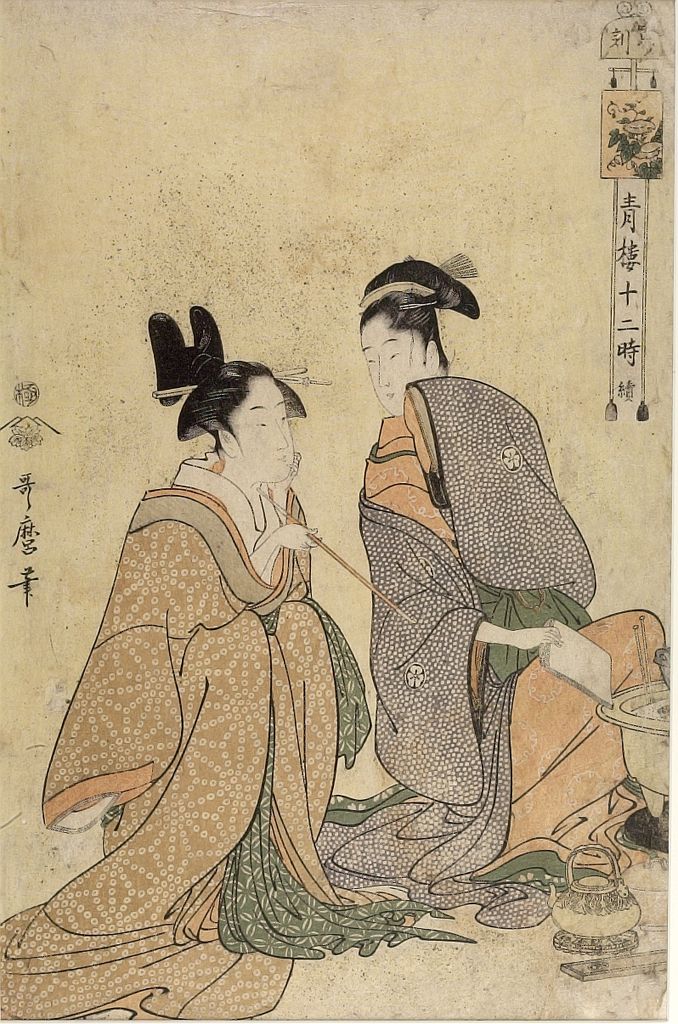
Hour of the Tiger (Tora no koku = 4 AM) from the series Twelve Hours in Yoshiwara (Seirô jûni toki tsuzuki), Late Edo period, circa 1794
Woodblock print
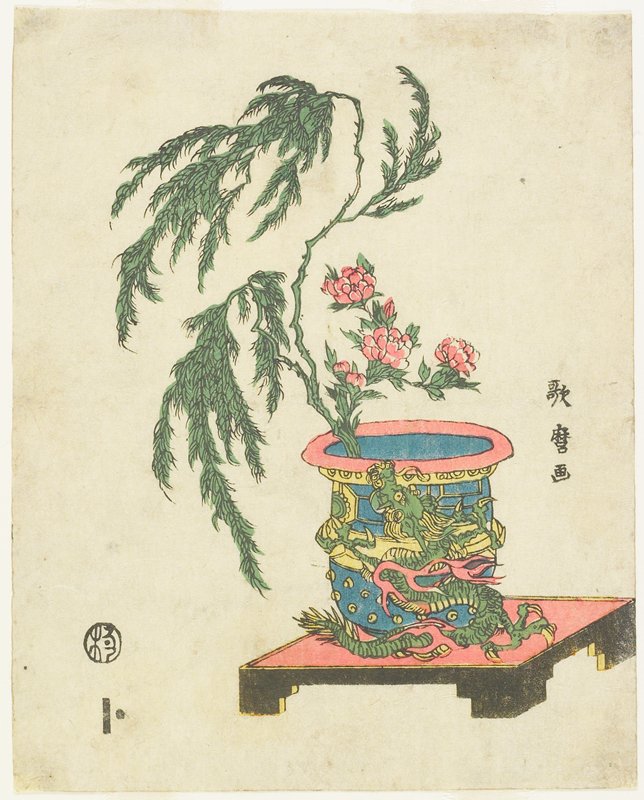
Ikebana arrangement of Peony and Willow in Dragon Pot
1781–1806
Woodblock print (nishiki-e), ink and color on paper
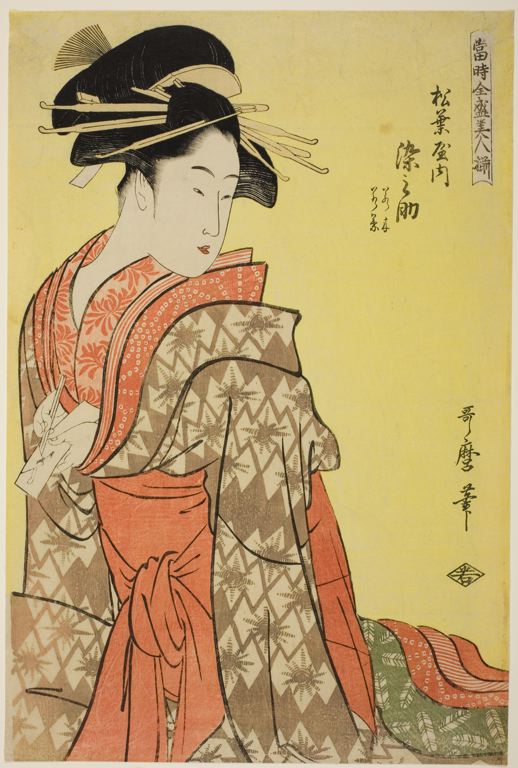
The Greatest Beauties of Our Time (Toji zensei bijin zoroe): Somenosuke of the Matsubaya with Attendants Wakagi and Wakaba
Woodblock print
Frequently Asked Questions
Courtesan Utagawa of the Matsubaya (Matsubaya no Utagawa) was created by Kitagawa Utamaro (喜多川歌麿) in Late Edo period, circa 1799.