Courtesan Wakamurasaki of the Matsubaya (Matsubaya uchi Wakamurasaki)
- Date:
- Late Edo period,
- Medium:
- Ukiyo-e woodblock print in "aiban" format; ink and color on paper
- Source:
- Harvard Art Museums
Description
Kitagawa Utamaro depicted the courtesan Wakamurasaki of the Matsubaya in this ukiyo-e portrait that belongs to the artist's long engagement with the leading houses of the Yoshiwara pleasure quarter. The Matsubaya was among the most celebrated brothels in Edo, and its courtesans, including Wakamurasaki, appeared repeatedly in Utamaro's prints as named subjects whose individual fashions and reputations attracted both patrons and admirers of bijin-ga. The portrait highlights Wakamurasaki's elaborately tied obi and layered kimono, the surfaces alive with the kind of complex woven and stenciled patterns that taxed the woodblock cutter and printer to coordinate dozens of impressions. Utamaro's drawing focuses on the elongated oval face, slender neck, and slight asymmetry of expression that turned standardized Edo bijin-ga into a record of distinguishable personalities. Such named portraits acted as a kind of celebrity broadcast: customers could recognize the exact courtesan they had read about in critiques and gossip sheets, while distant viewers could imagine the rarified world of the licensed quarter without entering it. The Harvard Art Museums preserves this impression (object 208042), where it sits alongside numerous Matsubaya prints that together document the house's role as one of the great patrons and subjects of late eighteenth-century ukiyo-e.
More Prints by Kitagawa Utamaro
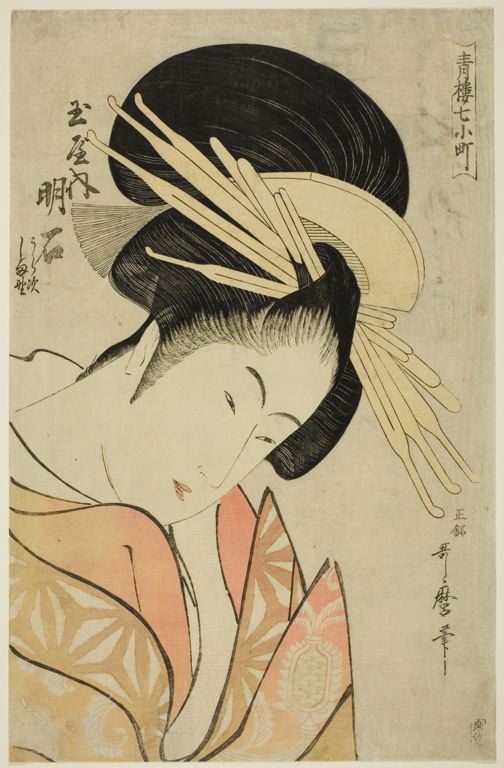
Akashi of the Tamaya, from the series Seven Komachis of Yoshiwara (Seiro nana Komachi) (Tamaya uchi Akashi, Uraji, Shimano)
Woodblock print
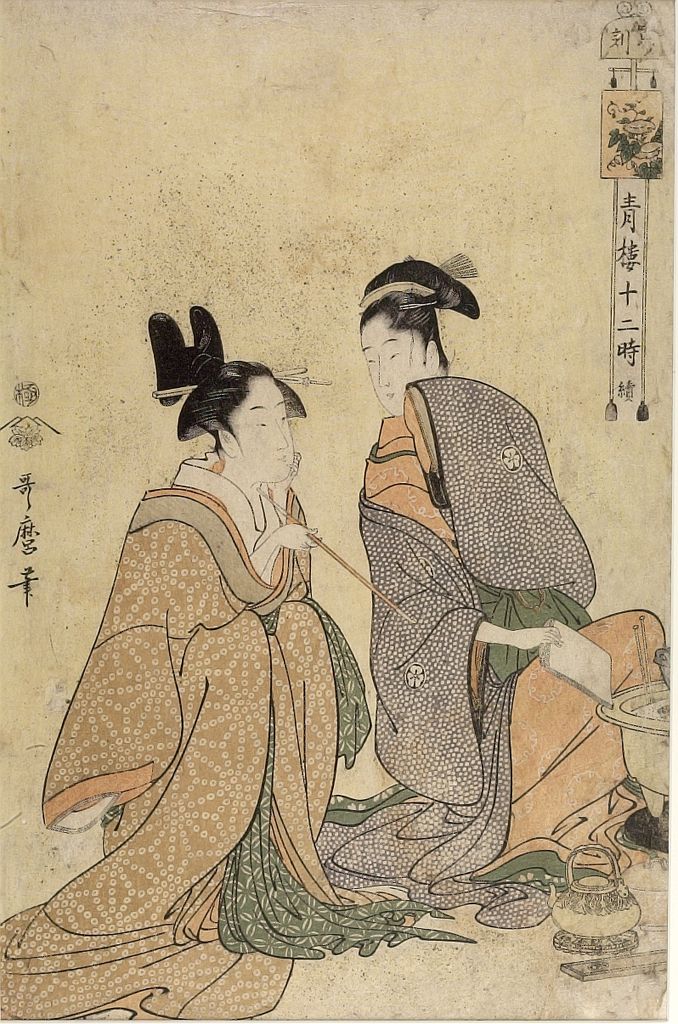
Hour of the Tiger (Tora no koku = 4 AM) from the series Twelve Hours in Yoshiwara (Seirô jûni toki tsuzuki), Late Edo period, circa 1794
Woodblock print
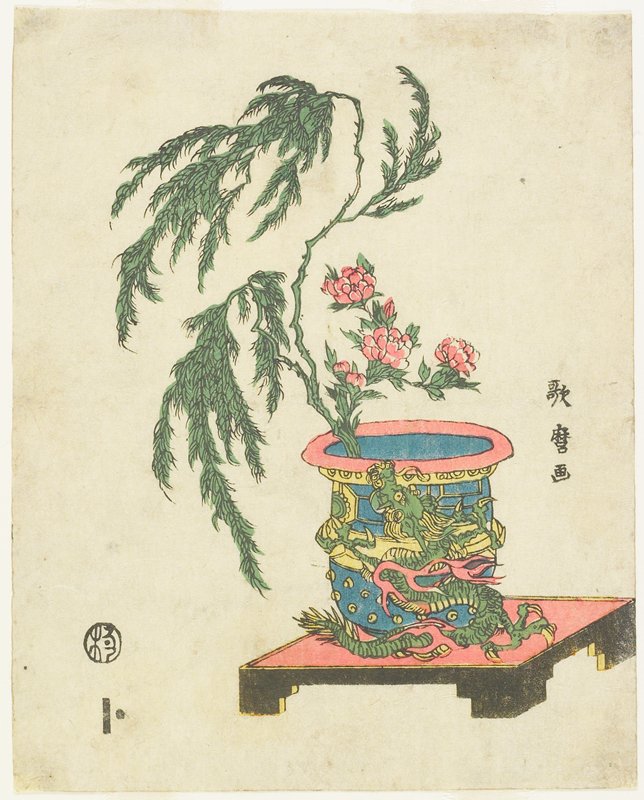
Ikebana arrangement of Peony and Willow in Dragon Pot
1781–1806
Woodblock print (nishiki-e), ink and color on paper
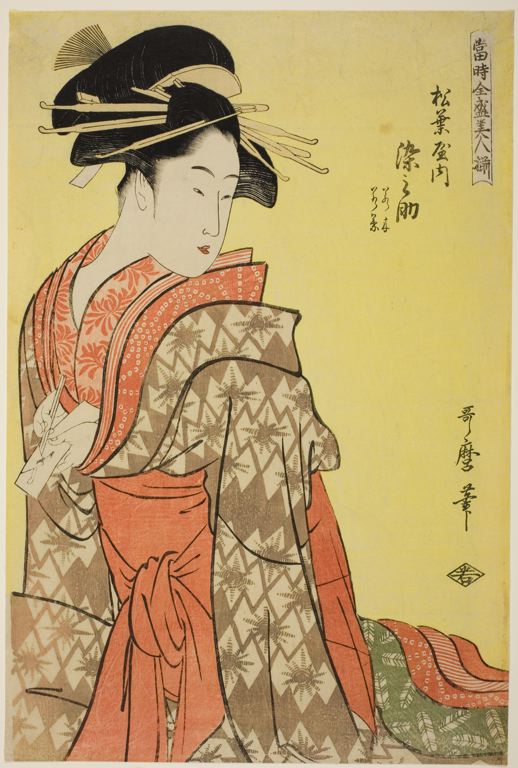
The Greatest Beauties of Our Time (Toji zensei bijin zoroe): Somenosuke of the Matsubaya with Attendants Wakagi and Wakaba
Woodblock print
Frequently Asked Questions
Courtesan Wakamurasaki of the Matsubaya (Matsubaya uchi Wakamurasaki) was created by Kitagawa Utamaro (喜多川歌麿) in Late Edo period,.