Courtesan Yaegiku of the Matsubaya (Matsubaya uchi Yaegiku)
- Date:
- Late Edo period, circa 1797-1798
- Medium:
- Ukiyo-e woodblock print in "ōban" format; ink and colors on paper, with printed signature reading "Utamaro hitsu"
- Source:
- Harvard Art Museums
Description
Held by the Harvard Art Museums and dated 1797, "Courtesan Yaegiku of the Matsubaya" represents Kitagawa Utamaro at the height of his powers as Edo's preeminent painter of Yoshiwara beauties. The Matsubaya was one of the most prestigious brothels of the licensed quarter, and Yaegiku one of its named tayu, women whose celebrity ranged across the world of ukiyo-e, kabuki, and printed gossip. Utamaro's late-1790s style favored the okubi-e format and three-quarter-length compositions of the kind seen here, devoting maximum space to face, hair, collar, and gesture. The result is a portrait closer to celebrity photography than to generic figure painting: a particular woman, identified by name and house, in a particular moment of her professional persona. Utamaro's mastery of kimono pattern and his sensitivity to facial expression made him the artist most able to translate the Yoshiwara's cult of personality into prints that traveled widely through Edo households. By naming Yaegiku, both the print and the patron participate in the elaborate economy of fame that organized the floating world. Harvard's impression preserves the calm authority of Utamaro's contour lines and the precise registration of color blocks for which his collaborating printers were known. It exemplifies the genre that defines his lasting reputation within the history of Japanese woodblock prints.
More Prints by Kitagawa Utamaro
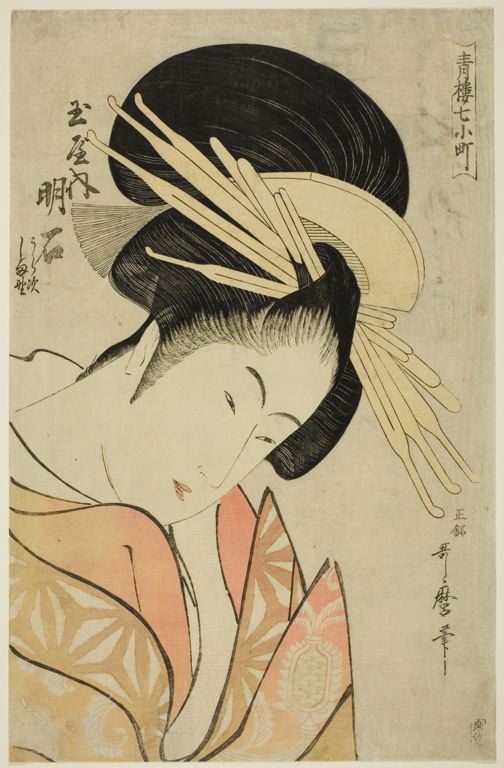
Akashi of the Tamaya, from the series Seven Komachis of Yoshiwara (Seiro nana Komachi) (Tamaya uchi Akashi, Uraji, Shimano)
Woodblock print
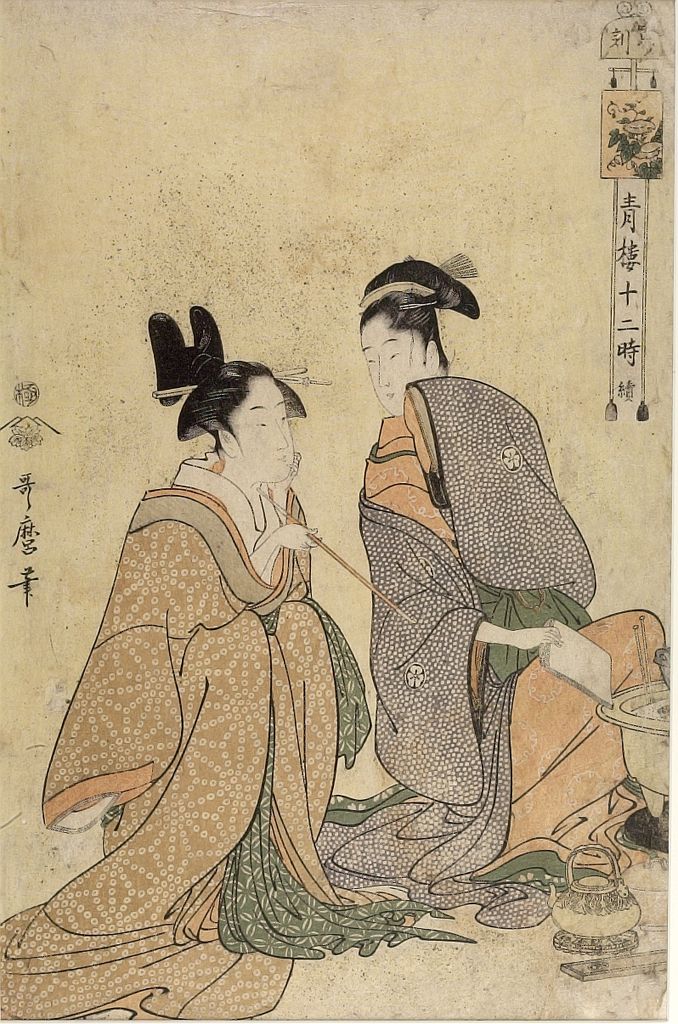
Hour of the Tiger (Tora no koku = 4 AM) from the series Twelve Hours in Yoshiwara (Seirô jûni toki tsuzuki), Late Edo period, circa 1794
Woodblock print
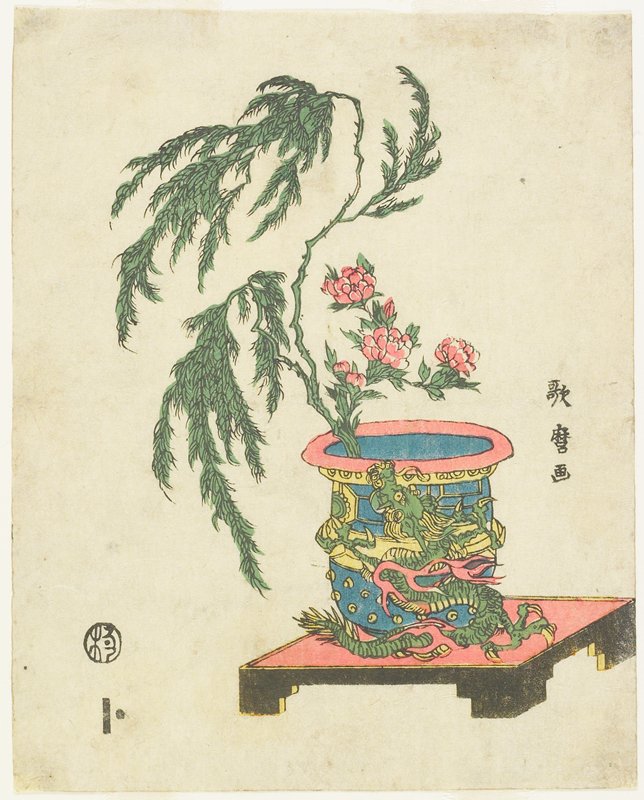
Ikebana arrangement of Peony and Willow in Dragon Pot
1781–1806
Woodblock print (nishiki-e), ink and color on paper
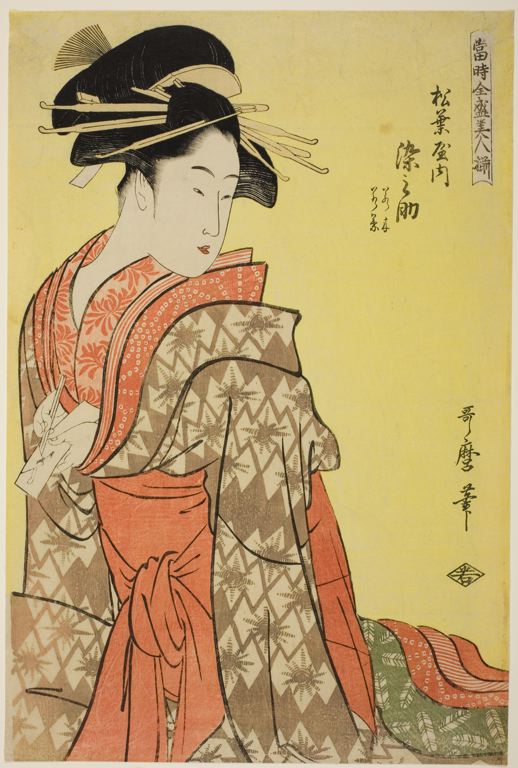
The Greatest Beauties of Our Time (Toji zensei bijin zoroe): Somenosuke of the Matsubaya with Attendants Wakagi and Wakaba
Woodblock print
Frequently Asked Questions
Courtesan Yaegiku of the Matsubaya (Matsubaya uchi Yaegiku) was created by Kitagawa Utamaro (喜多川歌麿) in Late Edo period, circa 1797-1798.