
Courtesans beneath Wisteria Arbor
- Date:
- c. 1795
- Medium:
- Color woodblock print; left sheet of oban triptych
- Source:
- Art Institute of Chicago
Description
Courtesans beneath Wisteria Arbor, dated 1790 and held in the Art Institute of Chicago, is a richly designed group portrait in which Kitagawa Utamaro sets his Yoshiwara stars beneath one of the most poetically loaded plants of the Japanese tradition. Wisteria, with its trailing purple racemes, carried associations with both classical court poetry and seasonal observance, and depicting courtesans under a wisteria arbor placed contemporary Edo bijin-ga in direct dialogue with the elegant pastimes of Heian and medieval literature. Utamaro arranges the women in a measured horizontal procession, their kimono silhouettes harmonizing with the cascading purple flowers above, the tall hairstyles and decorative combs functioning almost as architectural elements within the arbor. The composition is built on rhyming verticals, courtesan figures, hanging blooms, support posts, that lock the scene together while leaving room for the small bursts of color provided by patterned obi, fans, and accessories. Pattern is deployed with characteristic discipline: each robe is distinct, but their relationships make the group read as a unified visual phrase. As an oban-format design likely published by Tsutaya Juzaburo or one of his peers, the print also illustrates the close coordination between artist, block carver, and printer needed to sustain such a complex orchestration of color and shape. Within the Art Institute of Chicago's collection, the image stands as a particularly elegant example of how Kitagawa Utamaro mapped seasonal natural beauty onto the social world of the Yoshiwara at the height of late-eighteenth-century ukiyo-e.
More Prints by Kitagawa Utamaro
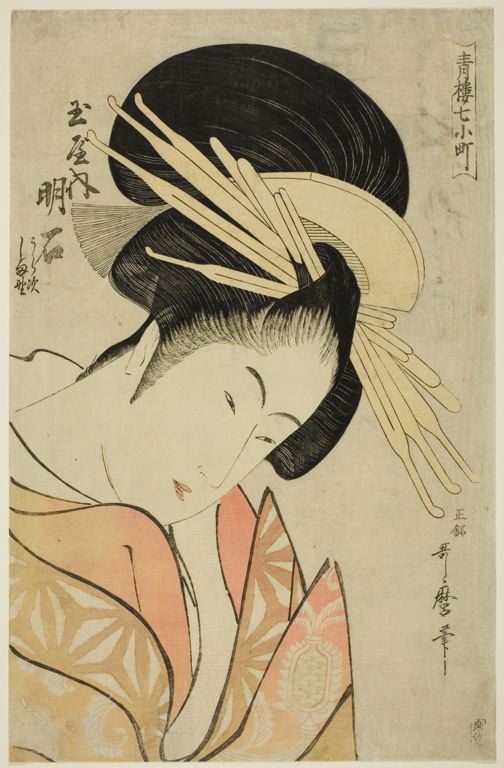
Akashi of the Tamaya, from the series Seven Komachis of Yoshiwara (Seiro nana Komachi) (Tamaya uchi Akashi, Uraji, Shimano)
Woodblock print
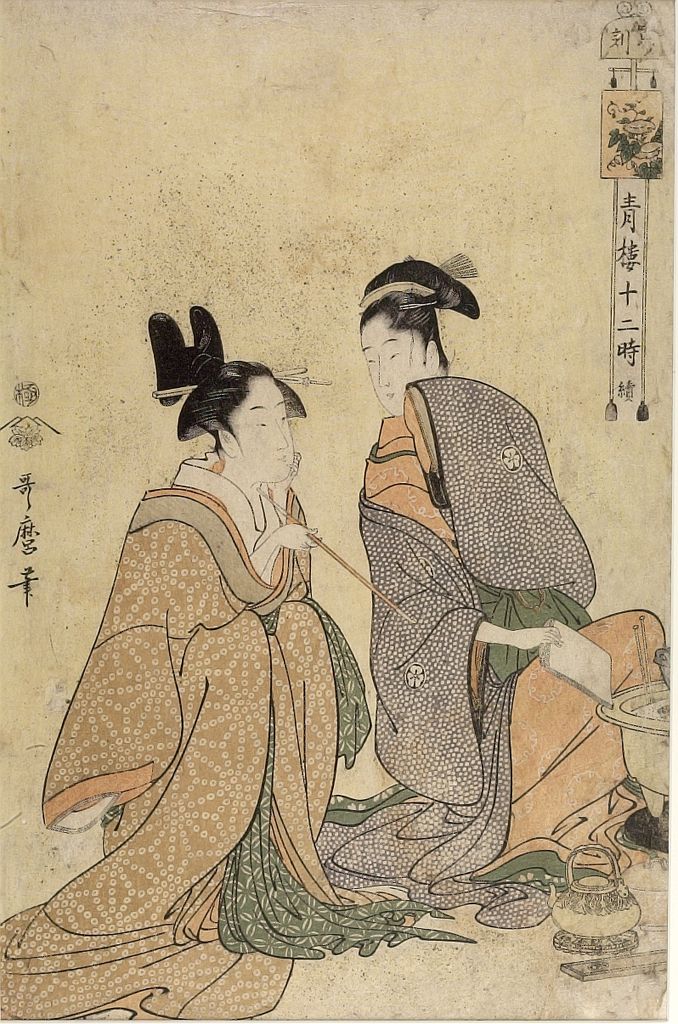
Hour of the Tiger (Tora no koku = 4 AM) from the series Twelve Hours in Yoshiwara (Seirô jûni toki tsuzuki), Late Edo period, circa 1794
Woodblock print
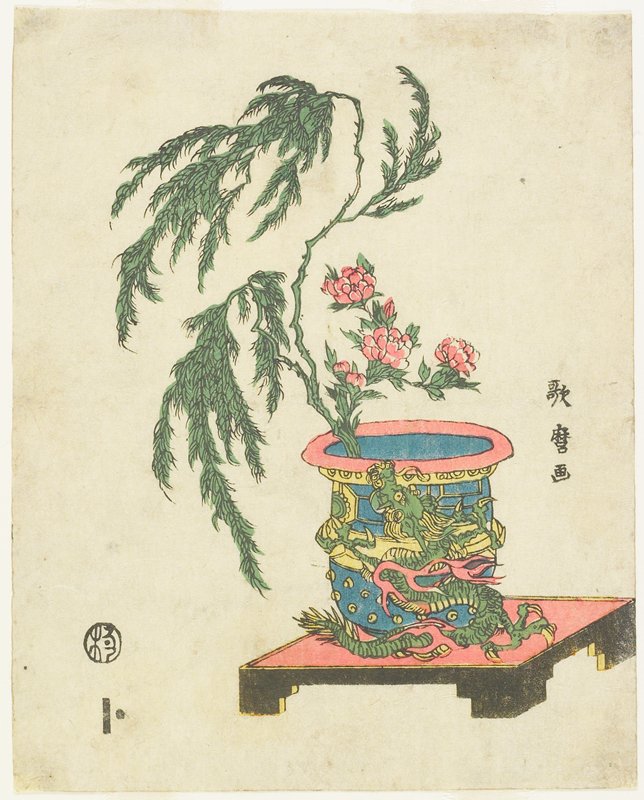
Ikebana arrangement of Peony and Willow in Dragon Pot
1781–1806
Woodblock print (nishiki-e), ink and color on paper
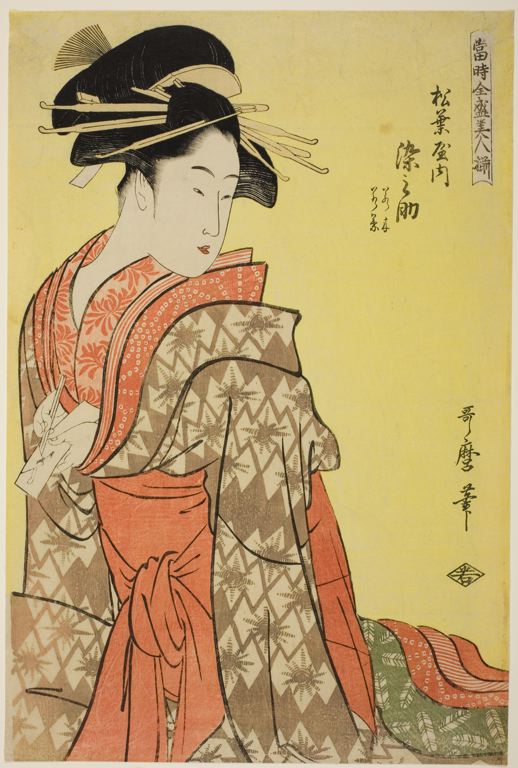
The Greatest Beauties of Our Time (Toji zensei bijin zoroe): Somenosuke of the Matsubaya with Attendants Wakagi and Wakaba
Woodblock print
Frequently Asked Questions
Courtesans beneath Wisteria Arbor was created by Kitagawa Utamaro (喜多川歌麿) in c. 1795.