Courtesans of the Matsubarō: Nakagawa, Utagawa, Matsukaze
- Date:
- c. 1799
- Medium:
- Woodblock print triptych (nishiki-e); ink and color on paper
- Source:
- Harvard Art Museums
Description
Courtesans of the Matsubaro: Nakagawa, Utagawa, Matsukaze is a Kitagawa Utamaro design of about 1794, preserved at the Harvard Art Museums. The Matsubaya was among the most prestigious of the Yoshiwara's licensed brothels, and its highest-ranking courtesans - including the celebrated Utagawa, whose name recurs in Utamaro's oeuvre - became favoured subjects for ukiyo-e portraiture. The print groups three women associated with the house, each identified by a cartouche so that contemporary viewers could recognise them as named individuals rather than generic beauties. Utamaro's mature Edo bijin-ga style is fully evident here: elongated faces with high foreheads and small features, long unbroken outlines describing the robes, and rich patterned textiles whose surfaces are differentiated through carefully separated colour blocks. The pictorial logic of such 'portrait sets' is closely tied to the economics of the Yoshiwara, where prints functioned as advertising for the houses they depicted and where rivalries between courtesans of different ranks could be staged within a single sheet. The composition's tight grouping suggests intimacy and rivalry simultaneously. As held at Harvard, this print contributes to the documentary record of mid-1790s Yoshiwara culture and to the broader Utamaro corpus, in which the named courtesan portrait emerged as a defining genre of late-eighteenth-century ukiyo-e.
More Prints by Kitagawa Utamaro
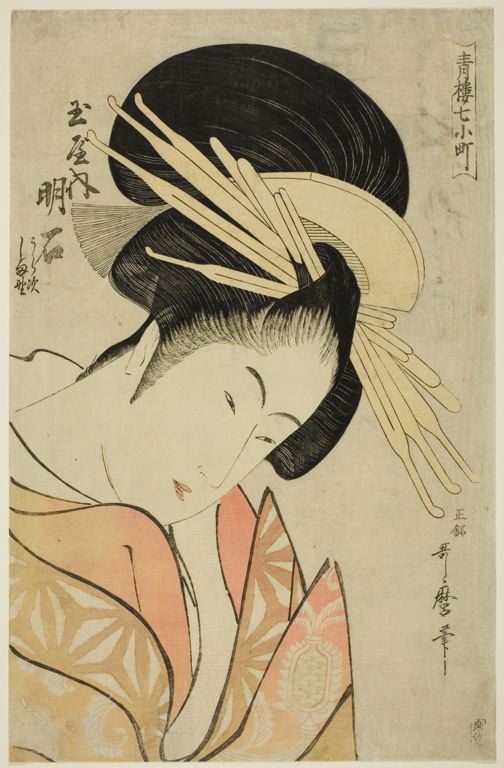
Akashi of the Tamaya, from the series Seven Komachis of Yoshiwara (Seiro nana Komachi) (Tamaya uchi Akashi, Uraji, Shimano)
Woodblock print
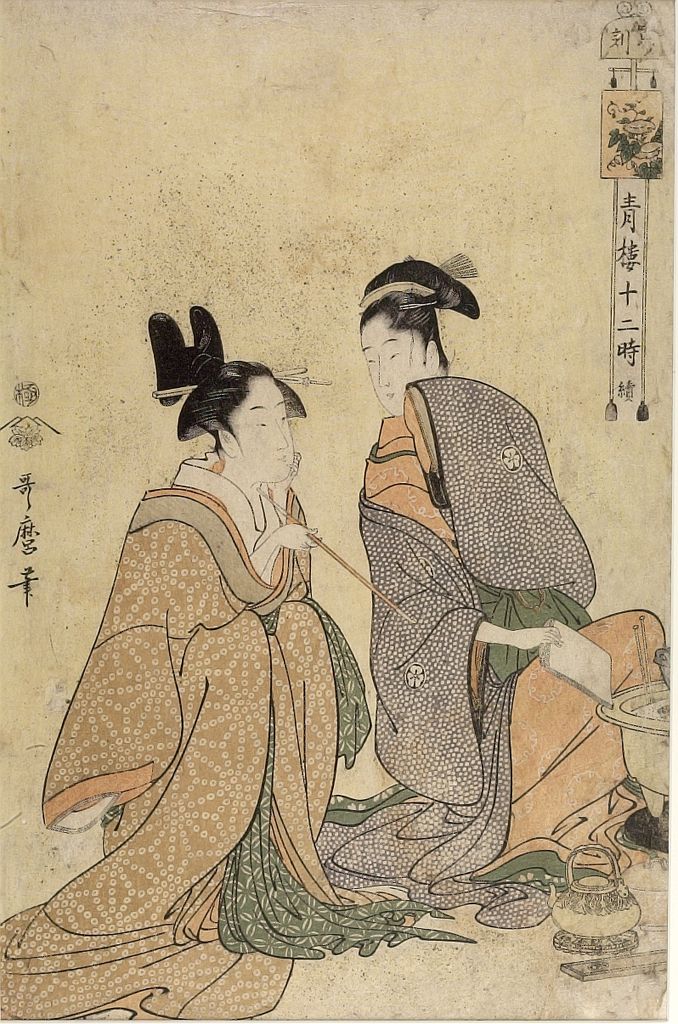
Hour of the Tiger (Tora no koku = 4 AM) from the series Twelve Hours in Yoshiwara (Seirô jûni toki tsuzuki), Late Edo period, circa 1794
Woodblock print
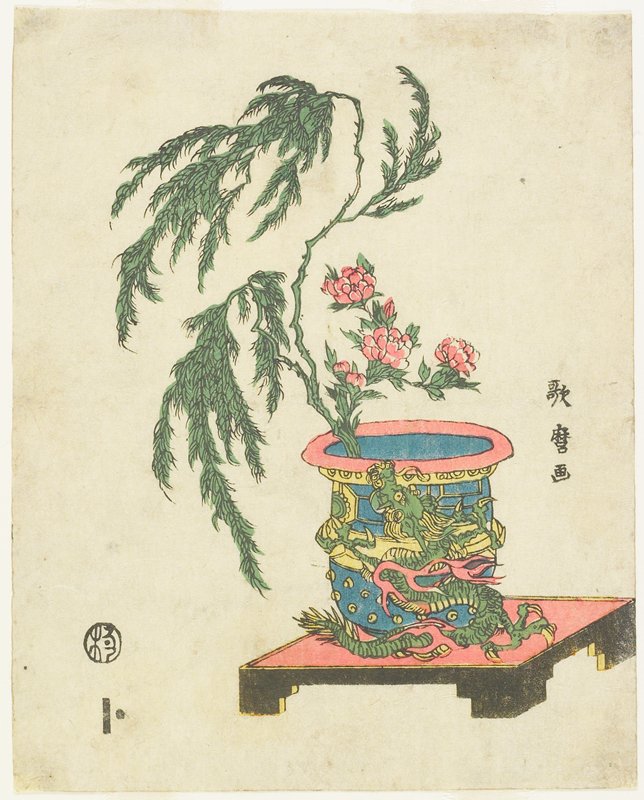
Ikebana arrangement of Peony and Willow in Dragon Pot
1781–1806
Woodblock print (nishiki-e), ink and color on paper
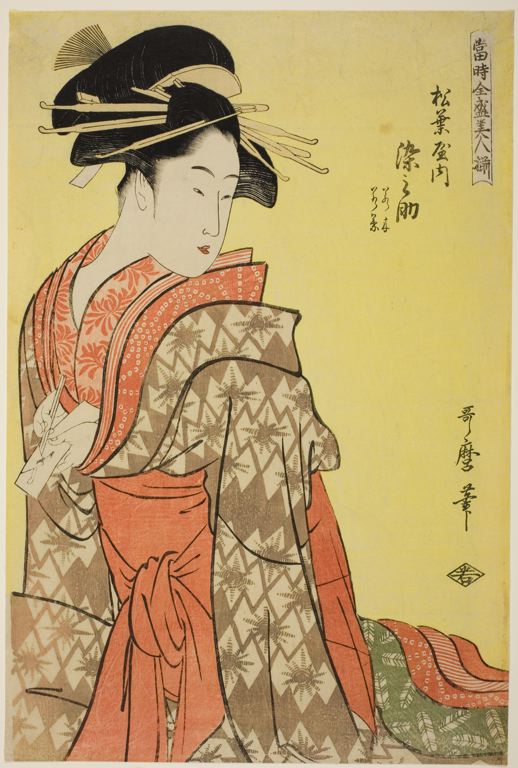
The Greatest Beauties of Our Time (Toji zensei bijin zoroe): Somenosuke of the Matsubaya with Attendants Wakagi and Wakaba
Woodblock print
Frequently Asked Questions
Courtesans of the Matsubarō: Nakagawa, Utagawa, Matsukaze was created by Kitagawa Utamaro (喜多川歌麿) in c. 1799.