Daikoku Shaving Fukurokuju
- Medium:
- Ink on paper
- Source:
- Harvard Art Museums
Description
Daikoku Shaving Fukurokuju, an undated print held by Harvard Art Museums, departs from Kitagawa Utamaro's standard Edo bijin-ga subjects to engage instead with the comic iconography of the Seven Lucky Gods. Daikoku, the deity of wealth, and Fukurokuju, the long-headed god of longevity, were favorite figures of late Edo popular religion and frequently appeared in playful pairings. Here Utamaro stages a humorous tableau in which Daikoku shaves Fukurokuju's famously elongated bald head, an inversion of dignity that exploits the visual absurdity of the latter's anatomy. As ukiyo-e, the print belongs to a vein of religious parody that flourished in the floating world, where popular gods were treated with familiarity and warmth rather than solemnity. The composition concentrates on the comic action, with the razor, basin and posture of the figures supplying both narrative and design. Utamaro's drawing of the body is precise enough to make the joke land, while his attention to costume keeps the figures recognizable. Even working outside his usual female subjects, the artist brings the same compositional discipline and graphic clarity that characterize his bijin-ga. The print suggests how an artist celebrated for portraits of beautiful women could move fluently into other genres, particularly when commissioned for talismanic or auspicious uses. The Harvard impression preserves the lighthearted spirit of the design, which would have circulated as both decorative print and good-luck token in late Edo households.
More Prints by Kitagawa Utamaro
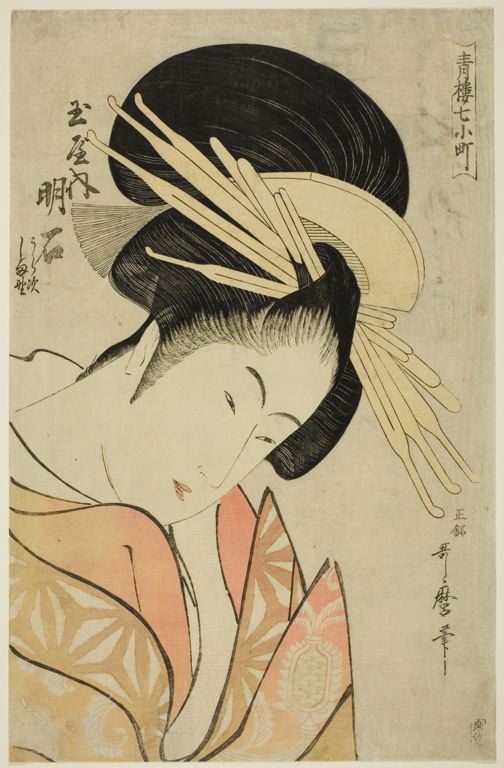
Akashi of the Tamaya, from the series Seven Komachis of Yoshiwara (Seiro nana Komachi) (Tamaya uchi Akashi, Uraji, Shimano)
Woodblock print
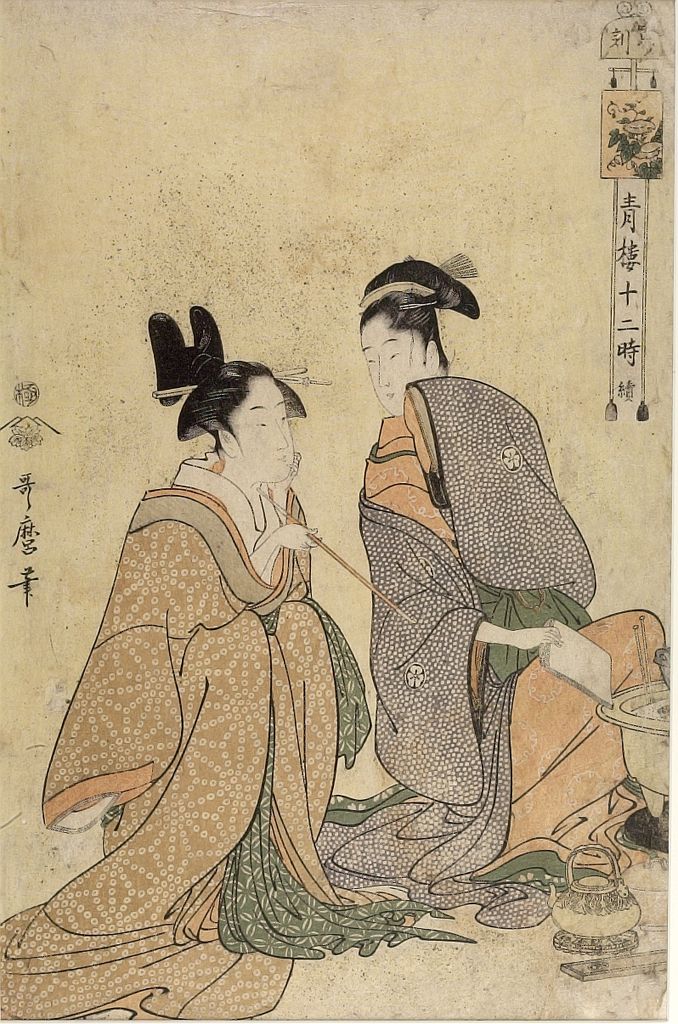
Hour of the Tiger (Tora no koku = 4 AM) from the series Twelve Hours in Yoshiwara (Seirô jûni toki tsuzuki), Late Edo period, circa 1794
Woodblock print
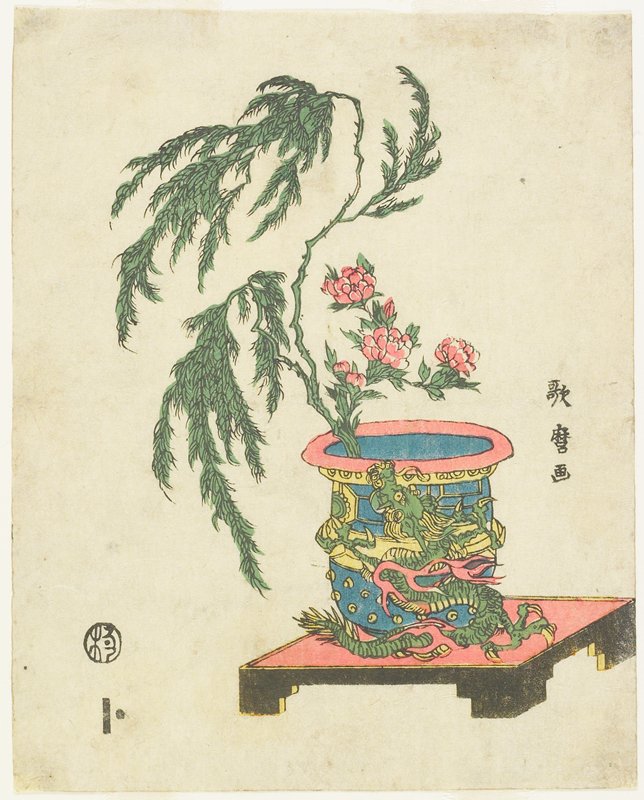
Ikebana arrangement of Peony and Willow in Dragon Pot
1781–1806
Woodblock print (nishiki-e), ink and color on paper
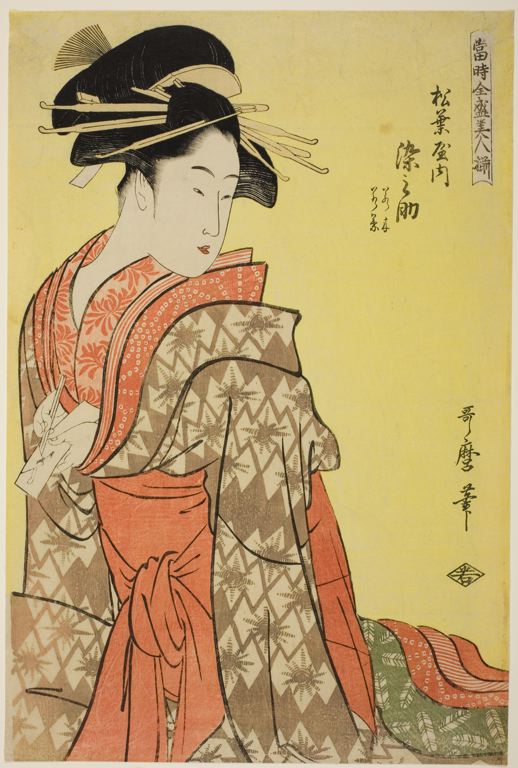
The Greatest Beauties of Our Time (Toji zensei bijin zoroe): Somenosuke of the Matsubaya with Attendants Wakagi and Wakaba
Woodblock print
Frequently Asked Questions
Daikoku Shaving Fukurokuju was created by Kitagawa Utamaro (喜多川歌麿).