DIFFERNT HAIR ORNAMENTS FOR THE FIVE FESTIVALS,"HAIR ORNAMENTS MADE OF PEACH BLOSSOMS FOR MARCH
- Medium:
- Ink on paper
- Source:
- Harvard Art Museums
Description
From a series cataloged at the Harvard Art Museums as Different Hair Ornaments for the Five Festivals, this Kitagawa Utamaro ukiyo-e print depicts hair ornaments made of peach blossoms for March, the month traditionally associated with the Hinamatsuri or Doll Festival in the third lunar month. The five sekku, or seasonal festivals, structured the Edo calendar with paired plant motifs, and assigning peach blossoms to March allowed Utamaro to combine fashionable ornament with a long-established floral symbolism that signaled feminine purity and good fortune. The print likely shows a young woman or kamuro pausing in the act of adjusting her hair, her face turned slightly so that the elaborate ornament catches the viewer's attention. Utamaro's signature Edo bijin-ga vocabulary, the elongated oval face, the slender neck, the calligraphic outline of the fingers, frames a meticulously drawn pin whose carved peach flowers exemplify the small-scale artistry of Edo accessory makers. By organizing fashion around the seasonal calendar, Utamaro and his publisher offered buyers both an ornamental sheet and a discreet guide to refined hair styling for festival days. The Harvard Art Museums preserves this impression (object 208074), where it joins other prints documenting the artist's interest in the visual culture of seasonal adornment.
More Prints by Kitagawa Utamaro
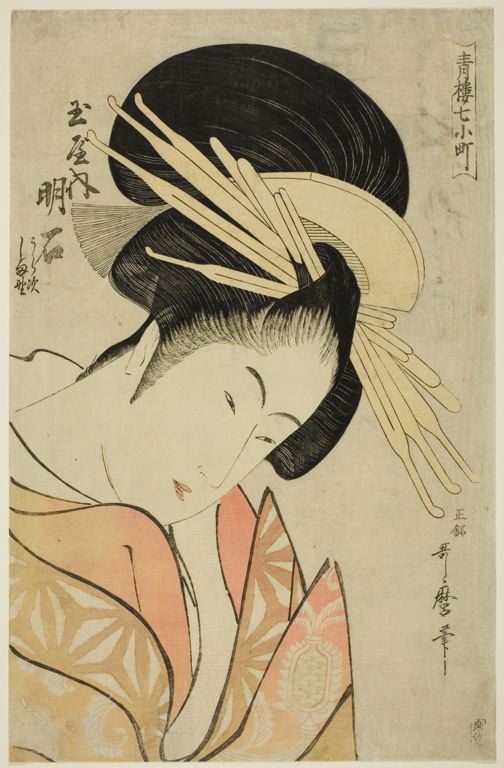
Akashi of the Tamaya, from the series Seven Komachis of Yoshiwara (Seiro nana Komachi) (Tamaya uchi Akashi, Uraji, Shimano)
Woodblock print
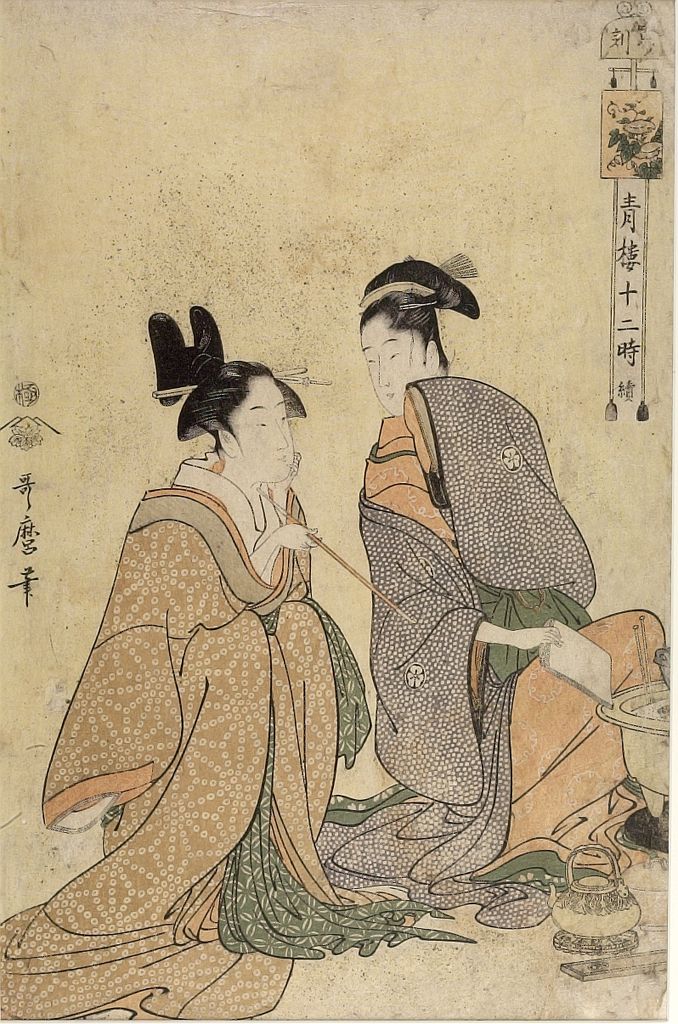
Hour of the Tiger (Tora no koku = 4 AM) from the series Twelve Hours in Yoshiwara (Seirô jûni toki tsuzuki), Late Edo period, circa 1794
Woodblock print
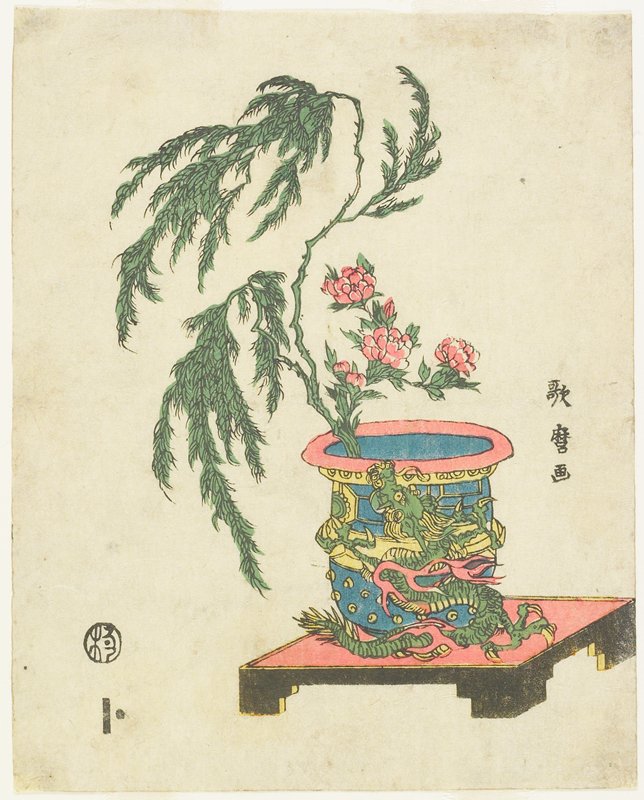
Ikebana arrangement of Peony and Willow in Dragon Pot
1781–1806
Woodblock print (nishiki-e), ink and color on paper
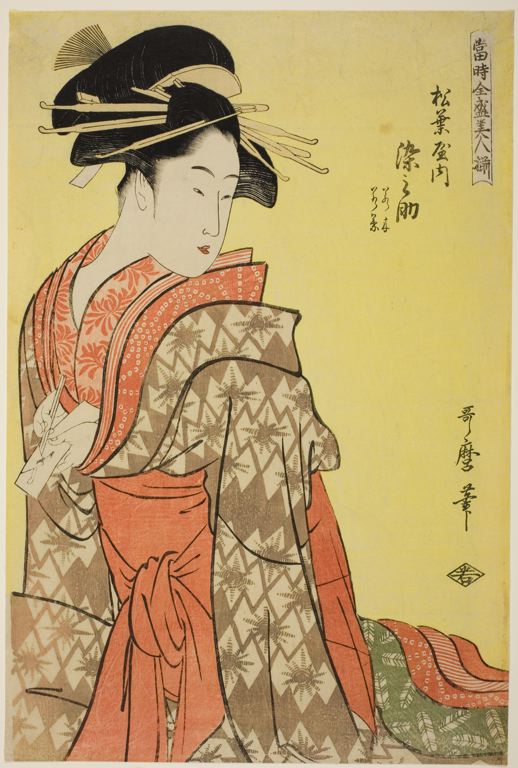
The Greatest Beauties of Our Time (Toji zensei bijin zoroe): Somenosuke of the Matsubaya with Attendants Wakagi and Wakaba
Woodblock print
Frequently Asked Questions
DIFFERNT HAIR ORNAMENTS FOR THE FIVE FESTIVALS,"HAIR ORNAMENTS MADE OF PEACH BLOSSOMS FOR MARCH was created by Kitagawa Utamaro (喜多川歌麿).