
Drawing Lots for Prizes (Ho biki)
- Date:
- c. 1798
- Medium:
- Color woodblock prints; ōban triptych
- Source:
- Art Institute of Chicago
Description
Kitagawa Utamaro's Drawing Lots for Prizes (Ho biki) is a color woodblock print of about 1793 in the Art Institute of Chicago. The subject belongs to the lively world of Edo entertainments, in which lotteries and prize drawings were a popular form of communal amusement; here that activity is filtered through Utamaro's interest in Edo bijin-ga and the social life of women. The composition gathers figures around the action of selecting a marked lot, with bodies turned in different directions, glances directed at the slip or the central organizer, and hands engaged at varying levels. The cluster of women allows Utamaro to display his range, contrasting types in age, costume, and bearing within a single sheet, in the manner of his more famous group compositions. Each figure is given the carefully described kimono, layered collar, and finely drawn hair that define his ukiyo-e style, while their faces register varying degrees of attention, hope, and amusement at the unfolding game. As in much of his Edo bijin-ga, the artist is more interested in the social texture of the moment, the small dynamics of anticipation and reaction, than in narrating a specific outcome. The print also reflects the festive economy of the late eighteenth century, in which prize drawings might be associated with shops, theaters, or temples seeking to draw customers and donors. As preserved at the Art Institute of Chicago, the impression is a fine record of how Kitagawa Utamaro could turn an everyday Edo gathering into a small ensemble portrait.
More Prints by Kitagawa Utamaro
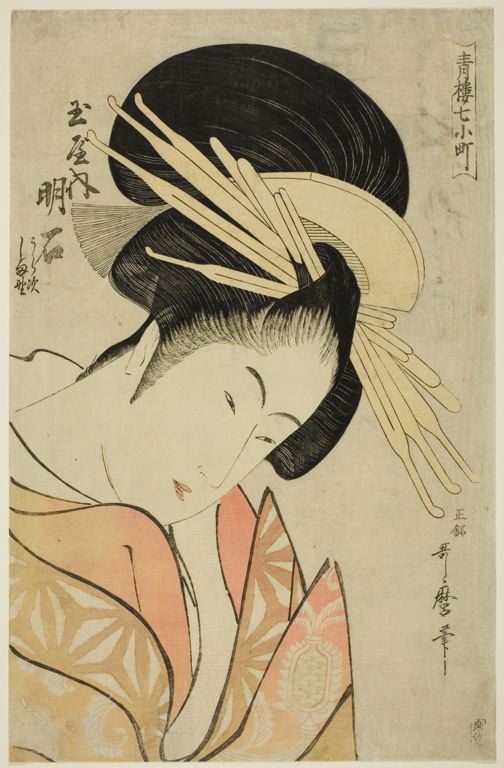
Akashi of the Tamaya, from the series Seven Komachis of Yoshiwara (Seiro nana Komachi) (Tamaya uchi Akashi, Uraji, Shimano)
Woodblock print
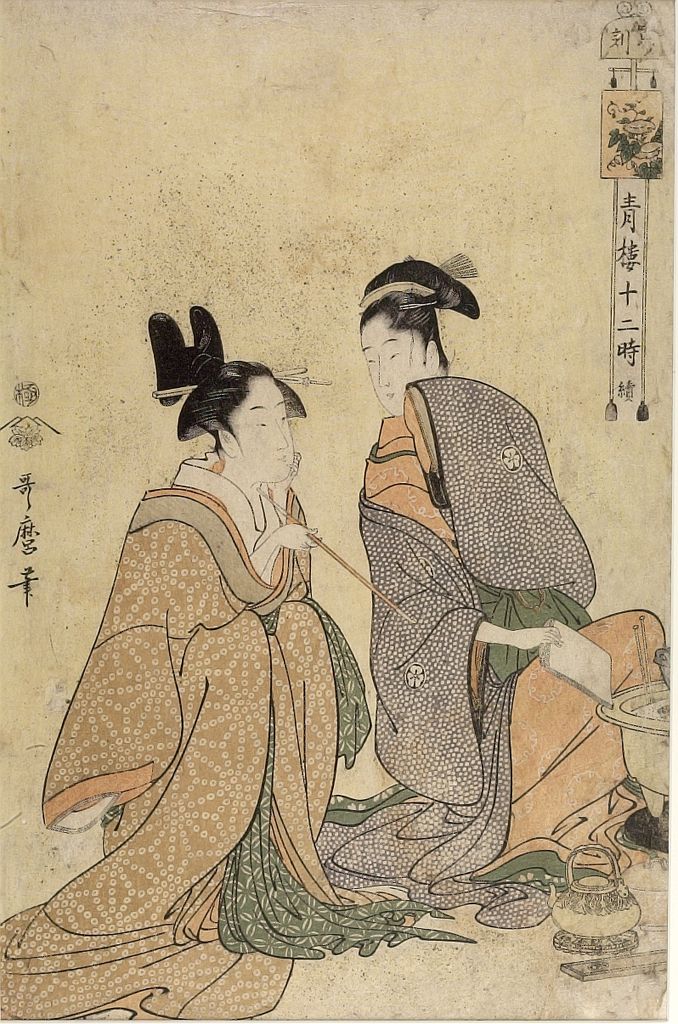
Hour of the Tiger (Tora no koku = 4 AM) from the series Twelve Hours in Yoshiwara (Seirô jûni toki tsuzuki), Late Edo period, circa 1794
Woodblock print
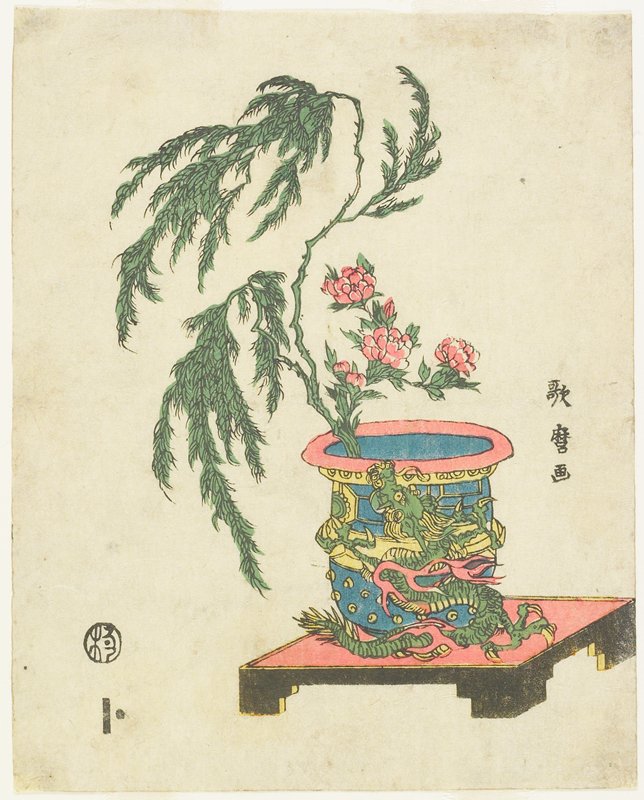
Ikebana arrangement of Peony and Willow in Dragon Pot
1781–1806
Woodblock print (nishiki-e), ink and color on paper
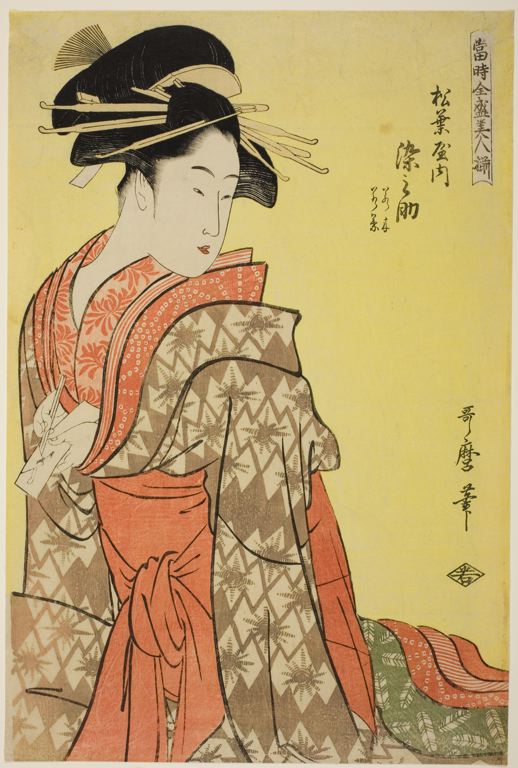
The Greatest Beauties of Our Time (Toji zensei bijin zoroe): Somenosuke of the Matsubaya with Attendants Wakagi and Wakaba
Woodblock print
Frequently Asked Questions
Drawing Lots for Prizes (Ho biki) was created by Kitagawa Utamaro (喜多川歌麿) in c. 1798.