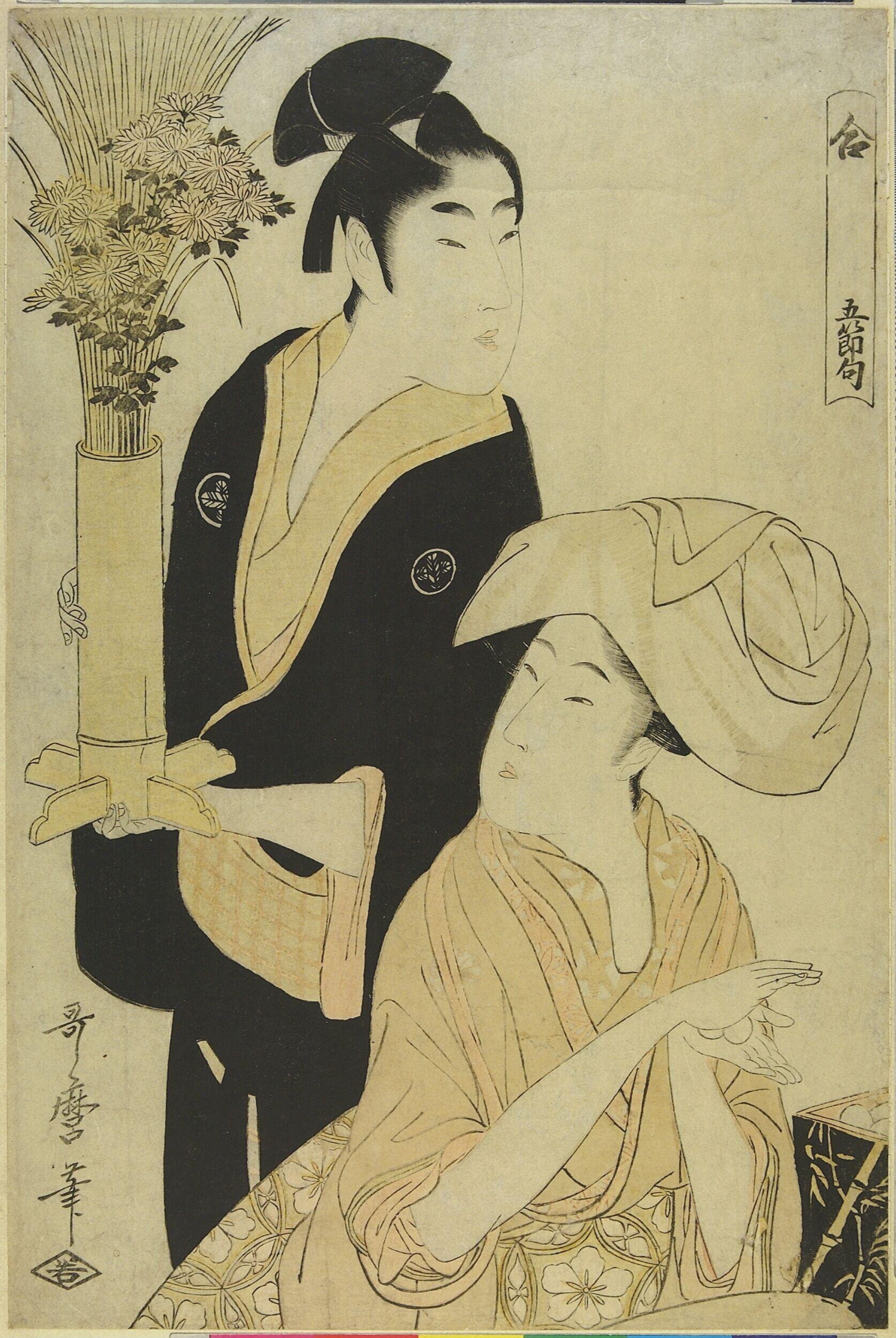
'Examples of Mutal Love for the Five Festivals'
- Date:
- ca.1804
- Medium:
- Source:
- Victoria and Albert Museum
Description
Examples of Mutual Love for the Five Festivals is a color woodblock print designed by Kitagawa Utamaro around 1804 and held by the Victoria and Albert Museum. The series unfolds in dialogue with the gosekku, the five seasonal festivals that anchored the Japanese calendar, including New Year, Girls' Day, Boys' Day, the Star Festival, and the Chrysanthemum Festival. Utamaro pairs each festival with a tableau of mutual affection between lovers, weaving the structure of the calendar through episodes of romance. As one of the leading designers of Edo bijin-ga, Kitagawa Utamaro had a special gift for compressing emotional charge into the still interval of an ukiyo-e composition, with the smallest inclinations of head or sleeve carrying the weight of feeling. The series title, with its emphasis on mutuality, signals that the prints are not portraits of one beauty observed but studies of relationships, in which figures register one another with reciprocated attention. The seasonal framing gave Utamaro and his publisher a rich repertoire of motifs and color schemes drawn from the festivals themselves, layering ornament onto an already nuanced study of affection. The V&A's example contributes to a fuller picture of Utamaro's mature output, in which he extended Edo bijin-ga from solitary beauty toward the choreographed dynamics of paired figures.
More Prints by Kitagawa Utamaro
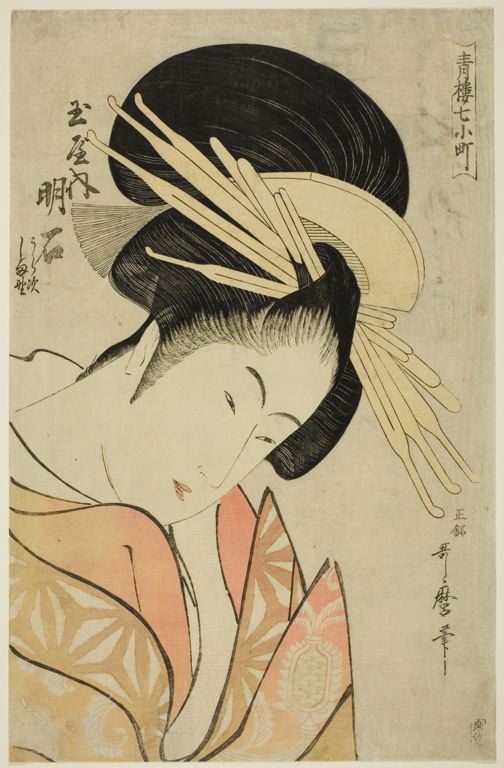
Akashi of the Tamaya, from the series Seven Komachis of Yoshiwara (Seiro nana Komachi) (Tamaya uchi Akashi, Uraji, Shimano)
Woodblock print
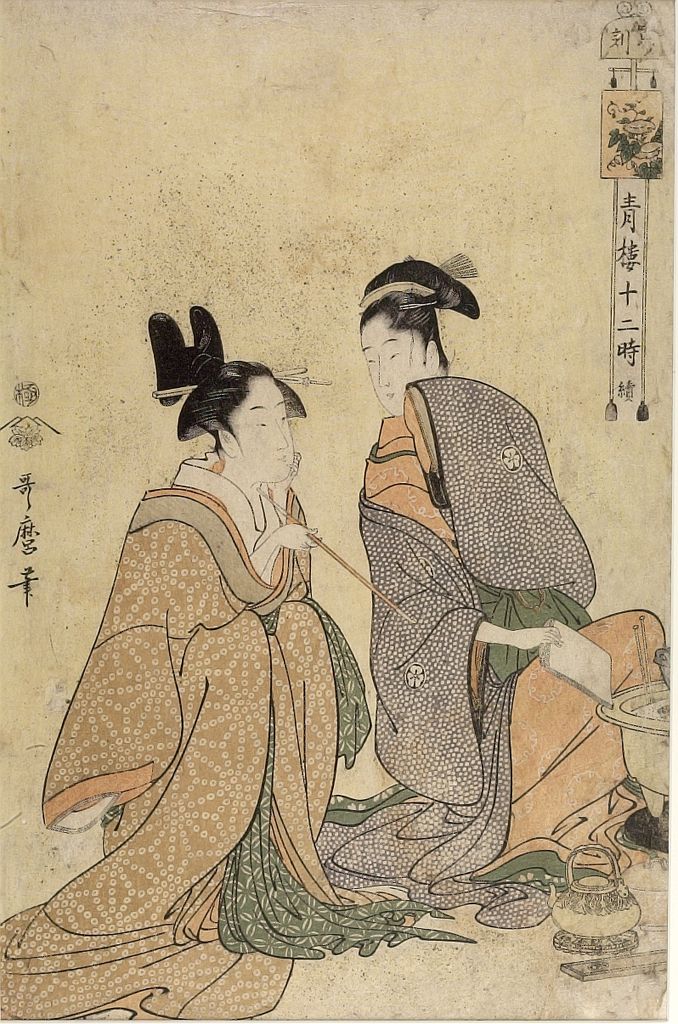
Hour of the Tiger (Tora no koku = 4 AM) from the series Twelve Hours in Yoshiwara (Seirô jûni toki tsuzuki), Late Edo period, circa 1794
Woodblock print
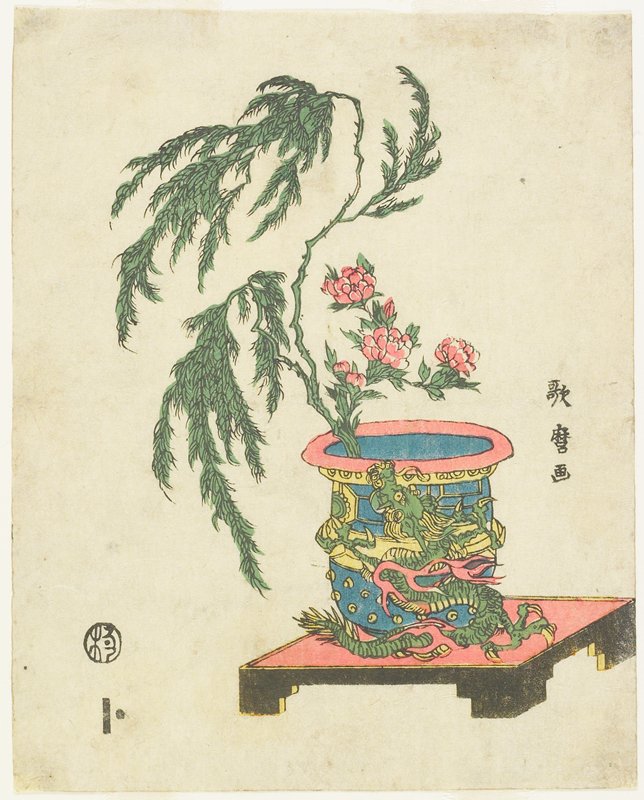
Ikebana arrangement of Peony and Willow in Dragon Pot
1781–1806
Woodblock print (nishiki-e), ink and color on paper
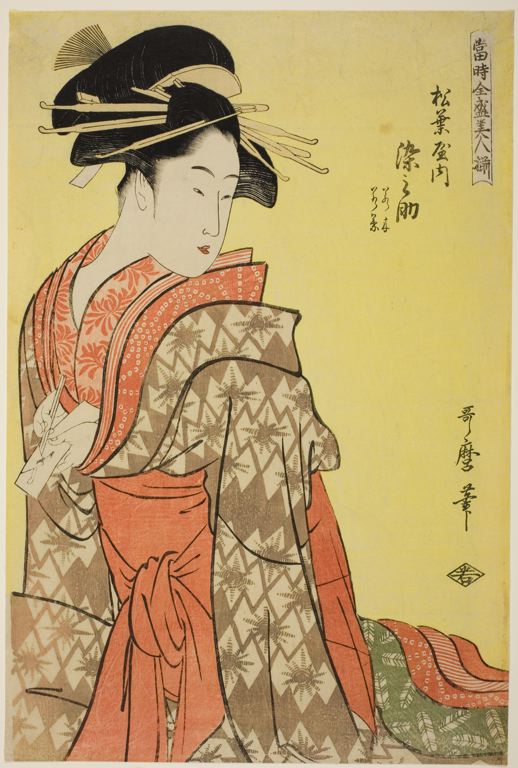
The Greatest Beauties of Our Time (Toji zensei bijin zoroe): Somenosuke of the Matsubaya with Attendants Wakagi and Wakaba
Woodblock print
Frequently Asked Questions
'Examples of Mutal Love for the Five Festivals' was created by Kitagawa Utamaro (喜多川歌麿) in ca.1804.