Female Amusements of the Five Festivals (Bijin gosetsu asobi)
- Date:
- Late Edo period, circa 1800-1806
- Medium:
- Ukiyo-e woodblock print in "ōban" format: ink and color on paper, with printed signature reading "Utamaro hitsu"
- Source:
- Harvard Art Museums
Description
Female Amusements of the Five Festivals (Bijin gosetsu asobi), dated about 1800 in the Harvard Art Museums record, is part of Kitagawa Utamaro's continued exploration of the seasonal calendar through Edo bijin-ga. The gosetsu, or Five Festivals, were the major punctuation points of the lunar year, New Year, the Doll Festival, Boys' Festival, Tanabata and the Chrysanthemum Festival, each with its own customs and emblematic objects. Utamaro adapts these celebrations to a feminine register, replacing official observance with the leisure activities of women whose dress, props and gestures express the season's mood. As ukiyo-e, the print belongs to a popular subgenre that linked beauty to the calendar, helping urban viewers identify the time of year through visual cues such as a particular flower, a kite or a festival decoration. Utamaro's command of figure grouping allows him to populate the design with multiple women without losing individual character, each marked by distinct robe patterns and posture. Color choices reflect the late eighteenth-century palette, with restrained ground tones offsetting more emphatic blocks of pattern. The series strategy, anchoring beauty to civic time, mirrors his other typological projects from this period, in which women are organized by hour, profession or virtue. The Harvard sheet preserves both the keyblock precision and the subtle color modulation expected of high-quality early-nineteenth-century printing. The work remains a representative example of Utamaro's ability to refresh familiar seasonal material through the refinement of his figure style.
More Prints by Kitagawa Utamaro
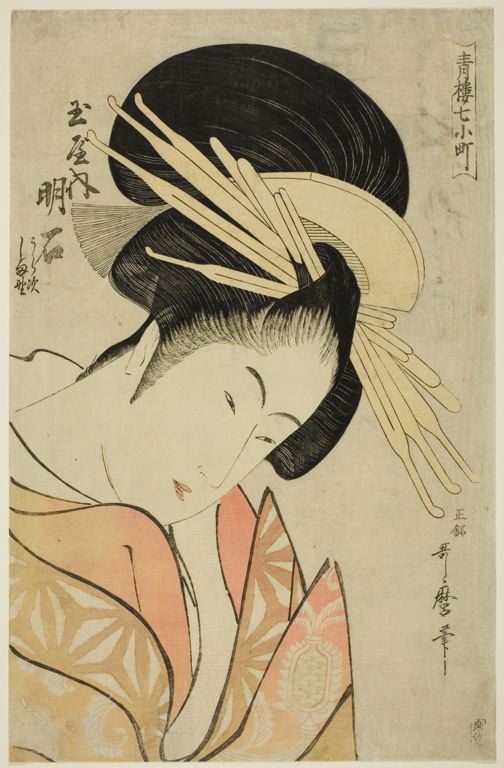
Akashi of the Tamaya, from the series Seven Komachis of Yoshiwara (Seiro nana Komachi) (Tamaya uchi Akashi, Uraji, Shimano)
Woodblock print
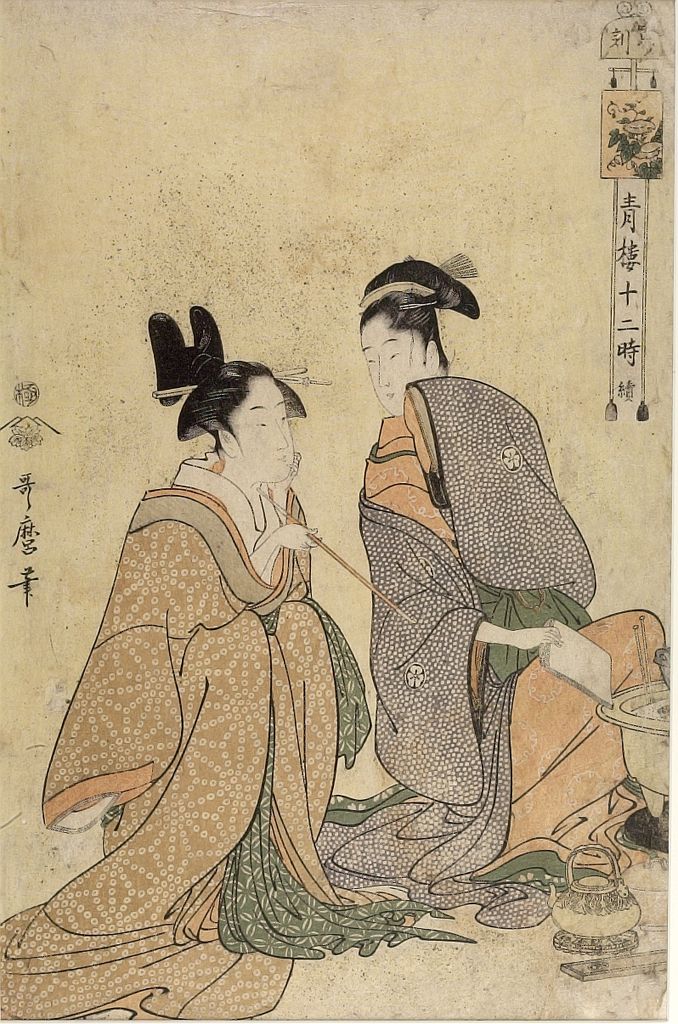
Hour of the Tiger (Tora no koku = 4 AM) from the series Twelve Hours in Yoshiwara (Seirô jûni toki tsuzuki), Late Edo period, circa 1794
Woodblock print
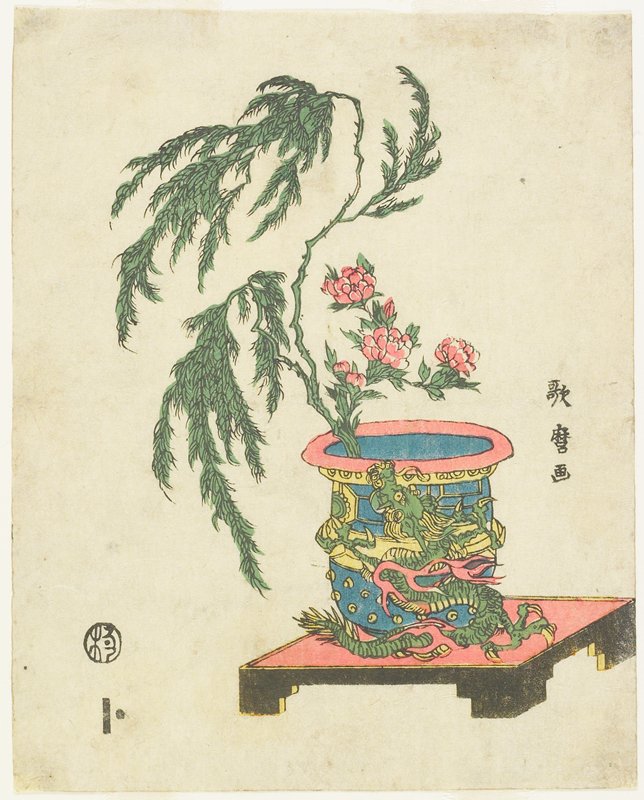
Ikebana arrangement of Peony and Willow in Dragon Pot
1781–1806
Woodblock print (nishiki-e), ink and color on paper
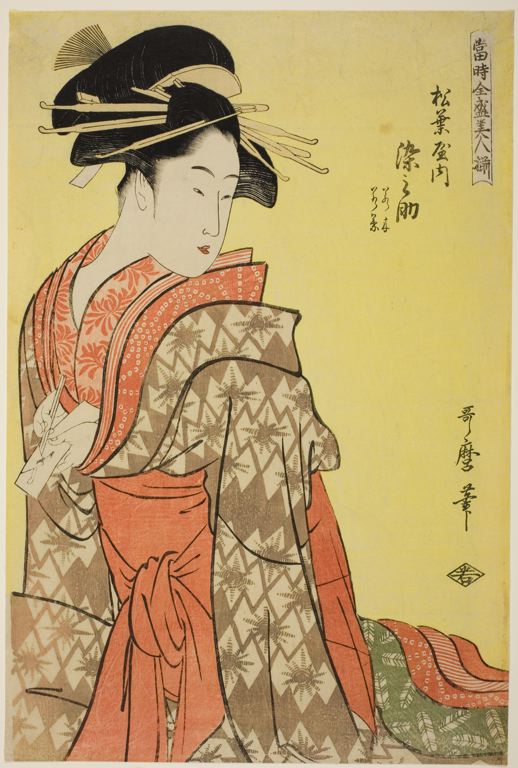
The Greatest Beauties of Our Time (Toji zensei bijin zoroe): Somenosuke of the Matsubaya with Attendants Wakagi and Wakaba
Woodblock print
Frequently Asked Questions
Female Amusements of the Five Festivals (Bijin gosetsu asobi) was created by Kitagawa Utamaro (喜多川歌麿) in Late Edo period, circa 1800-1806.