
Geisha (Geigi), from the series “Three Amusements of Contemporary Beauties" ("Tosei bijin san’yu")
- Date:
- c. 1800
- Medium:
- Color woodblock print; naga-oban
- Source:
- Art Institute of Chicago
Description
Geisha (Geigi), from Kitagawa Utamaro's c. 1795 series Three Amusements of Contemporary Beauties (Tosei bijin san'yu), held by the Art Institute of Chicago, presents the figure of the geisha as one of three feminine types into which fashionable urban womanhood could be sorted. Where the Yoshiwara courtesan represented sanctioned eroticism and the townswoman represented domestic respectability, the geisha occupied a distinct, professionalized middle ground: an accomplished performer of music and dance whose appeal lay in cultivated taste and conversational wit. Utamaro's design plays to this identity by giving his geisha understated, often dark-toned kimono, restrained hair ornaments, and an alert, composed expression. The half-length or three-quarter format permits the viewer to study the textile patterns at close range and the small adjustments of posture that distinguish a geisha from her counterparts elsewhere in the series. Within mature Edo bijin-ga, this sheet is exemplary of Utamaro's typological project, in which ukiyo-e becomes a kind of social atlas of feminine roles in late-eighteenth-century Edo.
More Prints by Kitagawa Utamaro
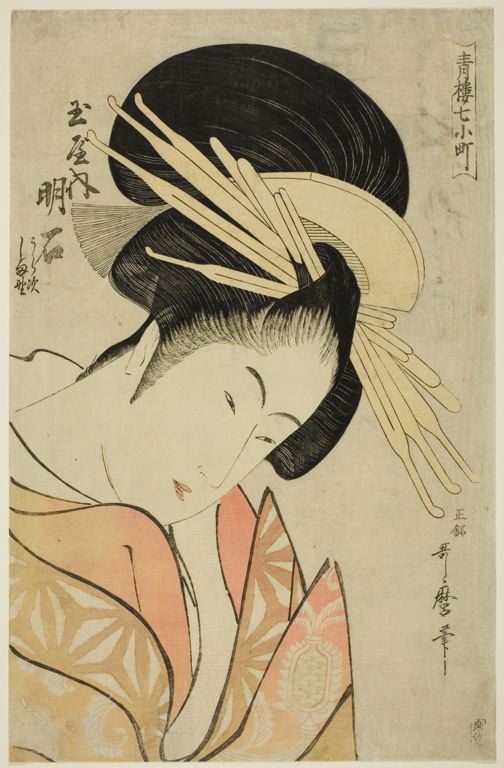
Akashi of the Tamaya, from the series Seven Komachis of Yoshiwara (Seiro nana Komachi) (Tamaya uchi Akashi, Uraji, Shimano)
Woodblock print
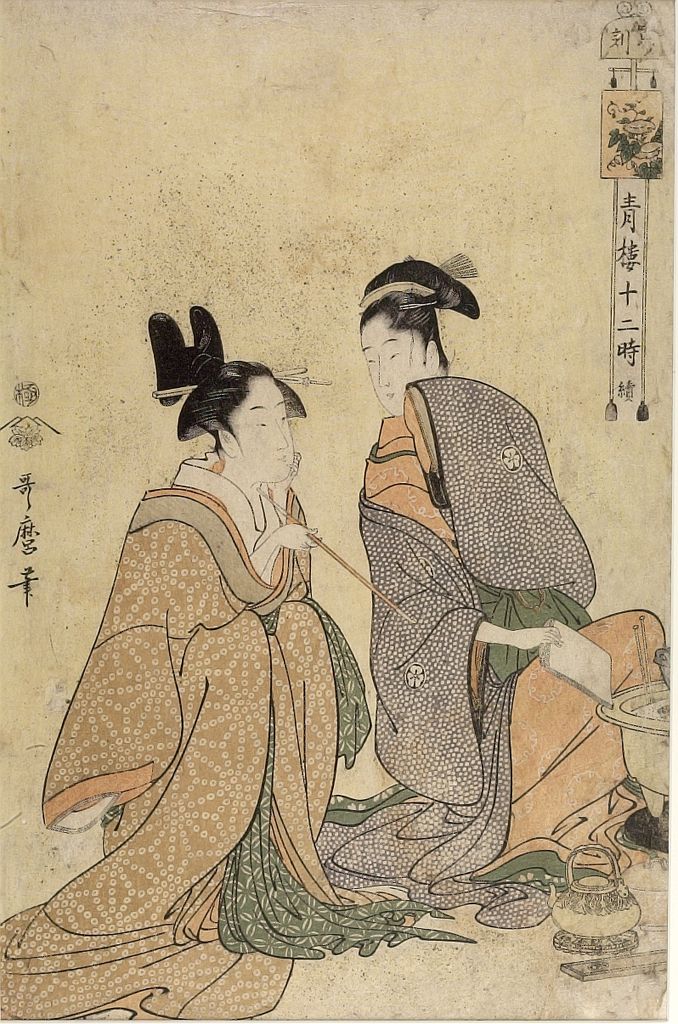
Hour of the Tiger (Tora no koku = 4 AM) from the series Twelve Hours in Yoshiwara (Seirô jûni toki tsuzuki), Late Edo period, circa 1794
Woodblock print
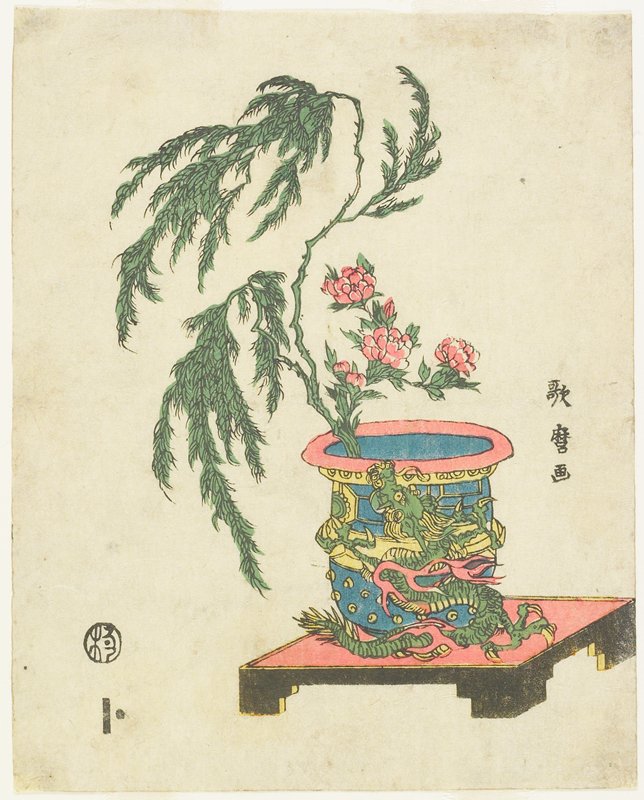
Ikebana arrangement of Peony and Willow in Dragon Pot
1781–1806
Woodblock print (nishiki-e), ink and color on paper
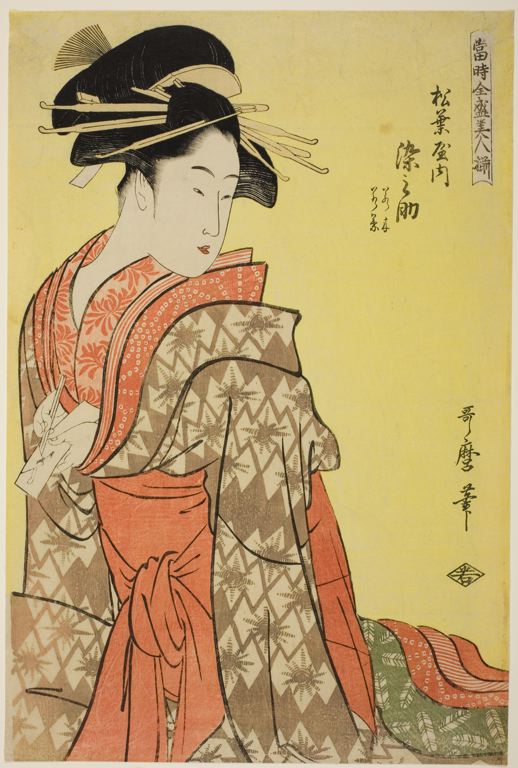
The Greatest Beauties of Our Time (Toji zensei bijin zoroe): Somenosuke of the Matsubaya with Attendants Wakagi and Wakaba
Woodblock print
More Figures Prints
Featured in Collections
Curated cross-cuts that include this print.
Frequently Asked Questions
Geisha (Geigi), from the series “Three Amusements of Contemporary Beauties" ("Tosei bijin san’yu") was created by Kitagawa Utamaro (喜多川歌麿) in c. 1800.
Geisha (Geigi), from the series “Three Amusements of Contemporary Beauties" ("Tosei bijin san’yu") depicts figures and bijin-ga.