
Goldfish
- Date:
- c. 1794/95
- Medium:
- Color woodblock print; oban
- Source:
- Art Institute of Chicago
Description
Goldfish, dated 1789 and held in the Art Institute of Chicago, is an unusually quiet print from Kitagawa Utamaro that demonstrates the breadth of subject matter possible within Edo-period ukiyo-e. While he is best remembered for Edo bijin-ga, Utamaro also produced significant work in the closely related genres of kacho-e, or bird-and-flower pictures, and natural-history studies, often published in the lavishly printed kyoka books that circulated among educated amateurs of the floating world. This sheet centers on the slow movement of goldfish, a status pet imported from China and prized in late-Tokugawa-period Edo for its association with refinement and leisure. Utamaro renders the fish with sweeping calligraphic outlines, articulating the fan-like tails and bulging eyes with as much attention as he otherwise gave to the layered hair ornaments of a courtesan. Color is restrained but pointed, with warm reds and golds set against the pale ground that was characteristic of the high-quality nishiki-e printed by the Tsutaya house. As an exercise in observed nature, the print sits comfortably alongside Utamaro's celebrated insect, bird, and shell compilations from the same period, all of which display an unsentimental curiosity about the visible world. Within the Art Institute of Chicago's deep ukiyo-e holdings, Goldfish offers a useful counterweight to the artist's more famous portraiture: it shows Kitagawa Utamaro thinking compositionally rather than psychologically, and reminds modern viewers that the ukiyo-e print was a flexible medium able to absorb fishbowls and frogs as readily as Yoshiwara stars.
More Prints by Kitagawa Utamaro
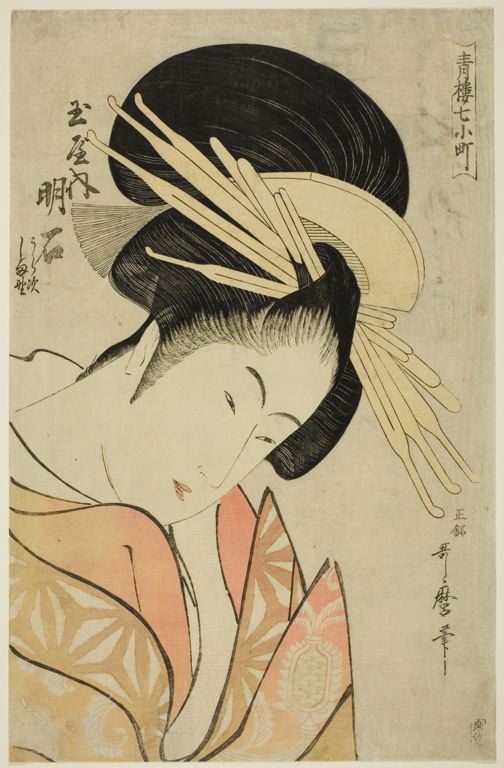
Akashi of the Tamaya, from the series Seven Komachis of Yoshiwara (Seiro nana Komachi) (Tamaya uchi Akashi, Uraji, Shimano)
Woodblock print
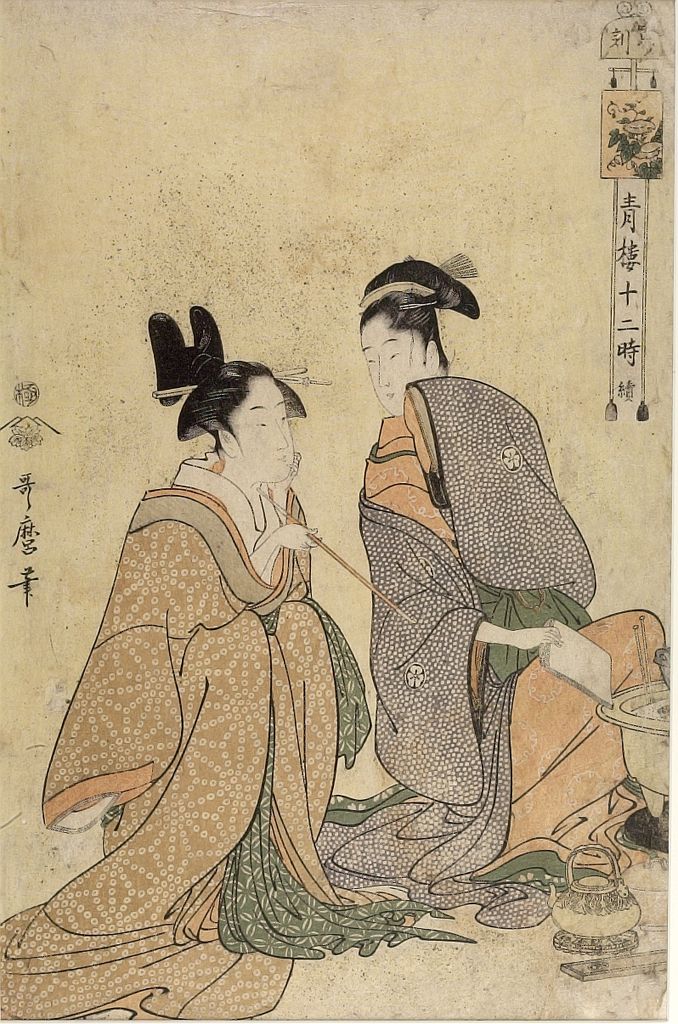
Hour of the Tiger (Tora no koku = 4 AM) from the series Twelve Hours in Yoshiwara (Seirô jûni toki tsuzuki), Late Edo period, circa 1794
Woodblock print
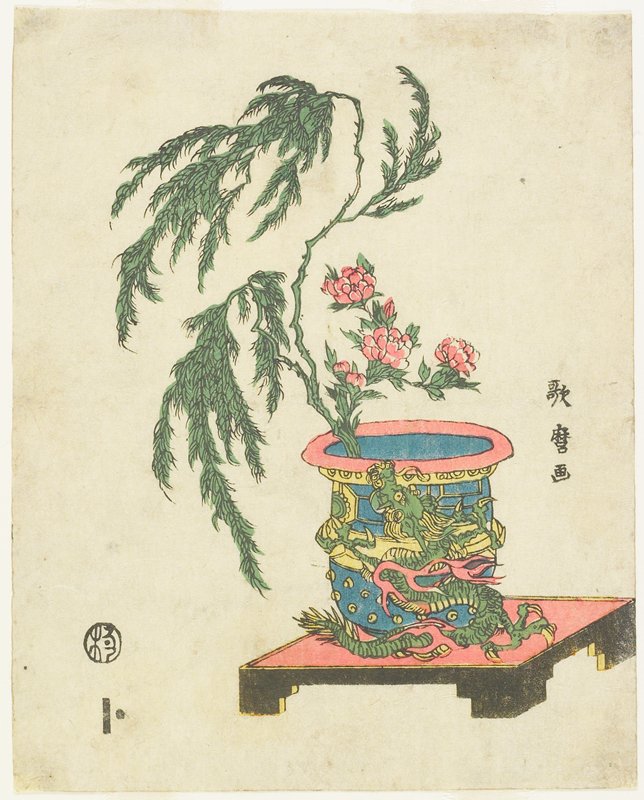
Ikebana arrangement of Peony and Willow in Dragon Pot
1781–1806
Woodblock print (nishiki-e), ink and color on paper
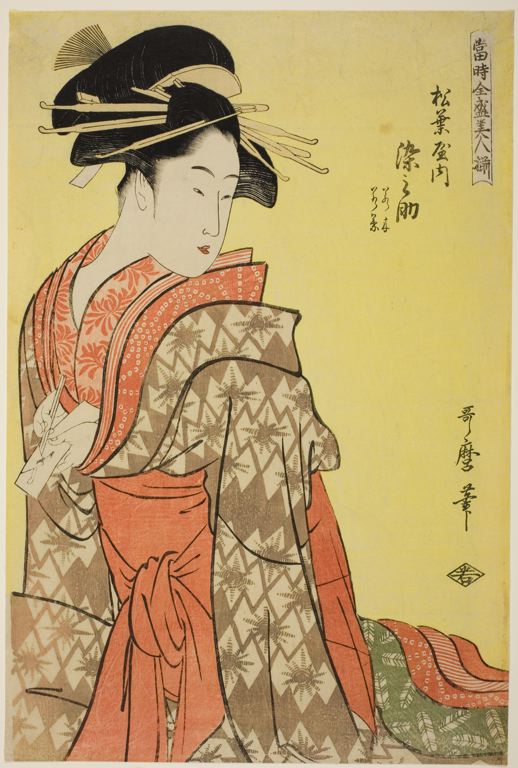
The Greatest Beauties of Our Time (Toji zensei bijin zoroe): Somenosuke of the Matsubaya with Attendants Wakagi and Wakaba
Woodblock print
More Fish Prints


Frequently Asked Questions
Goldfish was created by Kitagawa Utamaro (喜多川歌麿) in c. 1794/95.
Goldfish depicts fish.