
Ha... of the Southern Station (Nan'eki ha-jirushi)
- Date:
- c. 1795/96
- Medium:
- Color woodblock print; oban
- Source:
- Art Institute of Chicago
Description
Ha... of the Southern Station (Nan'eki ha-jirushi), dated 1790 and held in the Art Institute of Chicago, is one of Kitagawa Utamaro's portraits drawn from the post-station communities south of Edo, where licensed teahouse women operated outside the formal walls of the Yoshiwara. The Southern Station, or Shinagawa, was one of the most important post-towns on the Tokaido road, and the entertainments there enjoyed a quasi-official status that placed them somewhere between rural and urban pleasure quarters. By depicting a star of that district, identified by the elliptical first character of her name and by a place-marker, ha-jirushi, Utamaro extends his bijin-ga taxonomy beyond the famed Edo houses into the geographically and socially adjacent post-station world. The composition centers a single woman in oban format, drawn with the elongated proportions and refined linework that came to define Edo bijin-ga in the early 1790s. Pattern, accessory, and hairstyle communicate her professional identity and the particular flavor of Shinagawa fashion, which often blended Edo elegance with subtle inflections from the road. The print also illustrates Utamaro's wider sociological curiosity, his interest in mapping the full network of women working across the city and its environs through serial portraiture. Within the Art Institute of Chicago's collection, this sheet enlarges the standard story of ukiyo-e centered on the Yoshiwara, showing Kitagawa Utamaro attending carefully to the lesser-known but commercially vital pleasure districts of late-eighteenth-century Edo.
More Prints by Kitagawa Utamaro
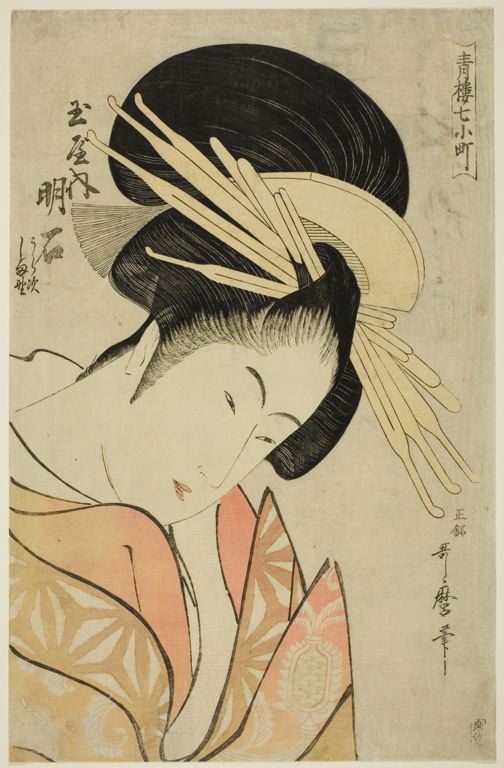
Akashi of the Tamaya, from the series Seven Komachis of Yoshiwara (Seiro nana Komachi) (Tamaya uchi Akashi, Uraji, Shimano)
Woodblock print
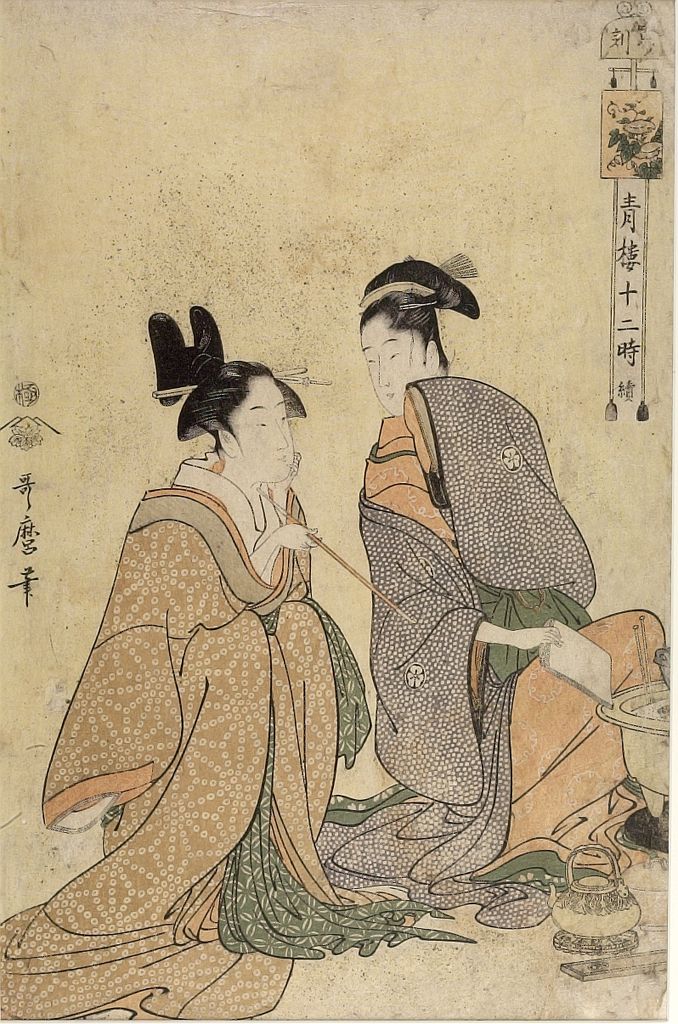
Hour of the Tiger (Tora no koku = 4 AM) from the series Twelve Hours in Yoshiwara (Seirô jûni toki tsuzuki), Late Edo period, circa 1794
Woodblock print
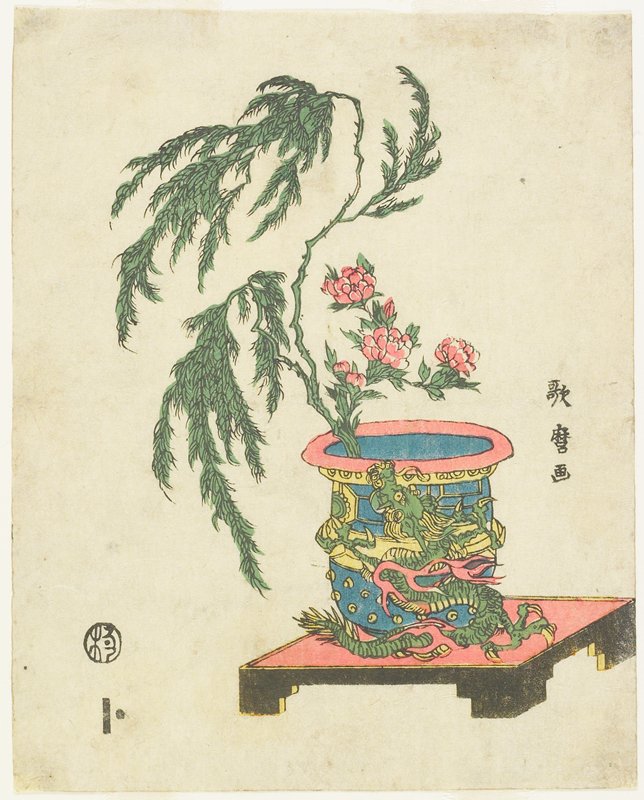
Ikebana arrangement of Peony and Willow in Dragon Pot
1781–1806
Woodblock print (nishiki-e), ink and color on paper
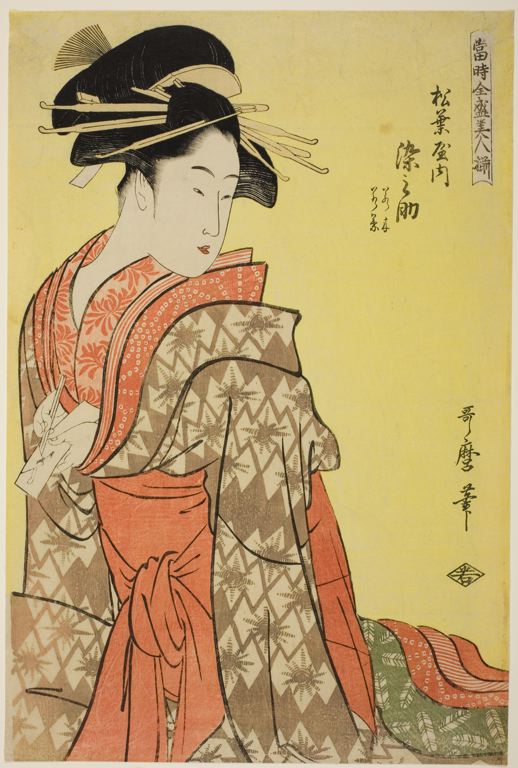
The Greatest Beauties of Our Time (Toji zensei bijin zoroe): Somenosuke of the Matsubaya with Attendants Wakagi and Wakaba
Woodblock print
Frequently Asked Questions
Ha... of the Southern Station (Nan'eki ha-jirushi) was created by Kitagawa Utamaro (喜多川歌麿) in c. 1795/96.