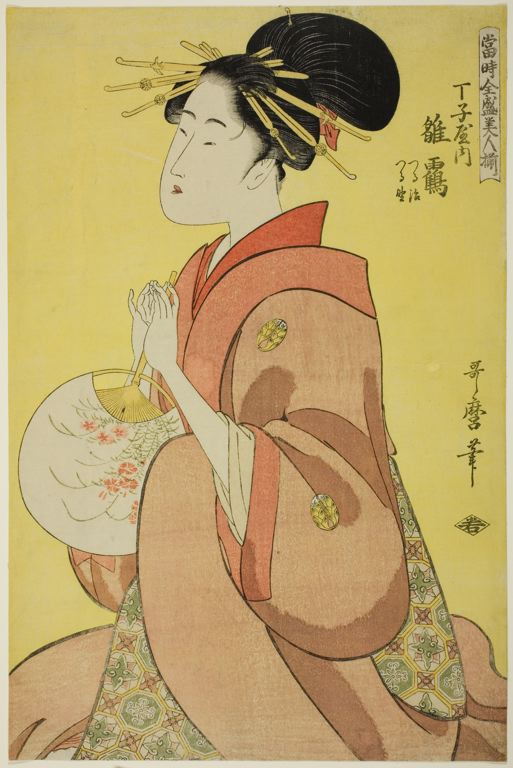
Hinazuru of the Chojiya, Whose Attendants Are Tsuruji and Tsuruno (Chôjiya uchi Hinazuru, Tsuruji, Tsuruno), from the series
- Medium:
- Woodblock print
- Source:
- Art Institute of Chicago
- Image courtesy of
- Art Institute of Chicago
Description
A courtesan in bust-length view kneels turned slightly to the side, holding a round white uchiwa fan patterned with a faint floral motif in both hands. She wears a layered kimono in soft coral-orange and pale yellow-green florals beneath an outer robe of deep salmon red, with an elaborate black coiffure ornamented with tortoiseshell hairpins and combs. The background is a flat mustard-yellow, and her pale face is rendered with the fine, delicate features typical of bust portraits, giving a quiet, composed mood; text and a cartouche appear in the upper right corner.
More Prints by Kitagawa Utamaro
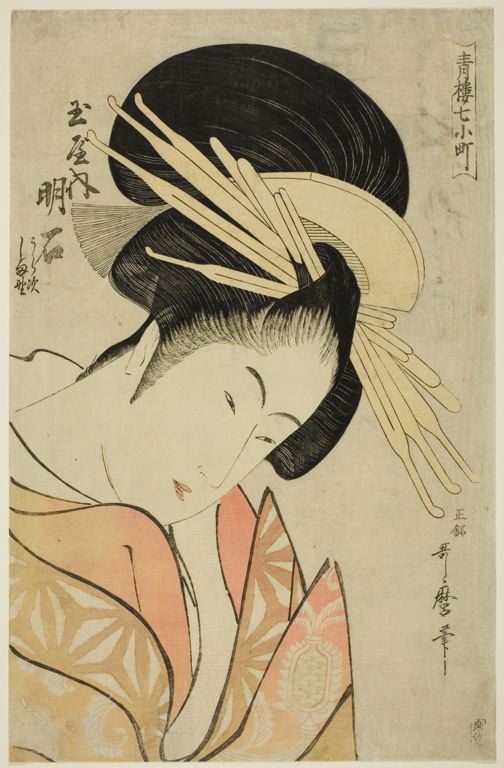
Akashi of the Tamaya, from the series Seven Komachis of Yoshiwara (Seiro nana Komachi) (Tamaya uchi Akashi, Uraji, Shimano)
Woodblock print
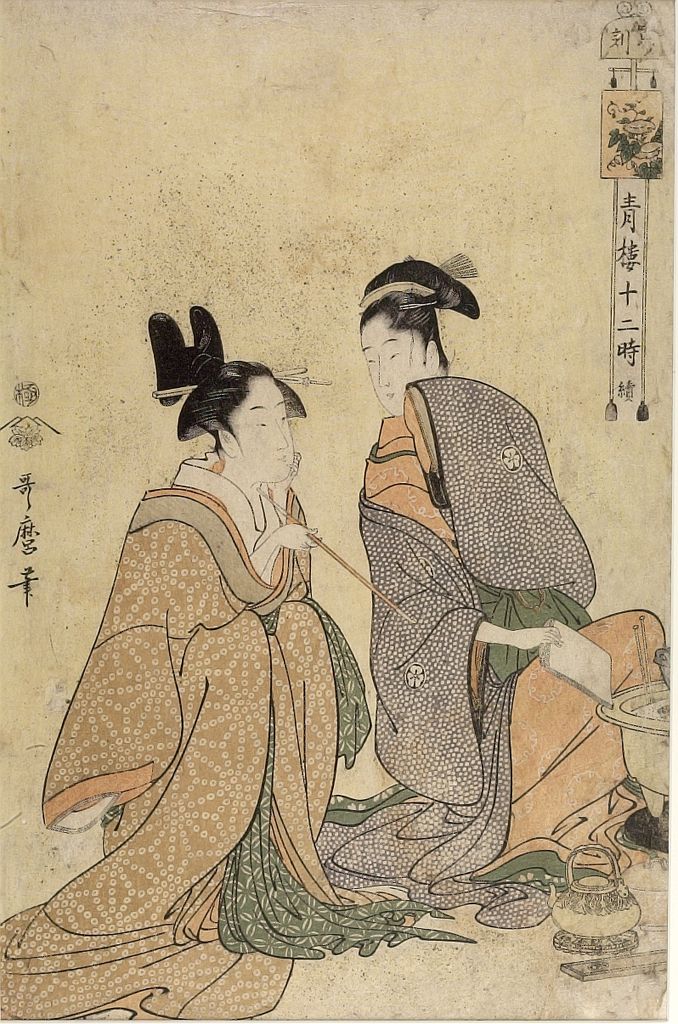
Hour of the Tiger (Tora no koku = 4 AM) from the series Twelve Hours in Yoshiwara (Seirô jûni toki tsuzuki), Late Edo period, circa 1794
Woodblock print
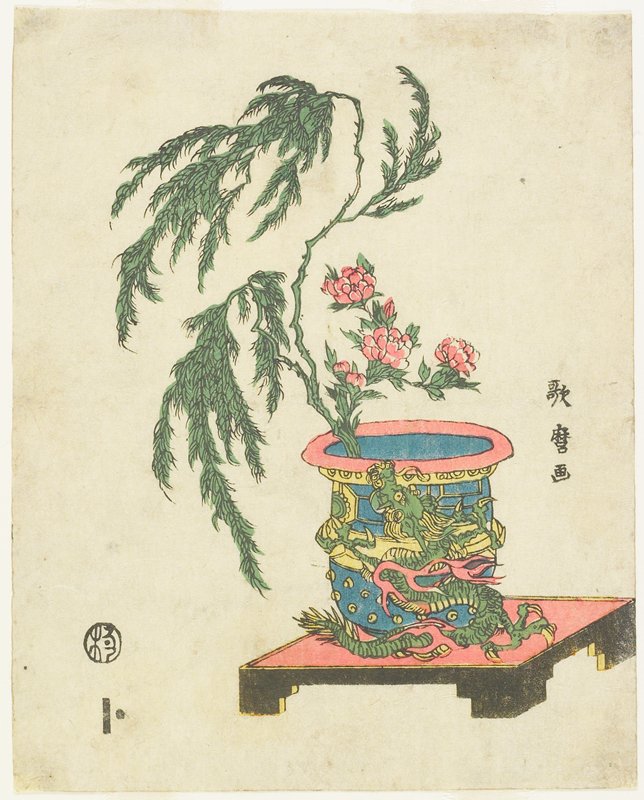
Ikebana arrangement of Peony and Willow in Dragon Pot
1781–1806
Woodblock print (nishiki-e), ink and color on paper
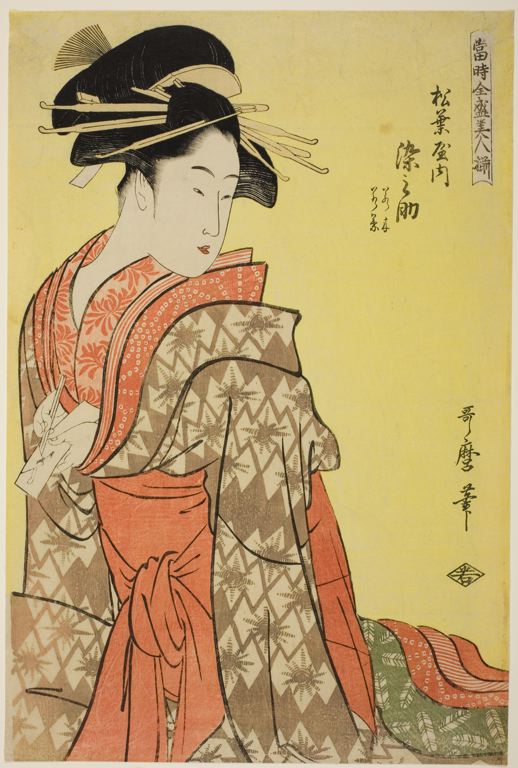
The Greatest Beauties of Our Time (Toji zensei bijin zoroe): Somenosuke of the Matsubaya with Attendants Wakagi and Wakaba
Woodblock print
Frequently Asked Questions
Hinazuru of the Chojiya, Whose Attendants Are Tsuruji and Tsuruno (Chôjiya uchi Hinazuru, Tsuruji, Tsuruno), from the series was created by Kitagawa Utamaro (喜多川歌麿).