
Horse beneath a Flowering Plum Tree
- Date:
- c. 1797/99
- Medium:
- Color woodblock print; long surimono
- Source:
- Art Institute of Chicago
Description
Horse beneath a Flowering Plum Tree is a color woodblock print of about 1792 by Kitagawa Utamaro held by the Art Institute of Chicago. While most of his ukiyo-e career was devoted to Edo bijin-ga and the depiction of courtesans, this sheet shows the artist working in a more poetic, even classical, vein. A horse, drawn with quiet attentiveness to its anatomy, stands or moves beneath the branches of a flowering plum, the umé. In Japanese visual and literary tradition the plum tree is a symbol of early spring and resilience, blossoming before the leaves return and often associated with scholars, poets, and elegant gatherings. Pairing the horse with the plum recalls classical motifs of New Year and seasonal imagery, in which horses were depicted as votive offerings, mounts of the gods, or emblems of the year of the horse in the zodiac. Utamaro's drawing is restrained: the curve of the animal's neck and the arc of its back balance the rising lines of the plum trunk and branches, while the blossoms are scattered in a way that animates the upper composition without overwhelming the figure beneath. The print indicates that Utamaro's ukiyo-e practice extended beyond bijin-ga into kachō-e (bird-and-flower) and animal subjects often produced as surimono and seasonal prints. As a quieter facet of Kitagawa Utamaro's output, the sheet at the Art Institute of Chicago is a useful reminder that ukiyo-e is more than its most famous figural genres.
More Prints by Kitagawa Utamaro
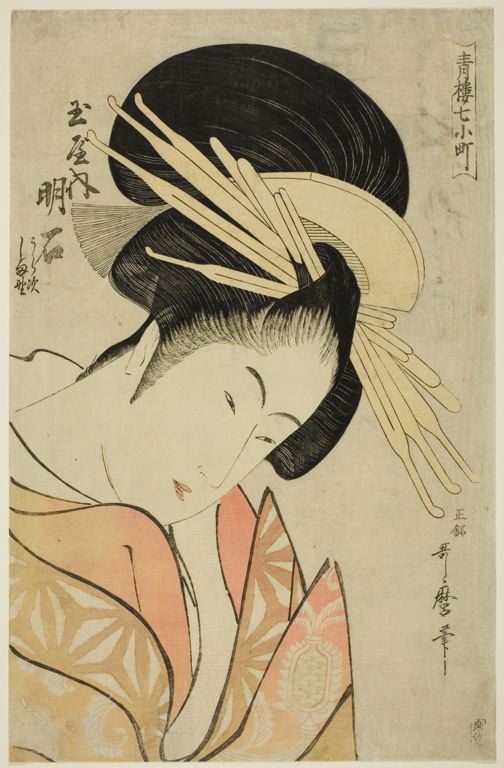
Akashi of the Tamaya, from the series Seven Komachis of Yoshiwara (Seiro nana Komachi) (Tamaya uchi Akashi, Uraji, Shimano)
Woodblock print
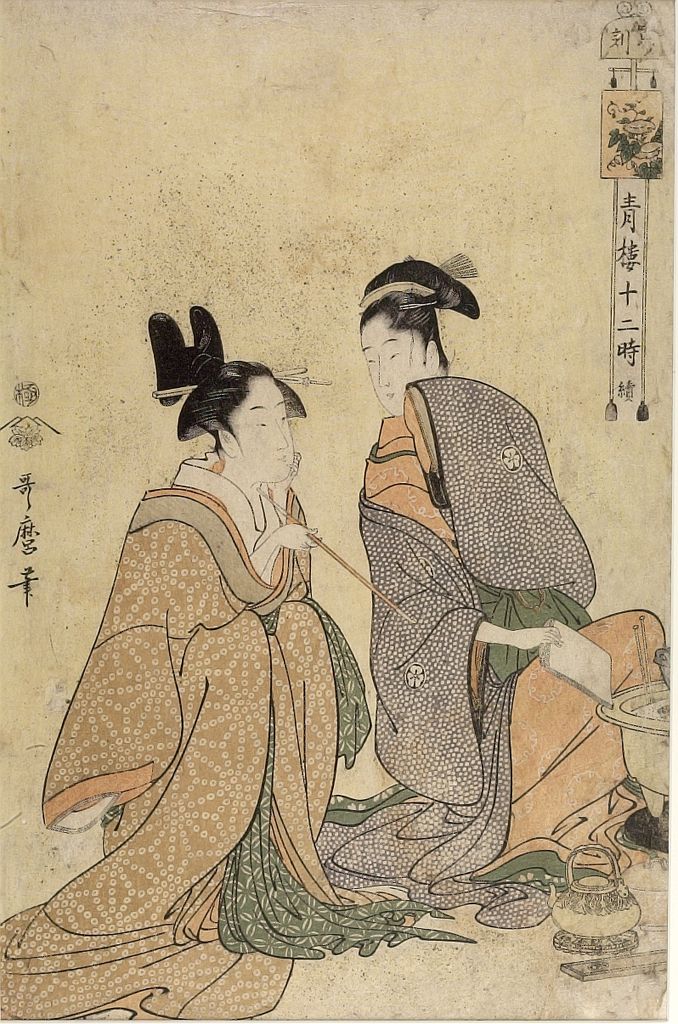
Hour of the Tiger (Tora no koku = 4 AM) from the series Twelve Hours in Yoshiwara (Seirô jûni toki tsuzuki), Late Edo period, circa 1794
Woodblock print
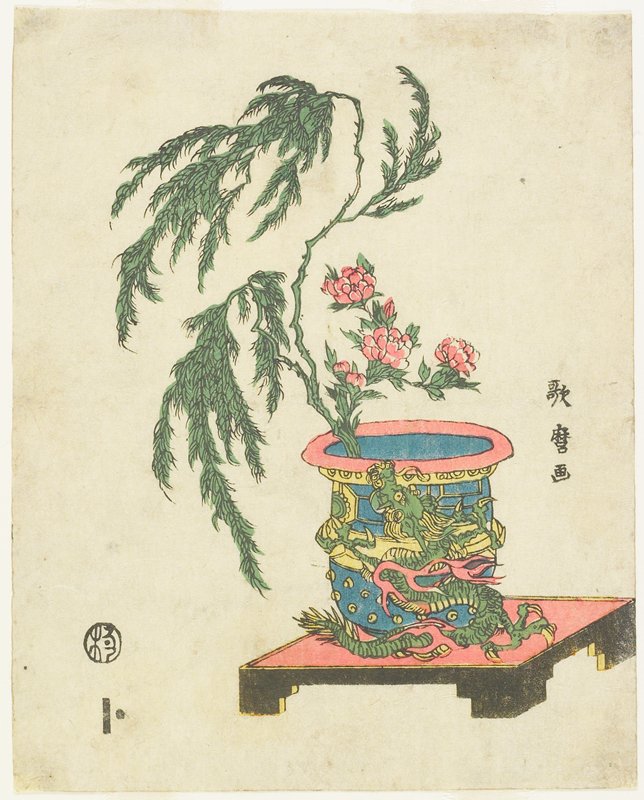
Ikebana arrangement of Peony and Willow in Dragon Pot
1781–1806
Woodblock print (nishiki-e), ink and color on paper
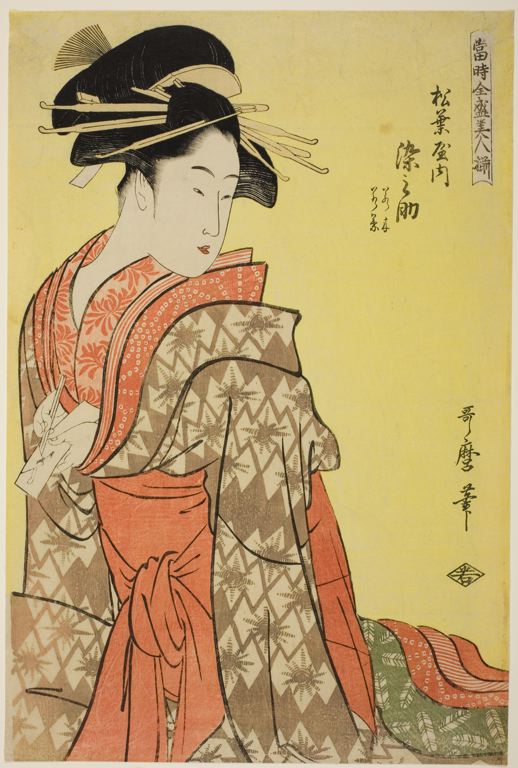
The Greatest Beauties of Our Time (Toji zensei bijin zoroe): Somenosuke of the Matsubaya with Attendants Wakagi and Wakaba
Woodblock print
More Birds & Flowers Prints
Frequently Asked Questions
Horse beneath a Flowering Plum Tree was created by Kitagawa Utamaro (喜多川歌麿) in c. 1797/99.
Horse beneath a Flowering Plum Tree depicts birds & flowers.