Kamuro with Shamisen and Kamuro(?) with Fan, from the series Fūryū kodomo asobi
- Date:
- 19th century
- Medium:
- Ukiyo-e woodblock print in "ōban" format; ink and color on paper, with printed signature reading "Utamaro hitsu"
- Source:
- Harvard Art Museums
Description
From the series Fashionable Children's Games (Furyu kodomo asobi), Kitagawa Utamaro's ukiyo-e print of a kamuro with a shamisen and a kamuro with a fan turns the young attendants of the Yoshiwara into engaging subjects of Edo bijin-ga in their own right. Kamuro were girls in training under high-ranking courtesans, performing errands, learning music, and absorbing the etiquette of the licensed quarter; Utamaro's choice to single them out in a series of fashionable games acknowledges the role they played in the visual culture of the pleasure district. One child holds the shamisen, the three-stringed instrument central to the entertainments of the brothel, while the other carries a fan, a prop that signals dance and conversation alike. Utamaro draws the pair with the same calligraphic outline and elongated proportions he applied to grown beauties, dignifying the children without erasing their youth. The pale paper ground throws their patterned kimono into relief, while small variations in hairstyle and gesture distinguish the two figures despite their parallel pose. The Harvard Art Museums preserves this impression (object 209972), where it joins related prints that show how Utamaro extended ukiyo-e's bijin-ga conventions to encompass the wider household of the Yoshiwara, training pupils included.
More Prints by Kitagawa Utamaro
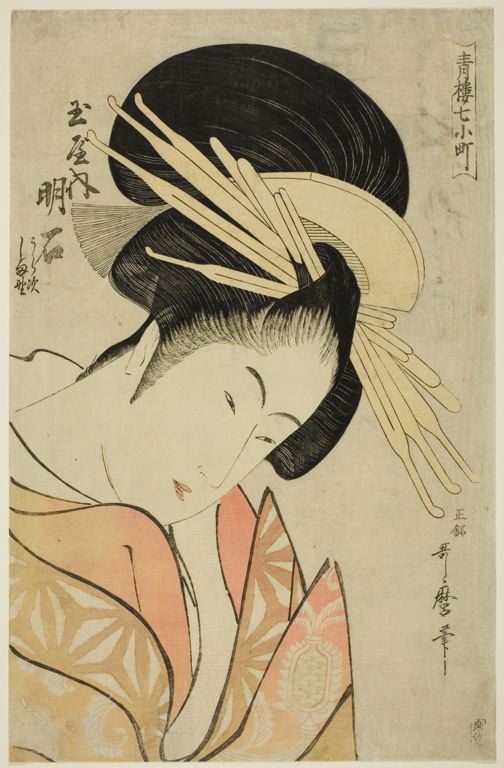
Akashi of the Tamaya, from the series Seven Komachis of Yoshiwara (Seiro nana Komachi) (Tamaya uchi Akashi, Uraji, Shimano)
Woodblock print
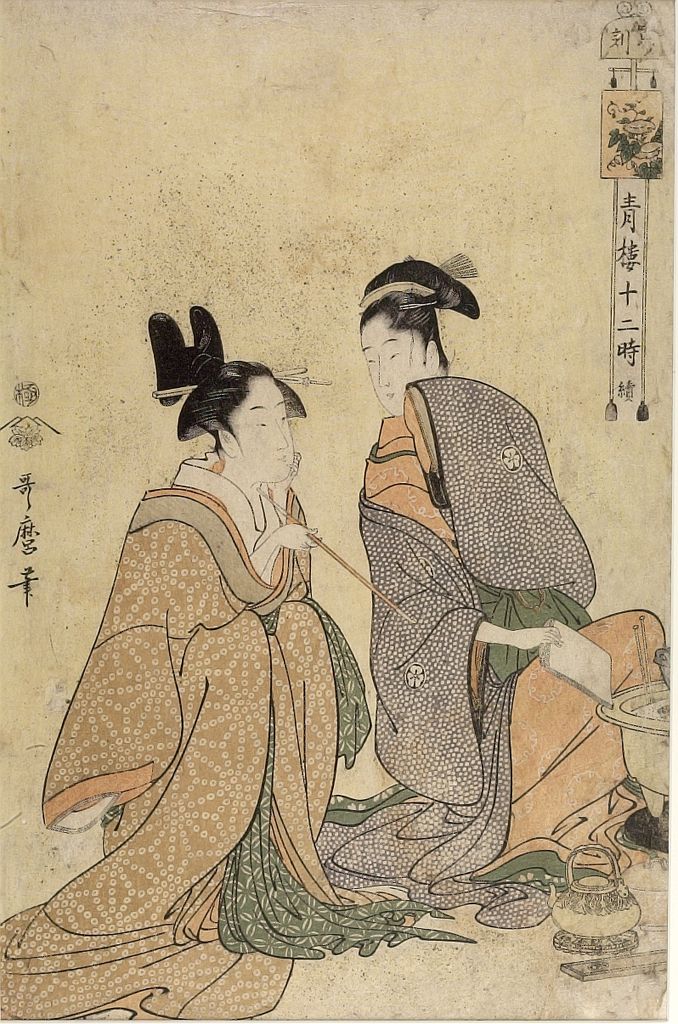
Hour of the Tiger (Tora no koku = 4 AM) from the series Twelve Hours in Yoshiwara (Seirô jûni toki tsuzuki), Late Edo period, circa 1794
Woodblock print
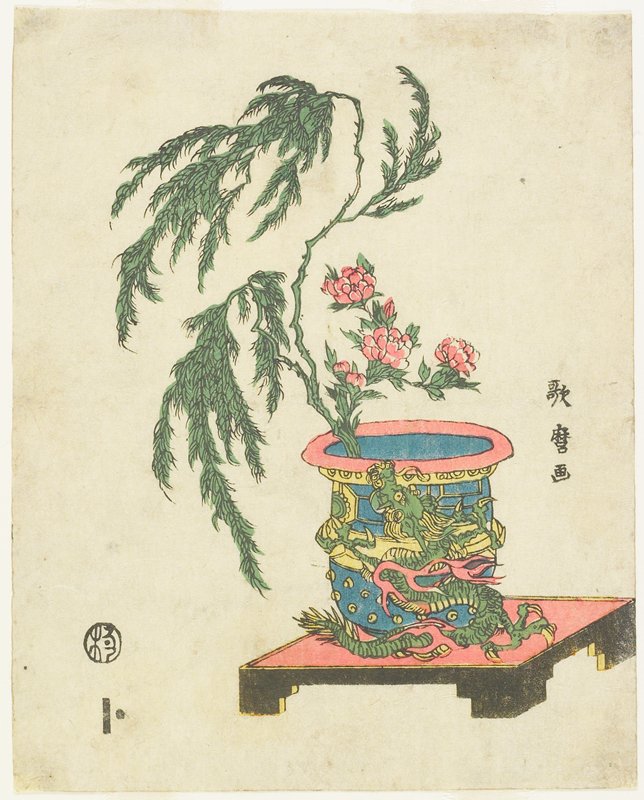
Ikebana arrangement of Peony and Willow in Dragon Pot
1781–1806
Woodblock print (nishiki-e), ink and color on paper
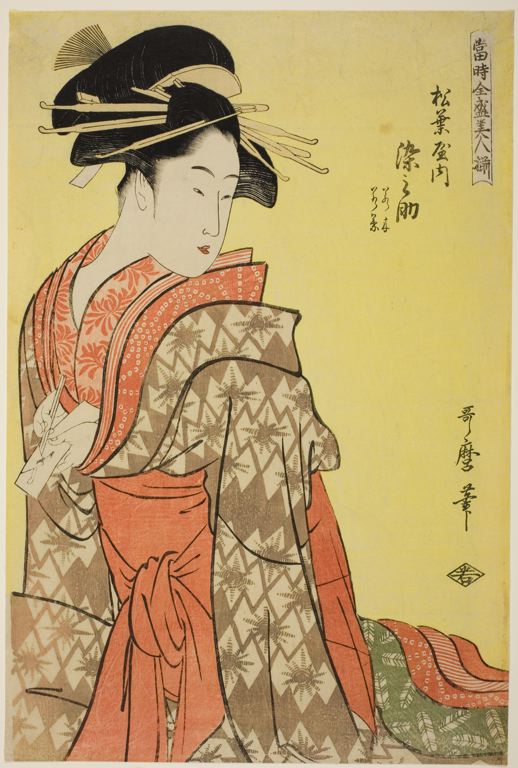
The Greatest Beauties of Our Time (Toji zensei bijin zoroe): Somenosuke of the Matsubaya with Attendants Wakagi and Wakaba
Woodblock print
Frequently Asked Questions
Kamuro with Shamisen and Kamuro(?) with Fan, from the series Fūryū kodomo asobi was created by Kitagawa Utamaro (喜多川歌麿) in 19th century.