
Kanpei's Wife Okaru
- Date:
- 1806, 1st month
- Medium:
- Woodblock print (nishiki-e), ink and color on paper
- Source:
- Art Institute of Chicago
Description
Kanpei's Wife Okaru, designed by Kitagawa Utamaro around 1806 and now in the collection of the Art Institute of Chicago, draws on the immensely popular kabuki and puppet drama Kanadehon Chushingura, the dramatization of the forty-seven loyal retainers. Okaru is one of the central female figures of the play: faithful wife of the ill-fated samurai Kanpei, she ultimately sells herself into Yoshiwara service to help finance the secret vendetta. Utamaro presents her not as a stage actor but as a contemplative beauty, her hair set in late-Edo coiffure, her kimono and obi described with the soft, planar color and confident contour line characteristic of his mature ukiyo-e style. By transposing a Chushingura heroine into the visual register of Edo bijin-ga, Utamaro lets viewers savor the emotional gravity of the play through the everyday body language of a woman caught in private thought. The print is part of a broader late-career engagement with literary and theatrical heroines that, alongside his Yoshiwara portraits, expanded what could be carried by the format of the okubi-e and half-length figure.
More Prints by Kitagawa Utamaro
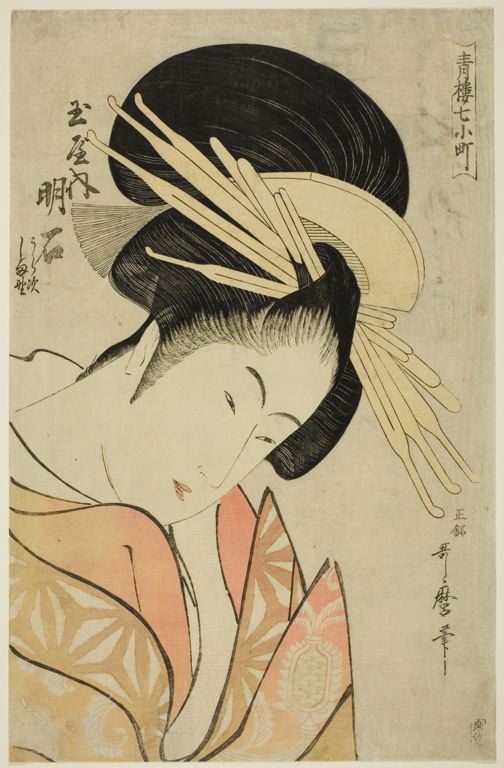
Akashi of the Tamaya, from the series Seven Komachis of Yoshiwara (Seiro nana Komachi) (Tamaya uchi Akashi, Uraji, Shimano)
Woodblock print
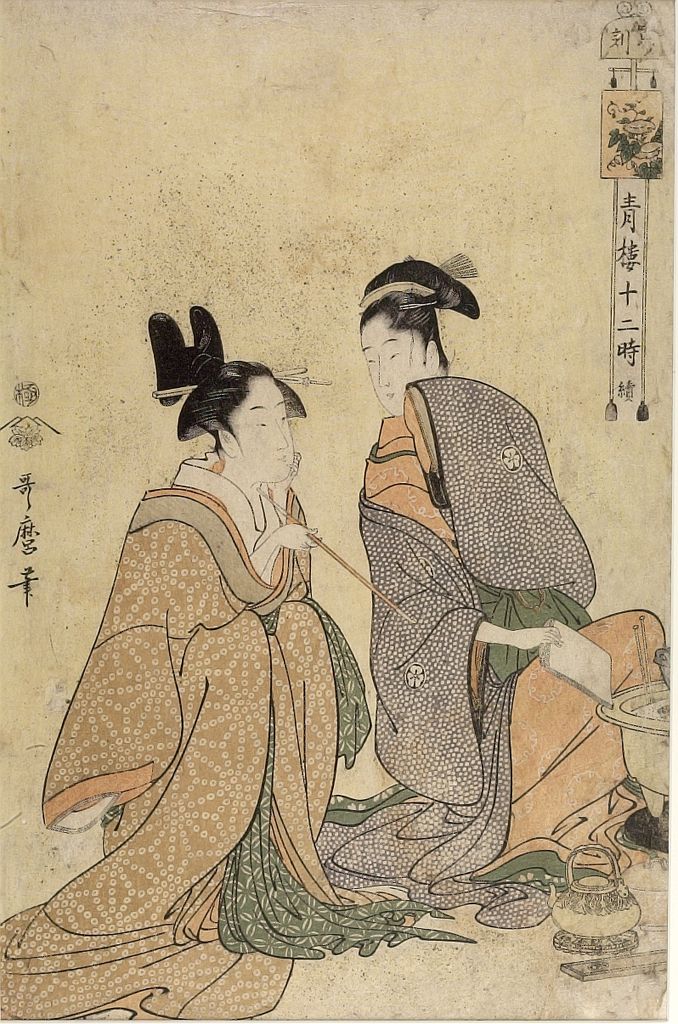
Hour of the Tiger (Tora no koku = 4 AM) from the series Twelve Hours in Yoshiwara (Seirô jûni toki tsuzuki), Late Edo period, circa 1794
Woodblock print
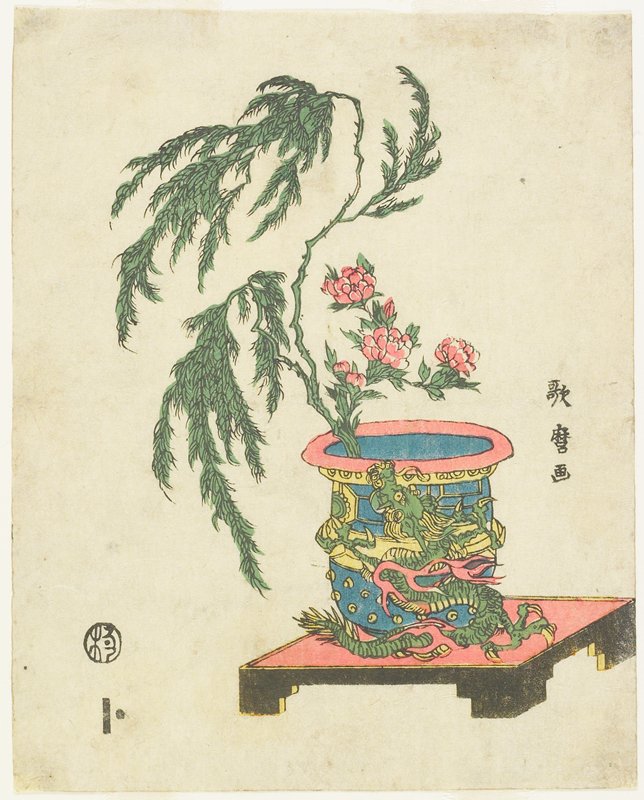
Ikebana arrangement of Peony and Willow in Dragon Pot
1781–1806
Woodblock print (nishiki-e), ink and color on paper
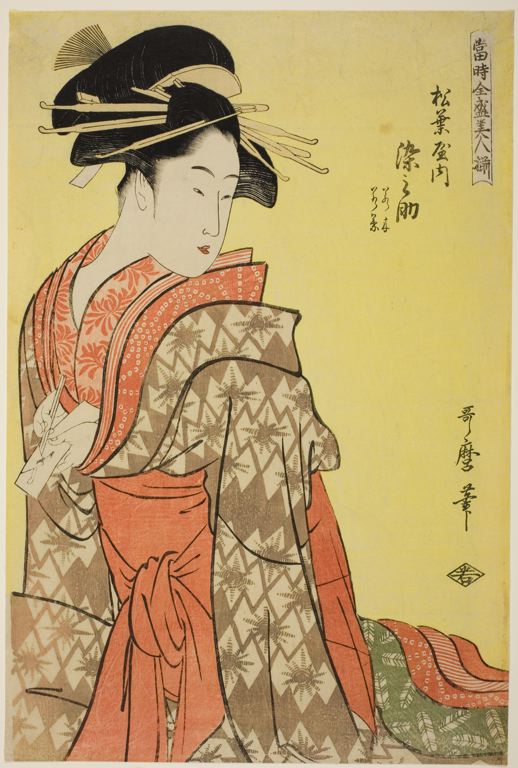
The Greatest Beauties of Our Time (Toji zensei bijin zoroe): Somenosuke of the Matsubaya with Attendants Wakagi and Wakaba
Woodblock print
Frequently Asked Questions
Kanpei's Wife Okaru was created by Kitagawa Utamaro (喜多川歌麿) in 1806, 1st month.