Kneeling Woman and Child from the series Fūryū nana komachi
- Date:
- 19th century
- Medium:
- Ukiyo-e woodblock print in "ōban" format; ink and color on paper, with printed signature reading "Utamaro hitsu"
- Source:
- Harvard Art Museums
Description
Kitagawa Utamaro's ukiyo-e print Kneeling Woman and Child, from the series Fashionable Seven Komachi (Furyu nana komachi), unites the artist's tender treatment of mother-and-child subjects with the literary game of the rokkasen-derived Komachi cycle. The series recasts the seven legendary episodes from the life of the ninth-century poet Ono no Komachi as scenes from contemporary Edo, allowing each sheet to flatter both the educated viewer's classical knowledge and the modern beauty's fashionable identity. Here the standalone moment of a kneeling woman with a child invites comparison to one of the seven Komachi stories while functioning as an Edo bijin-ga portrait in its own right. The woman's lowered posture brings her closer to the child's height, creating an intimate enclosure of two bodies whose embrace Utamaro draws with the calligraphic outline familiar from his courtesan portraits. Patterned textiles printed in carefully separated blocks balance the soft skin of mother and child, while the pale ground emphasizes their gestures. Such prints document the breadth of Utamaro's interest in womanhood, from the celebrated oiran of the Yoshiwara to the quieter scenes of domestic care. The Harvard Art Museums preserves this impression (object 209947), where it joins other works from the Furyu nana komachi series.
More Prints by Kitagawa Utamaro
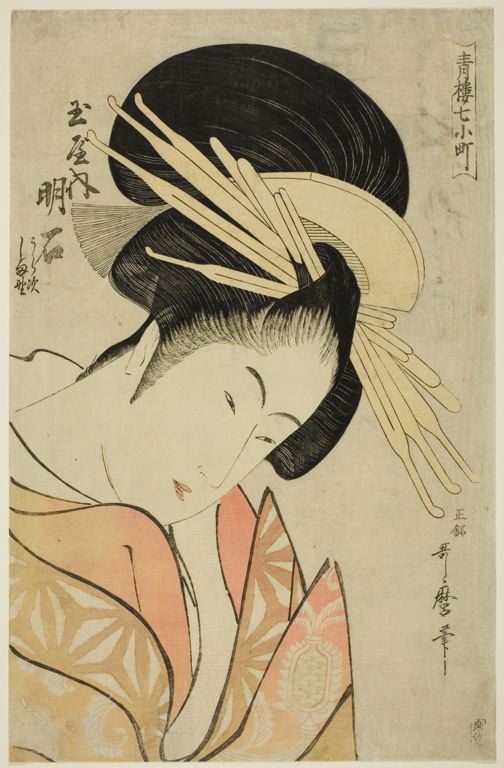
Akashi of the Tamaya, from the series Seven Komachis of Yoshiwara (Seiro nana Komachi) (Tamaya uchi Akashi, Uraji, Shimano)
Woodblock print
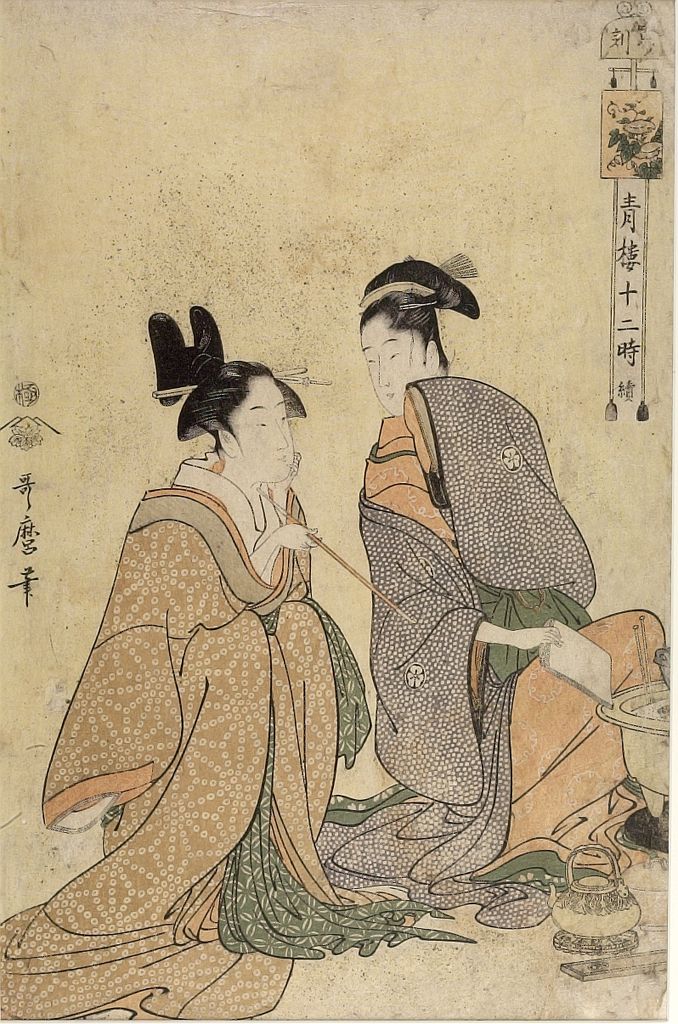
Hour of the Tiger (Tora no koku = 4 AM) from the series Twelve Hours in Yoshiwara (Seirô jûni toki tsuzuki), Late Edo period, circa 1794
Woodblock print
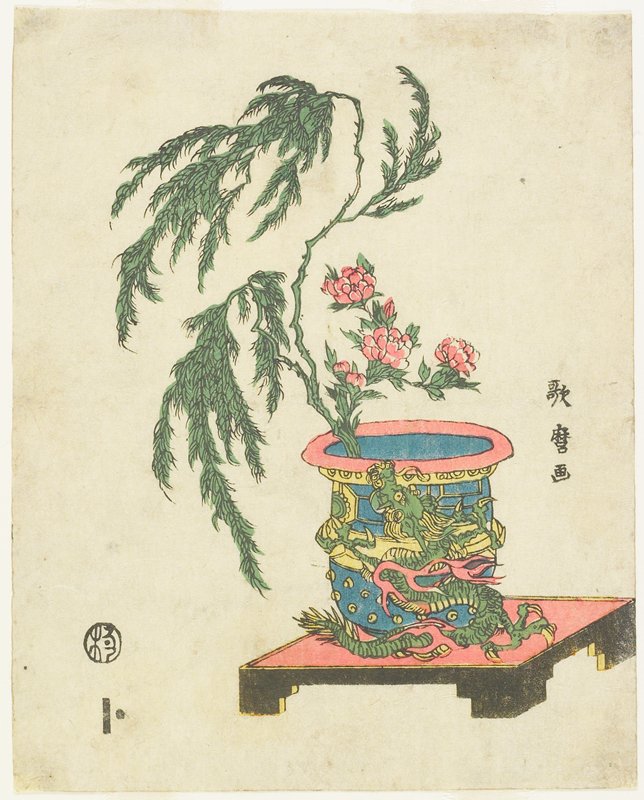
Ikebana arrangement of Peony and Willow in Dragon Pot
1781–1806
Woodblock print (nishiki-e), ink and color on paper
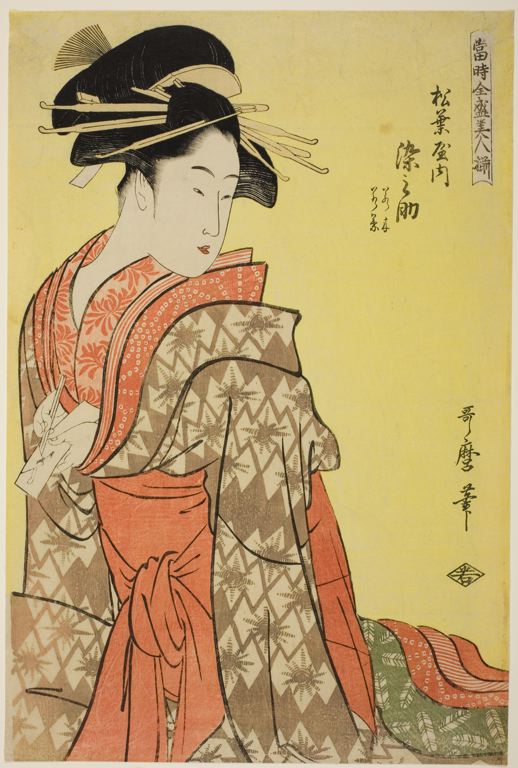
The Greatest Beauties of Our Time (Toji zensei bijin zoroe): Somenosuke of the Matsubaya with Attendants Wakagi and Wakaba
Woodblock print
Frequently Asked Questions
Kneeling Woman and Child from the series Fūryū nana komachi was created by Kitagawa Utamaro (喜多川歌麿) in 19th century.