Komachi at Kiyomizu Temple (Shimizu Komachi), from the series Little Seedlings: Seven Komachi (Futaba-gusa nana Komachi)
- Date:
- about 1803 (Kyôwa 3)
- Medium:
- Woodblock print (nishiki-e); ink and color on paper
- Source:
- Harvard Art Museums
Description
Komachi at Kiyomizu Temple (Shimizu Komachi), from the series Little Seedlings: Seven Komachi (Futaba-gusa nana Komachi), is dated about 1800 by Harvard Art Museums and exemplifies Kitagawa Utamaro's continued mining of classical Japanese poetry for visual material. Ono no Komachi, the legendary Heian-era poet, became the protagonist of seven nō plays known collectively as the Seven Komachi, and each play offered ukiyo-e designers a different setting and dramatic episode. In Shimizu Komachi, associated with Kiyomizu temple, the poet figure is drawn into a famous Kyoto sanctuary, and Utamaro reimagines her as a child within his Little Seedlings conceit. As Edo bijin-ga, the print treats the little Komachi with the same elongated proportions and careful robe patterning that defined his adult beauties, while adjusting the scale of features to evoke childhood. The seedling metaphor of the series name, applied to the Komachi, gently anticipates the future poet within the present child, layering temporal allusion onto the visual. As ukiyo-e, the work shows how the floating-world print absorbed classical material with affectionate playfulness, treating Heian icons as fellow citizens of the floating world rather than as remote historical figures. Color is handled with the soft restraint of Utamaro's late palette, and the composition isolates the child against a quiet ground that throws her dress and identifying attributes into relief. The Harvard sheet remains a strong example of his ability to compress literary, theatrical and bijin-ga interests into one compact design.
More Prints by Kitagawa Utamaro
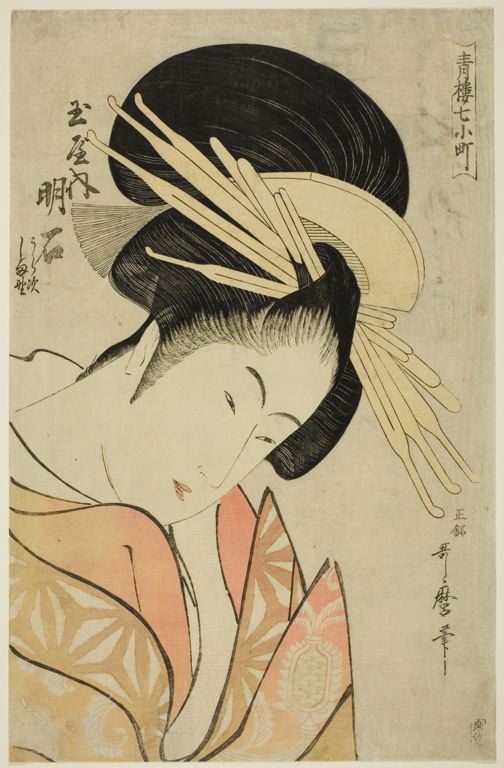
Akashi of the Tamaya, from the series Seven Komachis of Yoshiwara (Seiro nana Komachi) (Tamaya uchi Akashi, Uraji, Shimano)
Woodblock print
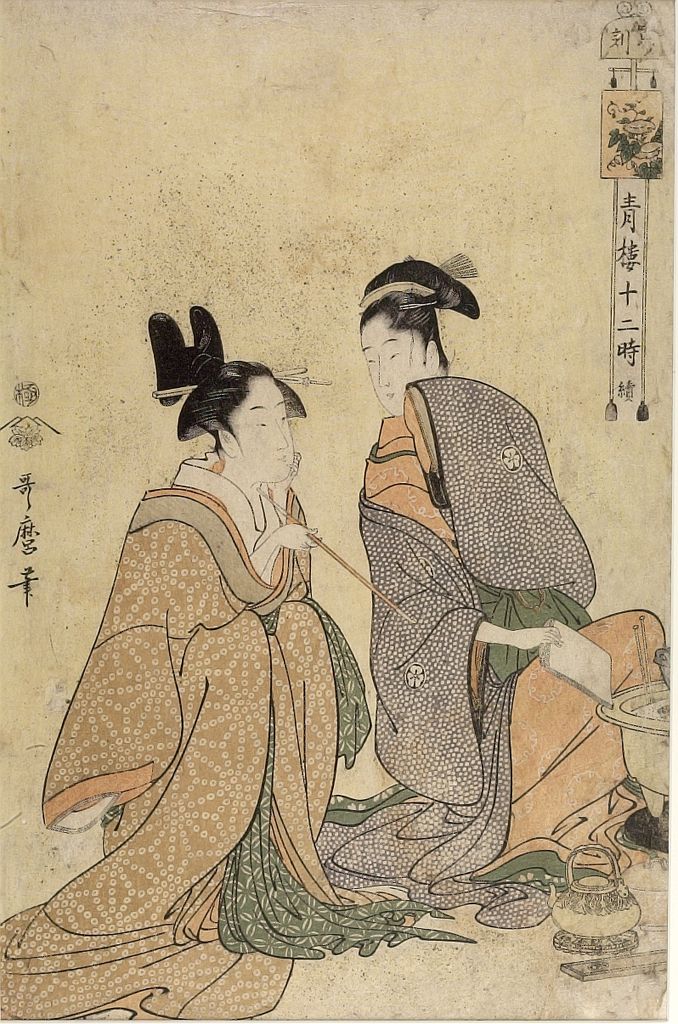
Hour of the Tiger (Tora no koku = 4 AM) from the series Twelve Hours in Yoshiwara (Seirô jûni toki tsuzuki), Late Edo period, circa 1794
Woodblock print
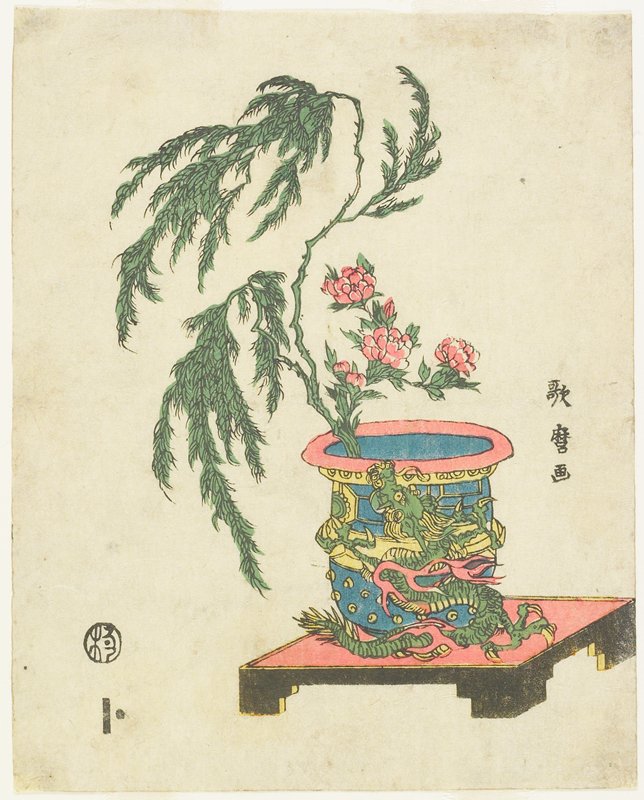
Ikebana arrangement of Peony and Willow in Dragon Pot
1781–1806
Woodblock print (nishiki-e), ink and color on paper
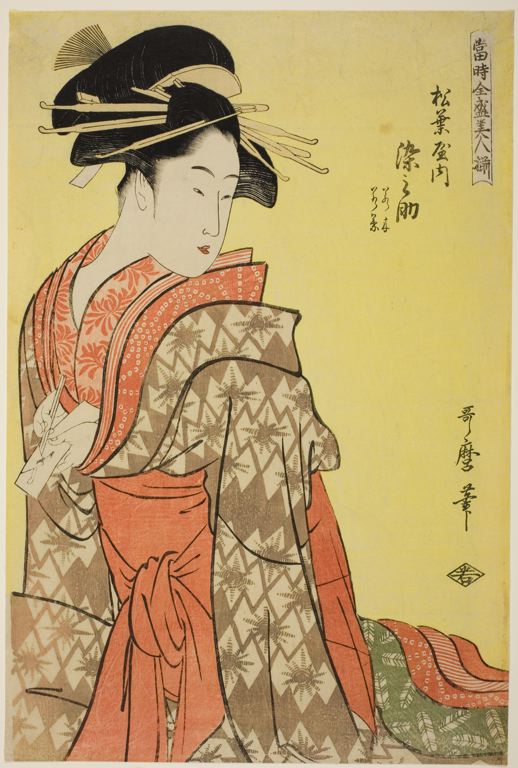
The Greatest Beauties of Our Time (Toji zensei bijin zoroe): Somenosuke of the Matsubaya with Attendants Wakagi and Wakaba
Woodblock print
Frequently Asked Questions
Komachi at Kiyomizu Temple (Shimizu Komachi), from the series Little Seedlings: Seven Komachi (Futaba-gusa nana Komachi) was created by Kitagawa Utamaro (喜多川歌麿) in about 1803 (Kyôwa 3).